Best Durable Guitar Cables for Stage and Studio
When choosing a durable guitar cable, you want something that minimizes noise, resists kinks, and lasts through long practice sessions and performances. This guide highlights five rugged options suited to different players and settings, from stage veterans to home studio enthusiasts. Each product includes who it’s best for, why it stands out, and a practical limitation to consider. Use the quick comparison table below to narrow your pick and read the details in each product section for exact benefits.
| Product | Best For | Key Benefit | Length |
|---|---|---|---|
| Fender Professional Series Instrument Cable | Live performers | Anti-kinking design with durable shielding | 10 ft |
| JSAUX Guitar Cable (10 ft) | Studio and stage players | Heavy shielding for quiet operation | 10 ft |
| GLS Audio Instrument Cable (20 ft) | Long runs on stage | Flexible and durable with standard 1/4″ plugs | |
| New Bee Guitar Cable (10 ft) | On-the-go performers | Low noise with flexible connectors | |
| AA AUDIO ACCESSORY Pro Series (10 ft) | High-end setups | Gold-plated Neutrik REAN connectors for reliability |
Fender Professional Series Instrument Cable
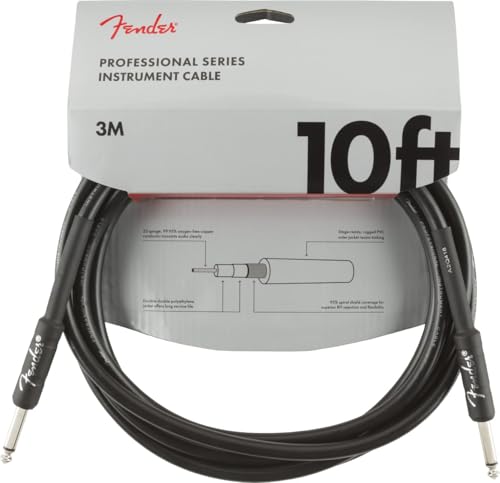
The Fender Professional Series Instrument Cable prioritizes durability and consistent signal transmission. This 10-foot guitar cable uses a robust 8mm PVC jacket and a 22-gauge conductor to keep noise to a minimum and resistance low, even during fast picking or aggressive playing. Its 95% oxygen-free spiral shielding adds flexibility and helps reduce handling noise, making it suitable for gigs and practice sessions alike.
Best for: Live performers who need a reliable stage cable that resists twisting and physical memory. The anti-kinking design helps maintain smooth playability on crowded stages or backstage areas where cables are frequently stepped on or moved. The nickel-plated connectors provide dependable connections with standard guitar rigs.
Limitations: As a standard-length 10 ft, it may feel short for large stage setups or pedalboard-to-amp configurations that require extra reach. If you frequently change pedal layouts, you might prefer a longer option.
JSAUX Guitar Cable 10 ft

The JSAUX 10-foot guitar cable emphasizes shielding and stability. It uses multiple insulator shields and high-quality oxygen-free copper to minimize static and crackle, delivering a crisper signal with less noise. The premium nylon braid adds durability and helps prevent tangling during performance or studio sessions.
Best for: Players in studios or on busy stages who need clean signal with minimal crackle, plus a durable cable that won’t tangle during quick setup. Its right-angle to straight connector design provides flexibility for pedalboards and tight rigs.
Limitations: While robust, the thicker build may be less flexible in extremely tight spaces, and some users may prefer cables with lighter shear for certain pedal layouts.
GLS Audio Instrument Cable (20 ft)
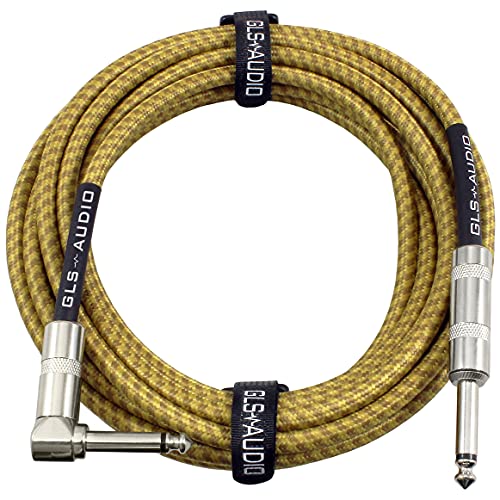
This GLS Audio 20-foot instrument cable gives long-run versatility for stages and studios. It uses high-quality oxygen-free copper and a flexible design that coils neatly, reducing the risk of kinks during stage setup or on-stage runs. The standard 1/4″ tips are reliable for most guitar and bass configurations.
Best for: Players who need extra length for stage layouts or large rooms, or for studio setups where the cable route requires more distance between instruments and amps. The length comes with the trade-off of a heavier cable that may require careful management on crowded pedalboards.
Limitations: The longer length can introduce slightly higher capacitance, potentially affecting very high-frequency harmonics for some guitar setups. If you’re chasing ultra-low noise at extreme gain, test in your signal chain.
New Bee Guitar Cable 10 ft

The New Bee 10-foot guitar cable emphasizes low noise and secure connections. With 22AWG oxygen-free copper conductors and a double-shielded PVC insulation, this cable is designed to minimize noise and maintain signal fidelity. Its right-angle to straight connectors provide versatility on stage or in a crowded home studio.
Best for: On-stage performers and studio players who need a reliable, low-noise cable that stays put in pedals and stands. The L-shaped connector helps reduce strain on the jack when mounted on stage rigs.
Limitations: The build focuses on durability and noise reduction, but some players may prefer higher-end connectors for long-term premium feel and possibly better endurance in heavy use.
AA AUDIO ACCESSORY Pro Series 10 ft

The AA AUDIO ACCESSORY Pro Series cable is designed for durability and high-end compatibility. It features gold-plated Neutrik REAN connectors, an 18 AWG 99.99% OFC conductor for lower resistance, and Kevlar reinforcement to increase toughness without compromising signal. The low-capacitance design supports clear, extended frequency response.
Best for: Players seeking long-term reliability in high-end rigs, where connector quality and conductor purity matter for consistent tone. This is a strong choice for serious practice rooms and professional setups.
Limitations: The premium build and connectors may come at a higher cost and heavier feel; if budget or ultra-flexibility is a top priority, consider alternatives with lighter construction.
Buying Guide: Key Purchase Considerations
What cable length do you need? Shorter cables are lighter and more portable, while longer cables offer flexibility for stage layouts and larger rooms. Consider your typical playing space and pedalboard distance when selecting length.
How important is shielding and noise rejection? If you record at home or play in noisy environments, extra shielding (e.g., double shielding or high-quality OFC) helps preserve your tone by reducing interference.
Connector quality matters. Gold-plated contacts or premium Neutrik connectors tend to provide longer life and more stable connections, especially for frequent plug-in/out use on stage.
Conductor gauge and material affect tone and durability. Heavier gauges (20–18 AWG) offer lower resistance and better signal integrity over longer runs, but weigh more and can be stiffer.
Build and durability features. Kevlar reinforcement, braided jackets, and anti-kink designs extend cable life in challenging environments like crowded stages and touring environments.
FAQ
- Q: Do longer cables always sound worse? A: Not necessarily. While longer cables can increase capacitance, high-quality shielding and conductors minimize adverse effects and maintain tone.
- Q: Is Kevlar reinforcement worth it? A: For frequent on-stage use, Kevlar helps prevent tears and reduces wear from foot traffic and gear movement.
- Q: Should I prioritize gold-plated connectors? A: Gold plating can improve corrosion resistance and longevity in some setups, especially with frequent connections.
- Q: How do I choose between right-angle and straight connectors? A: Right-angle connectors save space and reduce stress on guitar jacks in tight setups; straight connectors can be easier for certain pedalboard arrangements.
- Q: Can I mix brands in a signal chain? A: Yes, mixing cables is common, but maintaining consistent shielding and low-noise performance in critical segments (guitar to pedal, or pedal to amp) helps preserve signal quality.
- Q: Do all these cables fit Fender and Ernie Ball jacks? A: Most 1/4-inch mono cables use standard jacks, but verify the connector type and size if you use special jacks.