Best Solar Panels to Keep Your Car Battery Charged
Answering the common search for a reliable solar panel charger, these kits keep 12V car batteries topped up and ready, even during long periods of inactivity. They are best for infrequently used vehicles, boats, and outdoor equipment. The top picks below use built-in controllers to prevent overcharging and feature easy plug-and-use designs for everyday drivers, boat owners, and outdoor enthusiasts. The quick-reference table highlights suitability at a glance.
| Product | Best For | |
|---|---|---|
| SUNAPEX 12V Solar Battery Charge Kit | Casual car owners, boats, RVs | Built‑in controller; waterproof; versatile charging |
| Sunway Solar Car Battery Trickle Charger | Daily drivers, motorcycles, boats | Easy windshield mounting; multiple connection options |
| SUNER POWER 50W Solar Charger | RVs, boats, outdoor gear | Ultra‑Smart MPPT; three‑stage charging |
| ECO-WORTHY 10W Solar Charger | Budget-conscious users, light use | Simple, durable; built‑in blocking diode |
| SOLPERK 100W Solar Charger Kit | More demanding needs, multi-vehicle use | High efficiency MPPT; robust protection |
SUNAPEX 12V Solar Battery Charge Kit

The SUNAPEX system is designed to charge and maintain 12V rechargeable batteries. It integrates a built-in charge controller to prevent overcharging, resuming charging only when the voltage drops. It includes both a 12V cigarette lighter plug and alligator clips for direct battery connection, simplifying setup for cars, boats, and outdoor equipment. This kit supports sealed lead-acid, lithium, LiFePO4, GEL, AGM, and flooded batteries. Best for occasional users who want a low‑maintenance solution that protects against long-term discharge. Caution: ensure correct battery type is selected to maximize compatibility.
Sunway Solar Car Battery Trickle Charger
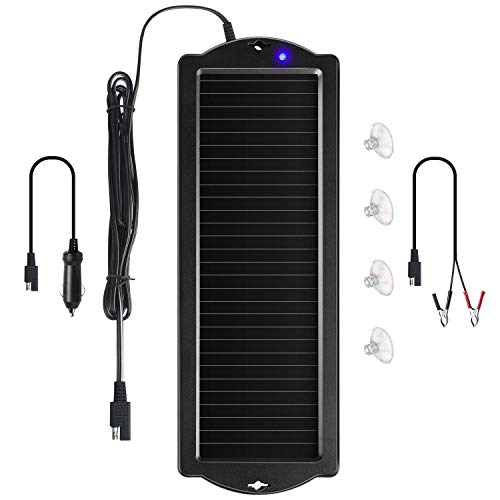
The Sunway Solar charger focuses on ease of use with windshield or dash mounting and a 12V cigarette lighter plug. It supports a range of vehicles, including cars, motorcycles, boats, and RVs. The panel delivers up to 1.8W, suitable for topping up batteries and preventing drain in all seasons. It features a rugged, durable build with UV‑resistant housing and a clear power indicator. Best for drivers who want a simple, ready-to-go solution; better for light maintenance than heavy, long-term storage. Limitation: lower charging capacity may be slower for larger batteries.
SUNER POWER 50W Solar Charger Kit

This model uses Ultra‑Smart MPPT technology to maximize power tracking, with a 3‑stage charging process (Bulk, Absorption, Float) to safely recharge and extend battery life. The kit is designed for heavy use in RVs, boats, and trailers and includes a fully automatic operation. Best for users who need higher power output and smarter charging. Caution: MPPT performance depends on adequate sunlight; expect lower results under overcast conditions.
ECO-WORTHY 10W Solar Charger
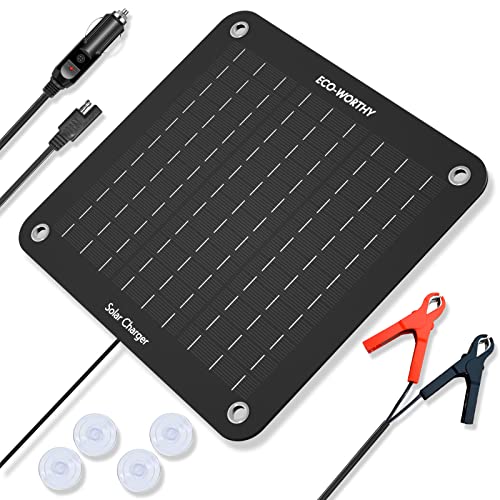
The ECO-WORTHY unit uses a 10W monocrystalline panel with a built-in blocking diode to prevent reverse charging. It supports weatherproof outdoor use and is waterproof for outdoor charging. Three key features are its simple operation, safe trickle charging, and day-to-day reliability for keeping vehicles ready after long storage. Best for budget-minded buyers who want a dependable trickle charger with uncomplicated setup. Limitation: lower wattage means slower charging for larger batteries.
SOLPERK 100W Solar Charger Kit

The SOLPERK kit uses a high-efficiency MPPT controller and a robust waterproof design to operate in challenging conditions. It is suitable for RVs, boats, caravans, and multiple vehicle setups, delivering more than 30% additional power compared to standard controllers. It includes pre-drilled holes and a plug-and-play connection. Best for multi-vehicle setups or higher power needs. Caution: installation requires attention to weatherproof sealing for long-term outdoor use.
Buying Guide
What should I look for in a car battery solar charger?
- Power output: Higher wattage charges faster but may require larger space and sturdier mounting.
- Charge controller: MPPT controllers maximize power; PWM is simpler but less efficient in variable sunlight.
- Connectivity: Look for multiple connection options (cigarette lighter, alligator clips, SAE, OBDII) for flexibility.
- Durability: Waterproof, UV‑resistant housings and robust mounting options help with outdoor use.
- Battery compatibility: Ensure compatibility with your battery type (sealed lead-acid, AGM, LiFePO4, etc.).
Which setup is best for infrequent use vs. regular charging?
- Infrequent use: A compact, weatherproof panel with a built‑in controller is typically sufficient to prevent discharge during storage.
- Regular charging: A higher wattage kit with MPPT keeps batteries topped up more reliably, especially in fluctuating weather.
Are there any practical installation tips?
- Place panels where they receive maximum sun without shading.
- Secure mounting to withstand wind and weather; seal all mounting points as needed.
- Connect to the correct battery terminals and avoid wiring that could chafe or overheat.
Maintenance and safety questions
- Do solar chargers overcharge? Reputable models include a built‑in controller to prevent overcharging.
- Can they work in cloudy conditions? Many panels still provide charging in partial sun, though output is reduced.
- Is professional installation required? Not typically, but follow manufacturer instructions for best results and safety.
FAQ
- What is the main advantage of an MPPT charger? It maximizes power extraction from the panel, improving efficiency and charging speed.
- Can I use a solar charger for any 12-volt battery? Most are compatible with common 12V battery chemistries, but verify the battery type.
- Will these panels work in winter? They can operate with lower sun, but charging will be slower; keep expectations realistic.
- Do I need tools to install? Many kits are plug-and-play; some setups may require mounting hardware and basic wiring.
- How do I know if the battery is fully charged? Look for built-in indicators, or monitor voltage with a multimeter per manufacturer guidelines.
- What happens if the panel is shaded? Output drops; MPPT panels still work but may need repositioning for maximum sun.