Best 6 Pin Audio Connector for DIY Cables and MIDI
The top 6 pin audio connectors listed here are selected for clear signal transfer, durable construction, and ease of use in DIY audio setups, keyboards, MIDI rigs, and stage gear. This guide highlights five practical options, their ideal buyers, and practical trade-offs so you can pick the right connector for your project.
Buyer types to consider:
– Musicians and studio techs needing reliable, solder-ready DIN 6-pin connections for instruments and mixers.
– DIY enthusiasts building custom cables or replacing worn connectors.
– AV setups requiring robust, panel-mount or inline DIN connectors for keyboards, amplifiers, and effect processors.
| Product | Best For | Why It Stands Out |
|---|---|---|
| MEIRIYFA DIN 6-Pin Male Plug (4 Pack) | DIY cable builders | Solid nickel-plated contacts; easy soldering; set of four for multiple cables. |
| YOTENKO DIN 6 Pin Male Plug + Female Adapter (2 pcs) | Professional connections | Includes both male and female adapters; standard DIN layout for audio devices. |
| DIYhz GX16 6 Pins Panel Aviation Connector (5 Pcs) | Panel-mount, rugged use | Aviation-style 6-pin with panel mounting; robust for chassis wiring. |
| Poyiccot DIN 6 PIN Extension Cable | Extendable rigs | DIN 6-pin male to female extension; long flexible lead for intermediate runs. |
| SHUKEFER 6 Pin DIN Connector Set (2Pcs each) | Kit for quick fixes | Two pairs of male/female soldering connectors; ready for immediate DIY swaps. |
MEIRIYFA DIN 6-Pin Male Plug Connector (4 Pack)

Overview: This DIN 6-pin male plug comes as a 4-pack with a plastic handle and a metal inner sleeve. It is designed for soldering to cables, enabling customized cords or replacement of existing connectors on keyboards or DIY audio projects.
Key features: Black plastic case; copper-nickel plated contacts; diameter about 13 mm; includes tabs to secure the inner sleeve during installation. The nickel-plated solder contacts help maintain signal integrity by reducing distortion and signal loss.
Best for: Builders who want multiple ready-to-solder connectors for custom mic cables, instrument cables, or DIY MIDI wires. It is especially suitable for hands-on projects that require precise, soldered terminations.
Limitations: Data notes emphasize soldering needs and terminations; no plug-and-play compatibility claim beyond DIY assembly. Not ideal for quick replacements on finished cables without soldering.
YOTENKO DIN 6 Pin Male Plug + Female Adapter Recessed Socket Set

Overview: This set includes two pieces: a standard insulated 6-pin DIN male connector with molded black covers and a matching female adapter. It targets professional audio and video hardware and microphone connections.
Best for: Users seeking a standard DIN 6-pin connection pair for microphones, amplifiers, or audio devices in professional environments. It is a straightforward option for replacing damaged connectors on existing gear.
Why selected: The product clearly addresses standard DIN 6-pin usage, with emphasis on professional audio compatibility and reliable mounting for fixed installations.
Caution: It is described as a normal full-size 6-pin DIN connector; it is not a mini-DIN variant, so compatibility with mini-DIN devices would be incorrect.
DIYhz GX16 6 Pins Panel Aviation Connector

Overview: This is an aviation-style 6-pin connector designed for panel mounting. It is built for durability in professional or rugged environments and is suitable for wiring in control panels, audio rigs, and equipment housings.
Best for: Projects requiring a panel-mounted, metal-bodied DIN alternative with robust construction. It suits situations where the connector must sit flush on a panel or chassis and endure environmental stress.
Why selected: The GX16 model is widely recognized for its mechanical strength and compatibility with 6-pin configurations, offering a strong option when panel mounting is needed.
Caution: This option is more mechanical and installation-focused; it may be overkill for simple inline audio leads where a traditional DIN plug suffices.
Poyiccot DIN 6 PIN Extension Cable

Overview: A long DIN 6-pin extension cable with male-to-female ends, intended to connect professional audio gear, microphones, amplifiers, and related components. It is described as a standard 6-pin DIN extension suitable for digital audio devices.
Best for: Users who need extra reach between devices, such as studio racks, stage setups, or fixed installations where devices are spaced apart.
Why selected: The extension design offers flexibility, making it easier to route cables in setups with limited space or tight cable runs.
Limitation: As with most extension cables, maintain proper strain relief to avoid connector fatigue at the ends over time.
SHUKEFER 6 Pin DIN Connector Set
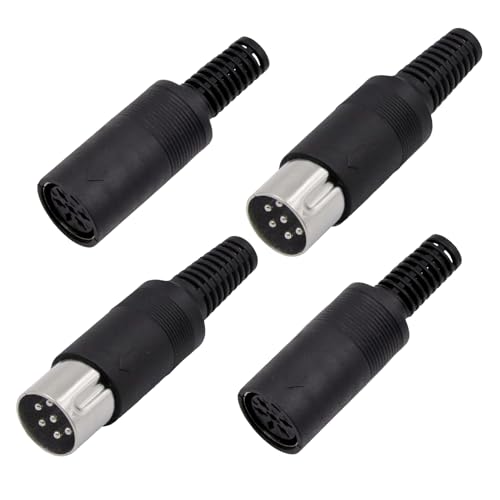
Overview: This set provides two male and two female 6-pin DIN soldering connectors. It is designed for DIY audio and video applications, including keyboards and MIDI cables, with zinc alloy and PE insulation.
Best for: DIY projects needing a ready-to-solder kit with both genders, allowing quick fabrications or replacements in custom cables or intermediate harnesses.
Why selected: The kit format accelerates assembly for fixed or semi-permanent installations, and the zinc alloy construction helps durability in soldered connections.
Caution: Soldering quality will impact signal integrity; ensure clean joints and secure insulation to prevent short circuits.
Buying Guide: Choosing The Right 6 Pin DIN Connector
- Do you need inline connectors or panel-m-mounted units? Inline plugs are common for cables, while panel-mount options work when a device or chassis requires a fixed interface.
- Electrical Specs: Check current and voltage ratings. For most audio and line-level gear, standard DIN 6-pin designs are sufficient, but higher-demand environments may require rugged aviation or metal-bodied variants.
- Material And Durability: Nickel-plated contacts and metal housings offer better wear resistance and signal stability, especially in live or studio environments.
- Installation Type: Soldering vs. quick-connect. Soldering provides robust terminations but requires skill; consider kits that simplify staking or crimping if you prefer faster builds.
- Compatibility: Confirm the device’s DIN pinout and connector type (full-size DIN vs. mini-DIN). Some devices only support specific 6-pin configurations.
- Package And Quantity: If you regularly replace cables, choose multi-packs or kits to ensure you have spares on hand.
- For extension cables, ensure the length aligns with your layout and that the jacket material provides adequate flexibility without sacrificing shielding.
Frequently Asked Questions
- What is a 6-pin DIN connector typically used for? It is commonly used for audio connections, MIDI interfaces, and some professional audio gear where a compact, shielded 6-pin interface is needed.
- Are 6-pin DIN connectors backward compatible with other DIN formats? No. 6-pin DIN connectors have a specific pin arrangement and should only be used with compatible devices to ensure proper signaling.
- Is soldering necessary for DIN 6-pin connectors? Not always; some kits offer crimp or plug-and-socket options, but soldering often provides the most durable termination for long-term use.
- Which 6-pin DIN connector is best for panel mounting? Aviation-style GX16 and similar panel-mount designs are best suited to fixed installations where the connector sits flush on a panel.
- Do these connectors affect audio quality? High-quality nickel-plated contacts and proper terminations help minimize signal loss and distortion; poor soldering or loose connections can degrade sound.
- How many connectors should I buy? Buy enough for the number of cables you plan to assemble, plus a few spares for future replacements.