Best 2 Inch 8 Ohm Speakers for DIY Audio Projects
Answering the common search for compact, reliable 2 inch 8 ohm speakers, this guide highlights practical options for DIY audio, Arduino projects, and small sound systems. These compact full-range drivers are best for hobbyists seeking easy replacements, hobbyist builds, or minimalist speaker setups. The top picks below focus on 8 ohm impedance, around 2 inches in diameter, and documented suitability for DIY use. The buyer personas best served include hobbyists on a budget, Arduino or microcontroller enthusiasts, and compact home audio-visual builders seeking straightforward integration and clear sound.
Overview: the following table compares five 2-inch, 8 ohm speakers commonly used in DIY kits and small systems. It helps identify best uses, power handling, and size considerations at a glance.
| Product | Impedance | Power | Size (diameter) | Best For |
|---|---|---|---|---|
| JRGKJCP Small Speaker | 8 Ohm | 2 W | 2 inch | Compact DIY mini speakers, home audio visuals |
| KIBBEH 2 Inch 8 Ohm | 8 Ohm | 3 W | 2 inch | Replacement for DIY kits, Arduino projects |
| ALMOCN 2″ 8Ohm 10W | 8 Ohm | 10 W | 2 inch | Higher-output small speakers, DIY stereo builds |
| DWEII 2″ 8Ohm 3W | 8 Ohm | 3 W | 2 inch | Educational DIY kits, hobby soldering projects |
| Cylewet 2-Inch 8Ohm 5W | 8 Ohm | 5 W | 2 inch | Higher-output compact systems, Arduino builds |
JRGKJCP Small 2 Inch 8Ohm Speaker

Features: 8 Ohm / 2W, diameter 50.7 mm, 20 cm terminal cable, full-range audio, suitable for DIY mini speakers and home audio-visual equipment. Best for small, budget-friendly DIY projects or hobbyist kits where space is tight. The product’s compact size and straightforward wiring benefit beginners and those building portable mini-systems. Limitation: lower power handling may limit bass performance in larger enclosures.
KIBBEH 2 Inch 8 Ohm 3W Pair
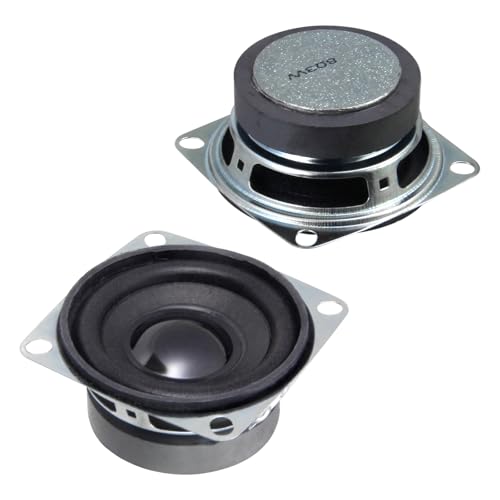
Features: Two 2 inch Full Range Speakers, 8 Ohm impedance, 3 W power. Best for Arduino-based or small DIY audio projects needing a pair for stereo or bridge configurations. Choose this if you want a bit more output for modestly sized enclosures. Caution: impedance and power specs assume typical operation; behavior can vary with enclosure design.
ALMOCN 2PCS 2″ 8Ohm 10W Kit

Features: 2 pcs, 2″ diameter, 8 Ohm, rated 10W. Best for higher-output compact builds or small stereo projects where louder playback is desired in a small footprint. Limitation: consumer data lists 2″ size but tolerance in diameter may affect fit in very tight enclosures.
DWEII 2 Inch 8Ohm 3W
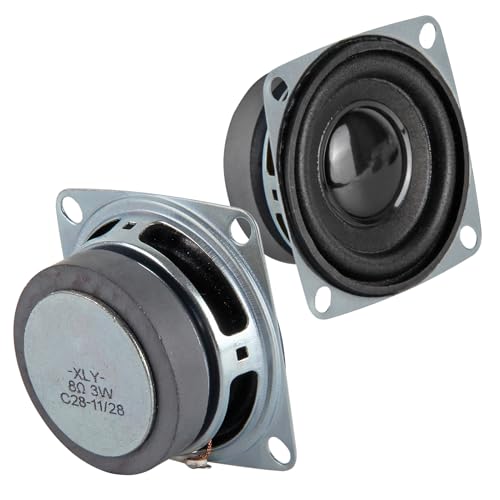
Features: 8 Ohm, 3W, 2 inch Full Range. Best for beginners and hobbyists looking for reliable, compact drivers for Arduino or small home audio projects. Use this when a balance between size and output is needed. Caution: smaller drivers may require careful enclosure design to maximize bass response.
Cylewet 4Pcs 2Inch 8Ohm 5W

Features: 4 pieces, 2 inch, 8 Ohm, 5W. Best for multi-driver DIY compact systems or classroom kits requiring multiple identical drivers. Choose this when building a small multi-speaker array in a compact chassis. Limitation: higher quantity may require more wiring and enclosure planning.
Buying Guide: 2-Inch 8 Ohm Speaker Essentials
What matters most when choosing a 2 inch 8 ohm speaker. Impedance (8 Ohm) affects compatibility with basic amplifiers and microcontroller projects. Power handling (2–10 W) indicates how much loudness and dynamic range you can expect before distortion. Size and mounting: ensure the diameter fits your enclosure and mounting method. Sound quality: consider sensitivity and frequency range for your intended use, such as voice clarity in small speakers or light music playback.
Do I need 2W, 3W, or 5W per driver?
For small DIY speakers or Arduino projects, 2–3W is typically sufficient. If you plan to push higher volumes or create stereo pairs in a modest enclosure, consider 5–10W drivers to avoid clipping. Always match the amplifier’s output to the speaker’s power rating to avoid damage.
Should I pick a pair or a single driver?
Pairs are preferred for stereo sound or when symmetry matters in a small system. A single driver can be adequate for ultracompact projects or when combined with a separate tweeter for crossovers in larger mini-systems.
What enclosure considerations matter?
Enclosure size and material influence bass response and overall clarity. Smaller enclosures emphasize higher pitch clarity and midrange; larger enclosures offer better bass extension. Ensure proper mounting depth and screw placements for each driver.
Are these suitable for Arduino or DIY kits?
Yes. Many 2 inch 8 ohm drivers are explicitly marketed for Arduino and DIY speaker kits. They provide straightforward wiring, compact form, and compatibility with common microcontroller audio projects.
What about sensitivity and frequency range?
Sensitivity indicates the loudness at a given input; higher sensitivity means louder output with the same power. Frequency range on these small drivers is typically centered on midrange, with limited deep bass. Users seeking strong bass may need larger drivers or tuned enclosures.
How do I avoid common issues?
Ensure correct polarity when wiring, avoid overpowering amps beyond the driver’s rating, and select enclosures sized to optimize performance. Test the system at low levels first to verify wiring integrity and enclosure resonance before pushing higher volumes.
FAQ
- Q: Are 2-inch speakers suitable for home audio?
A: They work well in compact setups or as part of a DIY project, but expect limited bass compared with larger drivers. - Q: Can I use these with an Arduino?
A: Yes, they’re commonly used in Arduino-based audio projects and kits. - Q: Do these require specialized amplifiers?
A: Basic audio amplifiers matching 8 Ohm impedance and appropriate power will work; no specialized equipment required for simple builds. - Q: Is impedance 8 Ohm compatible with most microcontroller boards?
A: Yes, 8 Ohm is widely compatible with standard hobby amplifiers and small audio boards. - Q: What if I need more bass?
A: Consider larger drivers or multiple drivers in a tuned enclosure to enhance low-frequency response.