Best Wireless Home Entertainment Speakers for Any Living Space
Answer: This guide highlights five top wireless home entertainment speaker systems that balance sound quality, ease of setup, and versatile connectivity. The best-for buyers include home theater lovers, small-to-mid rooms, and multi-purpose media setups. A concise comparison table follows the introduction to help you scan key specs at a glance.
| Product | Channel Count | Key Benefit |
|---|---|---|
| LG S40TR 4.1 | 4.1 | Surround sound with wireless rear speakers and subwoofer |
| ULTIMEA Poseidon M60 | 5.1 with built-in drivers | Dolby Atmos feel in a compact bar |
| Saiyin 5.0 System | 5.0 | Flexible placement with strong center clarity |
| Bose Surround System | Varies with setup | Premium compact design and easy wireless integration |
| Roku Wireless Speakers | 2 | Simple upgrade for Roku TV audio |
LG S40TR 4.1 Channel Home Theater System

The LG S40TR combines a 4.1 channel setup with wireless rear speakers and a wireless subwoofer for a compact but expansive home theater experience. It supports Dolby Digital and DTS Digital formats, delivering enhanced sound across TV shows, movies, and music. Dolby Audio enhances detail in dialogues and effects, ensuring a cinematic feel even in smaller rooms. The wireless rear speakers simplify placement and reduce clutter, making it ideal for living rooms, bedrooms, and apartments where wiring flexibility matters.
Best for: Small-to-medium living rooms where wireless rear channels are a priority and space is limited. The main bar handles most front-stage needs while the wireless sub and rears add depth without a large footprint.
Caution: Rear-speaker performance depends on room layout; in very large spaces, you may miss some surround depth unless you place the rear drivers optimally.
ULTIMEA Poseidon M60 5.1 Channel Bar

The Poseidon M60 provides a simplified 5.1 channel Dolby Atmos-capable experience with five built-in drivers and a dedicated wired subwoofer. It emphasizes low-latency DSP for a theater-like feel and quick, precise dialogue thanks to VoiceMX. With a 300W output range and a broad frequency response, it balances punchy bass with clear mids and highs. The setup is quick, aiming for rooms where you want immersive sound without wiring rear speakers in every corner.
Best for: Home theater enthusiasts who want a true surround impression from a single unit and minimal additional components. It suits medium-to-large living rooms where a compact bar can still deliver broad soundstage.
Caution: While it recreates surround effects well, it relies on built-in drivers rather than true rear speakers, which may limit deep rear ambience in very large rooms.
Saiyin 5.0 Home Theater System

The Saiyin 5.0 system features four mid-sized front players and a dedicated center speaker, complemented by a flexible arrangement that supports shelving, stands, or wall-mounts. It emphasizes enhanced dialogue clarity through a central channel and modular placement for room-optimized sound. The system’s flexible setup makes it suitable for rooms where furniture and seating layouts change, such as living rooms with modular seating or multi-use spaces.
Best for: Viewers who prioritize dialogue clarity and flexible placement. Suitable for rooms where furniture reconfiguration is common, or where a traditional multichannel arrangement is desired without complex wiring.
Caution: The system relies on passive components and may require an external amplifier in some setups; verify compatibility with existing gear if you plan to upgrade gradually.
Bose Surround Sound System

Bose offers a compact surround option focused on minimal clutter and streamlined setup. The package is designed to connect wirelessly to compatible Bose devices and a soundbar, providing an immersive listening experience with a small footprint. The emphasis on compact design makes it attractive for spaces where large speakers are impractical, while still delivering room-filling sound.
Best for: Users who want premium audio in a smaller cabinet, with easy wireless integration into existing Bose setups. It excels in apartments or bedrooms where space is at a premium and quick, clean installation matters.
Caution: As with compact designs, you may lose some sonic impact in very large rooms; pairing with a larger system may be necessary for truly expansive listening areas.
Roku Wireless Speakers (Pair)
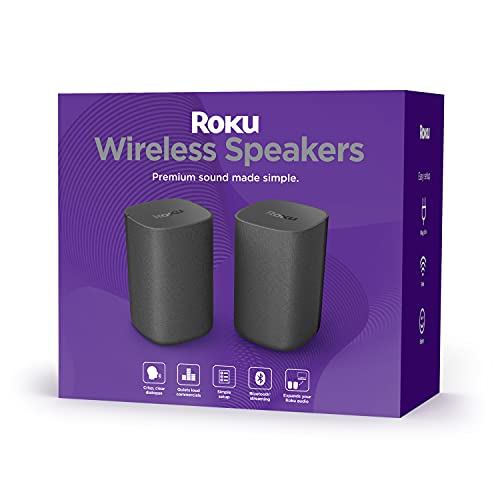
The Roku Wireless Speakers pair gently with Roku TVs and streams, delivering improved sound without a separate receiver. They synchronize with the TV for lip-sync accuracy, and their straightforward setup is ideal for budget-conscious buyers who already use Roku hardware. These are best used as a simple upgrade for TV audio rather than a full home theater system.
Best for: Roku ecosystem users seeking an easy, no-fuss upgrade to TV audio in smaller living rooms or bedrooms. They’re a good fit for those who want a quick, wireless enhancement without complex setup.
Caution: They are not a full surround system; consider additional speakers if you want immersive, multi-channel sound beyond TV dialogue and basic effects.
Buying Guide: Key Considerations When Choosing Wireless Home Entertainment Speakers
- Room size and seating layout: Large rooms benefit from true surround configurations or larger bar systems, while small rooms can work well with compact bars or a pair of bookshelf speakers.
- Channel strategy: 2.1 or 5.1 setups offer different levels of immersion. Wireless rear speakers add depth but may require space planning for optimal placement.
- Dialogue clarity: If watching lots of dialogue-heavy content, prioritize systems with a strong center channel or voice-enhancement tech such as DSP-based dialogue clarity features.
- Connectivity: Ensure compatibility with your TV or streaming devices (HDMI eARC, optical, Bluetooth, or line-in). Consider whether wireless components require a shared wireless network or a dedicated receiver.
- Power and placement: Passive speakers require an amplifier or receiver; built-in amplifiers simplify wiring. Consider stand- or wall-mount options for flexible placement.
- Latency and lip-sync: Look for low-latency DSP or fast processing to minimize lip-sync issues, especially for gaming or streaming video.
- Expansion potential: Some systems allow adding more speakers over time; plan for future upgrades if you want to scale.
Frequently Asked Questions
- What’s the main benefit of a wireless home theater system?
– Wireless components reduce cable clutter and simplify placement, while still delivering immersive sound for movies and music. - Do I need a separate subwoofer with these systems?
– Systems labeled 4.1 or 5.1 typically include a subwoofer or provide a path to add one; subwoofers add depth to bass frequencies for a more cinematic feel. - Is Dolby Atmos supported by all these products?
– Not all listed products support true Dolby Atmos; some provide Atmos-like surround through multi-driver configurations. Check product specs for Atmos support. - Can I use these with a non-smart TV?
– Yes. Many offer HDMI ARC, optical, or AUX inputs that work with standard TVs, regardless of smart features. - Are wireless rear speakers necessary for a good surround sound?
– They enhance immersion, but a strong bar with well-placed drivers can still deliver compelling surround effects in smaller rooms. - How important is room acoustics?
– Room layout and furniture strongly influence sound; acoustic treatment and speaker placement can significantly improve perceived clarity and depth.