Best High End Audio Interface for Studio-Quality Recording
Whether you’re a guitarist, vocalist, podcaster, or producer, a high-end audio interface delivers pristine sound, low latency, and reliable performance. This guide highlights five top-rated interfaces that balance professional features with user-friendly design. Best for: serious home studios, content creators, and small-batch recording setups seeking studio-grade results.
Quick reference table of chosen products:
| Product | Brand | Key Strength | Best For |
|---|---|---|---|
| Scarlett Solo 4th Gen | Focusrite | 120dB dynamic range; Air mode for vocal/guitar presence | Songwriters, solo artists |
| Scarlett 2i2 4th Gen | Focusrite | Auto Gain and Clip Safe; two combo inputs | Two-in recording, podcasting |
| Fender Quantum LT 4 | Fender | Dual MAX-HD preamps; robust USB-C | Growing creators needing versatility |
| Behringer U-PHORIA UMC404HD | Behringer | 4×4 I/O; Midas mic preamps | Budget-conscious multi-track setups |
| M-AUDIO M-Track Duo | M-AUDIO | Dual XLR/Line/DI inputs; 48kHz recording | Streaming, podcasting, quick hits |
Focusrite Scarlett Solo 4th Gen

The Focusrite Scarlett Solo 4th Gen is designed for one-user setups seeking studio quality. It features a single mic preamp and a separate instrument input, delivering high fidelity through 120dB dynamic range converters. Air mode adds brightness for acoustic recordings, while the interface’s converters align with professional standards. Best for: solo performers, vocalists, and guitarists who want a compact, top-tier solution that’s easy to transport and use in varied environments. Limitation: only one mic input, which may require an additional preamp for multi-person recording.
Focusrite Scarlett 2i2 4th Gen
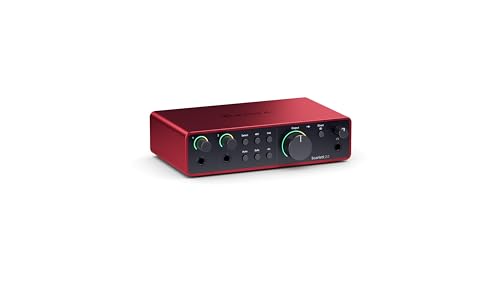
The Scarlett 2i2 4th Gen offers two mic/line inputs, Auto Gain, and Clip Safe protection to prevent distortion. With a 120dB dynamic range and the same premium Focusrite preamps used in flagship models, this interface suits small bands, podcasts, and streaming setups. Best for: small-duo recording, two-person podcasts, and writers who need a reliable dual-input device. Limitation: lacks a dedicated software bundle tailored to specialized workflows; requires separate DAW to maximize features.
Fender Quantum LT 4
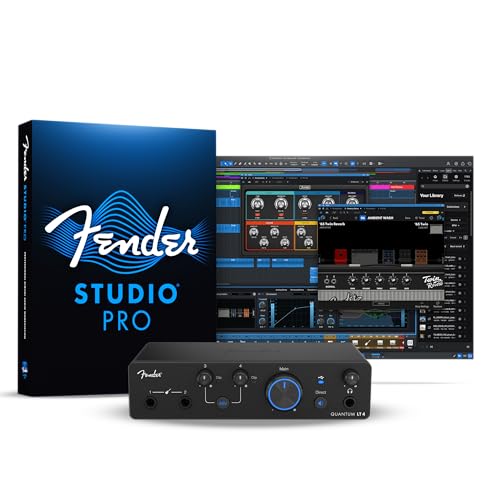
The Fender Quantum LT 4 offers a 4×2 USB-C interface with dual MAX-HD mic preamps and dual instrument inputs. It includes low-latency drivers and access to Fender Studio software for amp models and effects, making it a solid option for guitar-bass focused studios. Best for: guitarists and bass players who want integrated tones and expandability via the Fender Studio app. Limitation: more features oriented toward Fender software; users seeking pure, neutral mic tone may prefer alternatives with flatter monitoring curves.
Behringer U-PHORIA UMC404HD

The Behringer UMC404HD provides a four-input configuration with Midas preamps, offering flexible routing for multi-microphone setups at a budget-friendly price. This interface is suitable for small bands, home studios, and hobbyists who need multiple inputs without breaking the bank. Best for: multi-mic recordings on a budget, home studios, and entry-level professionals. Limitation: build quality and preamp character may be less refined than premium brands; occasional driver quirks can occur with some systems.
M-AUDIO M-Track Duo

The M-AUDIO M-Track Duo focuses on compact, reliable 2-input recording with a software suite included. It supports 48kHz resolution and provides easy monitoring with a headphone out and stereo outputs. Best for: podcasters, streamers, and musicians who want straightforward setup and solid performance without extra frills. Limitation: 48kHz max sample rate may be less suitable for ultra-high-fidelity projects compared to higher-end interfaces.
Buying Guide
- What do you primarily record? If vocals or single-instrument work is your focus, a Solo or 2i2 configuration may be ideal. For multiple mics or expanding sessions, look at 4×4 interfaces.
- What level of preamps and converters do you need? Interfaces from Focusrite, Fender, and Behringer offer different headroom and noise characteristics. Higher dynamic range generally yields cleaner recordings.
- Connectivity and future-proofing: USB-C interfaces like the Fender Quantum LT 4 provide modern connections and better driver support on newer machines. Consider whether you want loopback or dedicated monitoring modes for live streaming.
- Software and workflow: Some interfaces come with robust software bundles or amp/modeling suites. If you rely on specific DAWs, ensure compatibility and bundled plugins meet your needs.
- Portability vs. studio rigidity: If you travel or perform live, smaller units with simple setup tend to be preferable. If your space is fixed, a larger unit with more inputs may be better.
FAQ
- What is the difference between a 2-in and a 4-in interface?
– A 2-in interface supports two simultaneous inputs (commonly mic and instrument). A 4-in adds more input channels for multi-mic or multi-instrument projects, increasing recording flexibility. - Do higher price always mean better sound?
– Not always. It often correlates with headroom, preamp quality, dynamic range, and build quality. Choose based on your needs and workflow, not price alone. - Is USB-C better than USB-A for audio interfaces?
– USB-C supports modern devices and typically provides stable power and faster data transfer. Compatibility with your computer is the key constraint. - Should I buy an interface with built-in software or rely on my DAW plugins?
– Built-in software can quick-start workflows and improve integration, but a DAW with high-quality plugins often meets broader needs. Choose based on your preferred setup. - What is “Air mode” in Focusrite Scarlett interfaces?
– Air mode emulates an Esa-tube preamp characteristic, adding brightness and presence to recordings, especially useful for vocals and acoustic guitars.