Best 0.75 to 1.5 Cubic Foot Subwoofer Enclosures for Car Audio Enthusiasts
Answering the need for compact, efficient subwoofer boxes, this guide highlights enclosures near 0.75–1.5 cubic feet. These boxes are suited for smaller cars or compact trunks, for buyers seeking tighter bass without overbearing space requirements. The selections emphasize sealed versus vented designs, ease of installation, and durable construction to support steady performance. Best for DIY car audio upgrades, budget-conscious installers, and enthusiasts seeking clear, punchy low-end bass with straightforward setup.
| Product | Best For | Notes |
|---|---|---|
| QPower Pack of 2 Single 10-Inch Sealed Subwoofer Boxes | Sealed, compact, dual-box setups | 0.9 cu ft per box; easy install |
| Rockville RHB12 12″ Sealed Hatchback Sub Enclosure | Slim hatchbacks needing tight bass | 0.92 cu ft; compact design |
| QPower Single 8-Inch Vented Chamber Subwoofer Box | Best for space-limited bass lovers | 1.0 cu ft; side-ported |
| QPower QBomb Single 12-Inch Vented Subwoofer Box | Deeper bass in larger pockets | 1.4 cu ft; bedliner finish |
| QPower QBomb Single 10-Inch Vented Subwoofer Box | Balanced, deeper punch | 1.4 cu ft; strong MDF |
QPower Pack of 2 Single 10-Inch Sealed Subwoofer Boxes

Type: Sealed enclosure for 10-inch subs. Construction uses solid 5/8-inch MDF for rigidity. Each box yields 0.9 cubic feet of internal airspace, which supports tight, accurate bass response. The sealed design minimizes port noise and enhances punch in compact spaces.
Who it’s best for: DIY installers seeking a symmetrical dual-sub setup without custom fabrication. Ideal for small cars or tight trunks where space is at a premium.
Why selected: The two-box configuration simplifies balanced stereo bass and reduces uneven loading that can occur with mismatched enclosures. Its compact dimensions support versatile placement choices.
Caution: Sealed boxes rely on proper subwoofer compatibility; ensure your sub matches a 0.9 cu ft enclosure for best results. Avoid if you require high-output, deep bass from a single enclosure in a larger vehicle.
QPower 15 Inch Heavy Duty Single Vented Carpet Covered Durable Car Audio Extra Large Vehicle Subwoofer Enclosure Woofer Box

Type: Vented enclosure designed for a single 15-inch sub, with a large internal airspace of 5.3 cubic feet for expansive bass. Built from heavy-duty MDF and finished with charcoal carpeting; front panel is 1 inch thick MDF, body is 3/4 inch MDF.
Who it’s best for: Buyers who want very deep bass from a larger woofer with substantial airspace and durable construction in a vehicle that can accommodate bigger dimensions.
Why selected: It demonstrates how vented designs can dramatically improve low-frequency output when space is available and a larger driver is planned.
Caution: Not suitable for small cars or limited trunk spaces due to its large size and weight. Ensure mounting clearance before purchase.
QPower Single 8-Inch Vented Chamber Subwoofer Box
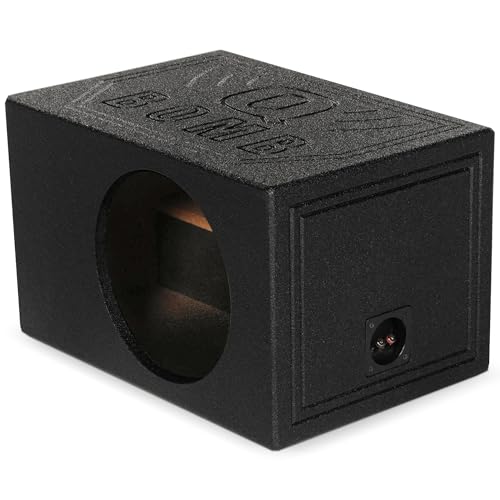
Type: Side-ported enclosure with 1.0 cubic feet of airspace. Vented design tuned around 34 Hz for deep, accurate bass. Exterior features a rugged bed liner coating to resist scratches and moisture, while the enclosure uses 3/4-inch MDF for solid construction.
Who it’s best for: Drivers wanting deeper bass from a compact 8-inch woofer, especially in tighter trunks or under seats where space is limited.
Why selected: The 1.0 cu ft airspace offers a good balance of size and bass extension, with a durable finish ideal for vehicle environments.
Caution: Side-ported designs can be sensitive to sub alignment; verify sub compatibility and enclosure dimensions before mounting.
QPower QBomb Single 12-Inch Vented Subwoofer Box

Type: Vented chamber enclosure for a 12-inch sub; provides 1.4 cubic feet of airspace for fuller bass output. Features high-quality MDF construction with a durable finish. Designed to maximize bass output when paired with compatible subs and amps.
Who it’s best for: Those who want deeper bass from a 12-inch driver in a relatively compact footprint while maintaining solid build quality.
Why selected: Combines larger airspace with a vented design to deliver noticeable low-frequency gain without overly occupying vehicle space.
Caution: 1.4 cu ft is still mid-range; not the best choice for very small vehicles where space is extremely constrained.
Q Power QBomb Single 10-Inch Vented Subwoofer Box

Type: Vented chamber for a 10-inch sub, delivering 1.4 cubic feet of airspace. Features a bedliner black finish for durability and a design that supports deep, amplified bass without excessive enclosure size.
Who it’s best for: Buyers seeking a compact yet powerful vented enclosure for 10-inch drivers, suitable for smaller vehicles with modest installation space.
Why selected: The 1.4 cu ft vented design offers strong bass output while staying within a compact footprint. It also sports a rugged exterior suitable for daily use.
Caution: Make sure the enclosure aligns with your sub’s mounting depth and your vehicle’s space constraints to avoid fit issues.
Buying Guide: Key Purchase Considerations
What type of enclosure should you choose?
- Sealed boxes deliver tight, accurate bass and are typically easier for compact spaces. They’re a good default for near-field listening and small vehicles.
- Vented (ported) boxes extend low-end output and are better for overall bass depth but require more space and precise tuning.
How much airspace is ideal?
- Airspace directly impacts low-frequency extension. A 0.9–1.4 cu ft box is common for 8–12 inch drivers and balances space with bass depth. Larger airspace supports deeper bass but needs more room.
What about mounting space and vehicle compatibility?
- Measure trunk, under-seat, or hatchback dimensions, plus subwoofer depth. Ensure the enclosure fits without impeding doors or seat movement and that it can be securely mounted.
- Check voltage and amp compatibility with your current car audio system to avoid overpowering the subwoofer or damaging equipment.
Material and build quality matter.
- Most boxes use MDF; 3/4″ to 5/8″ thicknesses balance weight and rigidity. A bedliner or carpet finish helps protect the enclosure from wear and moisture.
- Look for solid internal bracing and sealed joints to minimize resonance and ensure consistent bass response.
Which enclosure design should I pick for my sub?
- If you value precision and space efficiency, start with a sealed box in the 0.75–1.0 cu ft range for 8–10 inch drivers.
- If you want deeper bass from a larger driver and have space, consider vented boxes with 1.0–1.4 cu ft airspace.
Frequently Asked Questions
- What is the benefit of a sealed subwoofer box?
It provides tighter, more accurate bass with less space and fewer tuning variables, which is helpful in smaller vehicles. - How do I know what size enclosure to buy for my sub?
Check the subwoofer’s recommended enclosure volume, mounting depth, and your available space. Match the airspace to the driver’s requirements. - Are vented enclosures louder than sealed ones?
Generally yes for deep bass, but they require more space and proper tuning to avoid boomy or muddy lows. - Can I mix enclosure types in a single system?
Yes, but ensure impedance, phase, and power distribution are managed so outputs remain balanced across channels. - Is MDF construction durable for car use?
Yes, MDF is common and durable when properly braced. Add finishing or carpet to protect against wear and moisture. - What installation considerations matter most?
Secure mounting to prevent movement, proper wiring with terminal cups, and avoiding interference with seat tracks or trunk latching mechanisms.