Best Headphone Adapters for Guitar Amps: Clear, Low-Loss 1/4″ to 3.5mm Converters
Looking for a reliable headphone adapter to plug standard 3.5mm headphones into a 1/4″ guitar amp jack? This guide highlights adapters that maximize audio fidelity, durability, and ease of use for players, producers, and stage technicians. The top picks are best for practice setups, studio monitoring, and live rigs where a secure fit and minimal signal loss matter most. Below are five strong options with practical insights on who benefits most from each.
Summary table of chosen products:
| Product | Best For | Key Benefit |
|---|---|---|
| VCE 6.35mm to 3.5mm Adapter (2 Pack) | Home studios and on-the-go players | Gold-plated for low signal loss and durable brass housing |
| QianLink 2 Pack 6.35mm to 3.5mm Adapter | Multi-instrument setups | Wide compatibility across keyboards, amps, and speakers |
| MOBOREST 3.5mm to 1/4″ Adapter (2-Pack) | Budget-conscious performers | Pure copper construction and long service life |
| SOLMIMI 1/4″ to 3.5mm Adapter (4 ft) | Stage and studio monitors | Gold-plated connectors with oxygen-free copper for fidelity |
| VCELINK 6.35mm to 3.5mm Adapter (2 Pack) | Studio and live sound | Low impedance, crystal-clear sound with brass housing |
VCE 6.35mm to 3.5mm Adapter (2 Pack)

Reference features: 1/4″ to 3.5mm stereo connection, 24K gold-plated connectors for minimal signal loss, solid brass housing with a precision TRS interface and knurled grip for easy use. Best for players who need a reliable, durable adapter with low noise in compact spaces. Best for guitarists and hobbyists who value longevity and corrosion resistance. Caution: some users may prefer a slimmer profile in crowded pedalboards or behind large amps.
QianLink 2 Pack 6.35mm to 3.5mm Adapter

Reference features: 24K gold-plated connectors for corrosion resistance and minimal signal loss, solid brass copper build, and broad compatibility with Yamaha, Casio, Roland keyboards, guitars, home theater systems, and mixers. Best for multi-instrument setups or users who need a versatile solution across many devices. Caution: the connector fit can vary slightly with tightly plated jacks; ensure proper insertion for best contact.
MOBOREST 3.5mm to 1/4″ Adapter (2-Pack)
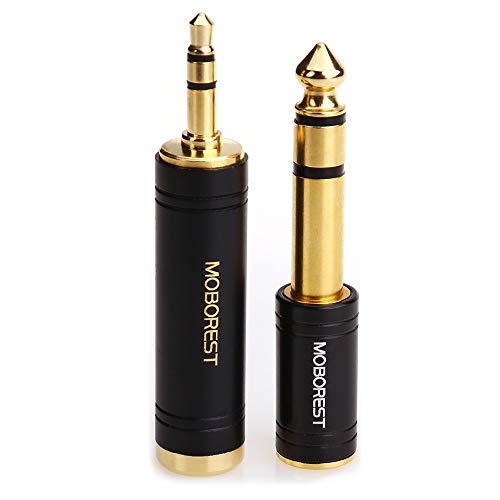
Reference features: Pure copper construction, robust design aimed at longer service life, and a simple plug-and-play 360-degree grip. Best for budget-minded players who need reliable performance without extra bulk. Caution: not all devices require copper-only construction; check device input impedance and cable diameter to ensure fit.
SOLMIMI 1/4 to 3.5mm Headphone Adapter (4 Ft)
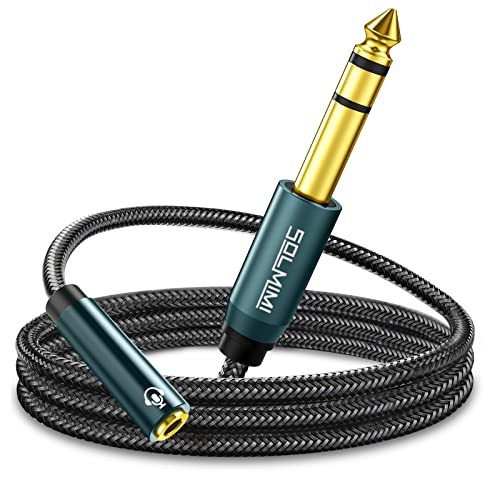
Reference features: TRS 6.35mm male to 3.5mm female, oxygen-free copper core for high-fidelity sound, 24K gold-plated connectors to minimize noise, and a durable aluminum shell. Best for musicians who need an extension length for stage or studio monitoring. Caution: longer cables can introduce extra impedance; keep runs short when possible for cleanest signal.
VCELINK 6.35mm to 3.5mm Adapter (2 Pack)

Reference features: Gold-plated brass housing, ultra-low impedance (<0.5Ω), wide frequency response (20Hz-20kHz), and compatibility with 3.5mm stereo headphones, guitars, keyboards, amps, and mixers. Best for those who demand studio-grade clarity in a small, robust adapter. Caution: TRS only; mono inputs can cause issues if used with incompatible gear.
IIISOGNO 3.5mm to 1/4″ TRS Adapter Set

Reference features: Includes 3.5mm female to 1/4″ male and 3.5mm male to 1/4″ female adapters, TRS design for balanced stereo, compact and portable with storage box. Best for musicians needing a small, flexible kit for various devices. Caution: may not fit devices using TRRS or non-standard jack configurations.
Nicholaus 3-Pack 6.35mm to 3.5mm Adapter

Reference features: Upgraded 3.5mm female to 6.35mm male design, thickened gold plating for corrosion resistance, and stable, high-fidelity audio reproduction. Best for users who want a robust multi-pack for touring or studio needs. Caution: 3.5mm female jack may not work with TRRS plugs, limiting some headset configurations.
Buying Guide
Key purchase considerations for headphone adapters used with guitar amps include compatibility, durability, and signal integrity. This section covers practical questions buyers ask and how to evaluate options.
What should I check for compatibility?
Confirm the device outputs (6.35mm/1/4″ plug) and the headphone input (3.5mm/1/8″ jack). Ensure the adapter supports TRS stereo connections if you plan to maintain proper stereo audio. Note that some adapters are not built for mono inputs or TRRS configurations, which can affect one-sided audio or microphone use.
How important is gold plating and conductor material?
Gold-plated contacts reduce corrosion and ensure consistent conductivity, especially with frequent plugging and unplugging. Copper and brass housings add durability and better heat resistance, contributing to longer life in live environments.
What about length and portability?
Short adapters are ideal for pedalboards or tight racks, while longer cables provide flexibility on stage. If you mainly need a converter, a compact adapter is generally sufficient; for stage performances, a model with a protective shell and secure grip is beneficial.
Which factors influence audio quality the most?
Low impedance, high-quality connectors, and solid internal conductors minimize signal loss and noise. Gold plating and corrosion resistance help maintain stable performance across many sessions. Avoid adapters with low-grade metals or flimsy interiors if you value clean, undistorted sound.
Should I buy a pack or a single adapter?
Packs are cost-effective for multiple gear setups or backup units. If you have a fixed rig, a single high-quality adapter may suffice, but having a spare helps during gigs or studio work.
How do I choose between the options listed?
Match the adapter to your primary gear: if you work across keyboards, amps, and home theater systems, pick a versatile, widely compatible model. For budget-conscious users, a copper-based or basic gold-plated option with a solid grip is typically enough. For studio use, prioritize ultra-low impedance and robust construction.
Frequently Asked Questions
- Do these adapters affect guitar tone?
- Can I use a 6.35mm to 3.5mm adapter with a TRRS headset?
- Will these adapters work with all amplifiers?
- Are gold-plated adapters more durable?
- Should I buy a 2-pack or more?
- What is the best option for stage use?
Most well-made adapters maintain signal integrity with minimal impact on tone, provided the connectors are clean and the impedance remains stable.
Not typically. Many adapters support TRS only and may not properly carry microphone signals from TRRS headsets.
They work with devices that have 6.35mm outputs and 3.5mm inputs. Always verify the jack types on both your amp and headphones before purchase.
Gold plating helps resist corrosion and maintains contact quality over time, especially with frequent connections.
A 2-pack provides backups for multiple rigs or co-players, which is practical for touring or shared studio spaces.
Adapters with low impedance, robust brass housing, and gold-plated contacts tend to perform best under crowded, high-usage conditions.