Best Amp Guide for Classical Guitar: 5 Practical Picks for Quiet Practice and Live Play
Looking for an amp that complements a classical guitar’s natural tone? This guide highlights five dependable amps and amp-like solutions suitable for classical or acoustic guitars. It emphasizes models that deliver clear, warm sound, simple controls, and portability for practice, busking, or small venues. Each option is chosen for different needs: home practice, small performances, or quiet daytime playing. The buyer can compare features like built-in reverb, separate instrument/microphone channels, and battery or USB power for true portability.
Summary table of selected products (best use cases at a glance):
| Product | Best For | Key Benefit |
|---|---|---|
| Flatsons Crush20 | Open-air practice and small gigs | Two-channel with 20W, battery-powered |
| Fender Acoustasonic 40 | A/V performances and small PA | Dual 6.5″ speakers with built-in reverb |
| Fender Acoustasonic 15 | Portable acoustic amplification | Simple, two-channel with dedicated mic/instrument |
| Flatsons FBA-10 | Indoor practice and travel | Analog tone with USB-C recharge |
| Fender Frontman 10G | Beginner electric-style practice | Overdrive option and simple controls |
Flatsons Crush20 Acoustic Guitar Amp

Overview: The Flatsons Crush20 is a two-channel amplifier designed for singer-songwriters. It provides separate guitar and vocal inputs, a 2-band Bass/Treble EQ, and built-in reverb for both channels. The 20W RMS output powers a single 5.5″ full-range speaker, delivering clear lows and highs in open-air spaces. A notable feature is its battery-powered operation with up to eight hours of playtime, thanks to a 3000mAh battery and efficient Class-D amplification. A four-level LED display helps control the power status at a glance.
Best for: Musicians who perform live with vocals and guitar and need portability. It suits solo performers in small venues or outdoor settings where AC power is limited.
Why selected: The dual-channel design mirrors practice-room setups used by classical players who sing or accompany themselves, while the rechargeable battery supports on-the-go use. The integrated reverb on both channels adds depth without external effects.
Limitations to note: Some users may miss stompbox-style effects or more advanced EQ controls found on higher-end models. The built-in speaker is compact, which may limit bass fullness at louder outdoor volumes.
Fender Frontman 10G Electric Guitar Amplifier

Overview: The Fender Frontman 10G is a compact 10-watt practice amp with a built-in overdrive option and a 6″ speaker. It is commonly used for electric guitars but can accommodate quieter classical nylon or steel-string practice when paired with a pickup or piezo-equipped guitar. The amp includes a headphone jack and aux input for silent practice and jam sessions.
Best for: Beginners and players seeking an entry-level, portable practice amp for electric-style tones, or for players who want a lightweight option for basic amplification of a classical-electric hybrid setup.
Why selected: Its simple interface and signature Fender tone make it approachable for learners moving from practice to small performances.
Limitations to note: It is not purpose-built for classical acoustic tones. For pure classical acoustic guitars, consider a dedicated acoustic amp or amp with acoustic channels instead of this model.
Fender Acoustasonic 40 Acoustic Guitar Amplifier

Overview: The Acoustasonic 40 offers 40 watts of power with dual 6.5″ speakers and built-in reverb. It is designed for acoustic-electric guitars and microphones, making it a versatile small PA and monitor solution. Its reverb adds depth to vocal and instrument tones, delivering a full, natural acoustic sound without external effects.
Best for: Small gigs, busking, or intimate acoustic performances where clear projection and a natural guitar voice are essential. Great for players who want a simple, one-box solution for both instrument and vocal needs.
Why selected: The dual speakers and Fender’s design approach provide even coverage and faithful representation of acoustic tones. Built-in reverb simplifies tone shaping in live settings.
Limitations to note: While suitable for small venues, larger rooms may benefit from a larger amp or PA system for audience reach.
Fender Acoustasonic 15 Acoustic Guitar Amplifier
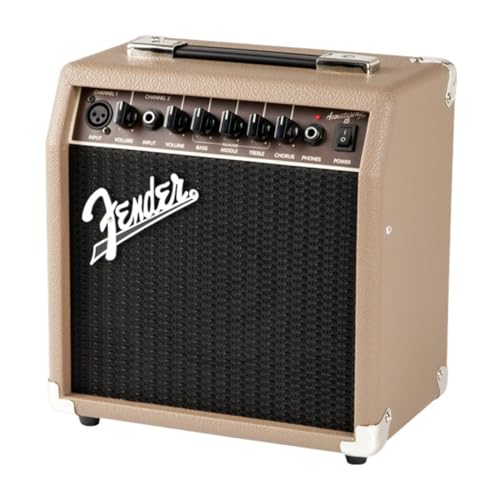
Overview: The Acoustasonic 15 is a compact 15-watt amplifier with two channels designed for acoustic-electric guitars and microphones. It emphasizes portability and simplicity, featuring a 6″ speaker and built-in effects like chorus to enhance acoustic voice during performances or practice. It’s easy to transport and quick to set up for small venues or street performances.
Best for: Players seeking a lightweight, straightforward portable amp for small venues or busking who want reliable acoustic amplification with minimal setup.
Why selected: The two-channel layout helps separate instrument and vocal levels, and built-in features reduce the need for external pedals.
Limitations to note: It’s not a high-output solution; consider larger amps as audience size grows or when playing noisier environments.
Flatsons FBA-10 Guitar Amp

Overview: The FBA-10 is a 10W mini amplifier with clean and drive channels, USB-C rechargeable design, and a 3.5mm headphone/AUX jack. It uses pure analog technology for a natural response and broad coverage, claiming up to 165 feet of range for outdoor or street practice. It is intended for indoor practice, travel playing, and silent practice with headphones.
Best for: Musicians needing a small, portable practice amp with a straightforward two-tone setup and USB-C recharging for travel or on-the-go playing.
Why selected: The analog signal path offers a traditional, warm tone favored by some classical players seeking a simple yet expressive electric-style option for practice.
Limitations to note: It may lack the depth of larger acoustic amps and may not deliver strong bass presence in larger spaces without an external cabinet or PA.
SONICAKE Guitar Headphone Amp
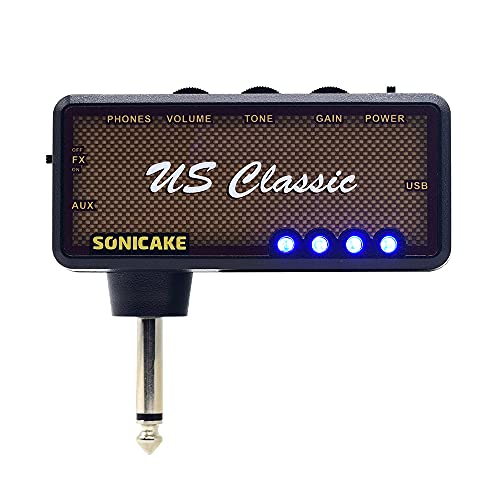
Overview: The SONICAKE Guitar Headphone Amp is a compact, rechargeable option designed for silent practice with headphones. It provides classic Tweed Amp clean and overdrive tones and includes built-in reverb for tonal depth. The primary use is quiet practice rather than live amplification.
Best for: Players who want silent practice at home or in a bedroom setup without disturbing others. Ideal for late-night practice or travel-friendly training.
Why selected: Its small footprint and rechargeable design make it a practical add-on to an acoustic or classical setup for personal jamming sessions.
Limitations to note: It is not a room-filling live amp. Volume and audience projection are limited by the headphone-only output.
Fender Acoustasonic 40 vs 15 Buying Quick Guide
Buying Guide: When choosing an amp for classical guitar, consider these factors:
- Sound fidelity: Look for dedicated acoustic channels or full-range speakers that accurately reproduce acoustic timbre.
- Power and portability: For practice, 10-20W is often enough; for gigs, higher power or PA compatibility matters.
- Inputs and outputs: Instrument and microphone channels, DI options, and headphone/aux in/out improve versatility.
- Built-in effects: Reverb can enhance natural guitar voice; chorus or EQ can shape tone without external pedals.
- Power options: Battery or USB-C recharging adds portability for street playing or outdoor gigs.
FAQ
- What makes an amp suitable for classical guitar? Look for natural, balanced tone with clear highs and mids, and a design that preserves the guitar’s acoustic voice.
- Is a dedicated acoustic guitar amp necessary? Not always; many small PA systems or all-in-one amps handle acoustic-electric guitars well.
- Should I choose battery-powered or mains-powered amps? Battery-powered options offer portability for outdoor or street performances; mains-powered units generally provide longer continuous use and consistent performance.
- Do I need built-in reverb? Built-in reverb helps create a more natural, spacious sound without external effects, especially for solo performances.
- What’s the difference between two-channel and single-channel amps for guitar with voice? Two-channel amps allow separate control of instrument and vocal levels, providing more flexible live performances.