Best Must-Have Guitar Pedals for Every Player
Answering the question “which guitar pedals should I consider first?” this guide highlights five versatile, widely used pedals ideal for most players. Each option serves a distinct purpose—distortion, multi-effects, chorus, and modulation—allowing you to build a practical core rig. Best for beginners building a simple core tone, intermediate players expanding sounds, or gigging players needing reliability, these selections balance classic tone with modern features. See the brief summary table below for quick comparisons.
| Product | Best For | Key Benefit | Limitations |
|---|---|---|---|
| BOSS DS-1 Distortion | Rock to metal rhythms | Classic, reliable distortion | Limited tone options at extreme settings |
| MOOER GE100 | All-around tones | 80 presets, 66 effects, drum rhythms | Smaller screen; learning curve |
| Pogolab Chorus Pedal | Your spacious chorus tones | Solid true-bypass chorus with vintage vibe | Chorus focus; not a multi-effects |
| AFOT Heavy Metal Distortion | High-gain metal/rock | Wide gain, clear definition | Higher gain may require careful EQ |
| FLAMMA FC05 Modulation | Modulation variety | 11 classic modulation effects in one pedal | Limited by pedal’s internal routing |
BOSS DS-1 Distortion Pedal

The BOSS DS-1 Distortion is a foundational pedal known for its hard-edged attack and smooth sustain. Since its 1978 debut, it defined a bold distortion voice used across rock and metal styles. It remains a reliable option when you need a consistent, recognizable distortion that cuts through a dense mix. Best for players seeking a classic, no-fruss pedal to fuel heavy riffs and solos.
Best for: players wanting a straightforward, dependable distortion with a long track record. Why selected: its distinct, aggressive tone remains a staple in many rigs, offering predictable results in live and studio settings.
Caution: At maximum distortion, tone clarity can become less pronounced; use careful EQ and gain management to maintain musical clarity.
MOOER GE100 Multi-Effects Guitar Pedal

The MOOER GE100 offers a compact, all-in-one solution with 80 preset patches and 80 user patches, 8 effect modules featuring 66 types, and 6 assignable expression pedal parameters. It includes a dedicated tuner and a headphone output, plus a tap tempo and a drum rhythm engine. Best for players who want a broad palette of tones without carrying multiple pedals, or who need a portable practice rig with built-in rhythm.
Best for: players seeking a versatile, space-saving solution with extensive preset and expression options. Why selected: the wide variety of effects and user patches supports experimentation and live versatility in a single box.
Caution: The interface can be dense for new users; plan time to learn navigation and preset management to get the most from it.
Pogolab Chorus Pedal

The Pogolab Chorus Pedal delivers a compact, analog-style chorus effect using a classic BBD circuit approach. It emphasizes a broad, evolving chorus that blends well with clean tones and lighter overdrives. Best for players who want an approachable, musical chorus without diving into a multi-effect unit.
Best for: players chasing a classic, wide chorus tone for indie, pop, and clean-guitar textures. Why selected: its emphasis on a pure chorus character provides a straightforward, musical modulation option.
Caution: The pedal focuses on chorus; for other modulation types you’ll need additional pedals or a multi-effects solution.
Flatsons KMF-1 Guitar Pedal

The Flatsons KMF-1 is a multi-effect board-style pedal offering 77 effects across eight modules including amp and cabinet simulations, with 50 presets, a 30-second looper, 42 drum rhythms, and a built-in tuner. It’s designed for players who want a broad tonal palette and a ready-to-perform setup in a single unit. Best for players seeking a versatile practice or performance platform with substantial sound-shaping options.
Best for: players who want a wide range of effects plus a looper and backing rhythms in one unit. Why selected: its large effect library and integrated features streamline both practice and small-venue gigs.
Caution: More complex menus can increase setup time; be prepared to navigate multiple models and memory slots during setup.
FLAMMA FC05 Mini Modulation Pedal
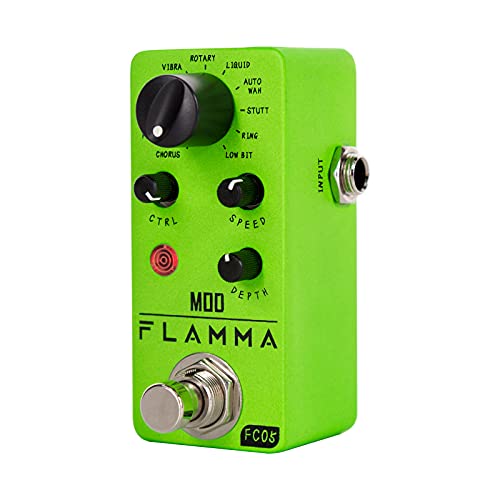
The FLAMMA FC05 is a compact modulation pedal with 11 effects including chorus, flanger, tremolo, phaser, vibrato, rotary, and more. Its full-metal construction lends durability, and the small footprint makes it ideal for tight pedalboards or travel. Best for players who want a wide modulation palette in a single, portable unit.
Best for: players needing a compact, durable modulation solution with a variety of classic effects. Why selected: it consolidates many modulation types into one pedal, helping simplify a small rig while expanding tonal options.
Caution: Although feature-rich, the FC05 may not replace a dedicated pedal for every modulation detail; consider your preferred sounds to ensure it covers your needs.
Buying Guide: Key Purchase Considerations
- Purpose and style: Identify primary genres and tones you want (distortion, chorus, modulation, or all-in-one). Choose a pedal that directly serves those needs.
- Ease of use vs. versatility: Beginners may prioritize simple, reliable pedals (like classic distortion or a dedicated tuner), while advanced players may favor multi-effects units with presets and expression controls.
- Portability and setup: For practice on the go or tight gig rigs, compact units with helpful built-in features (tuner, headphone out, looper) save space and setup time.
- Sound shaping capabilities: Look for clear EQ controls, gain staging, and articulation in the pedal’s tone to ensure it matches your guitar and amp.
- Durability and build: Metal housings and robust footswitches are essential for frequent use on stage or in studio environments.
- Future expandability: If you anticipate needing more tones, consider pedals with presets or a modular approach (multi-effects or a combination of a few single-effect pedals).
FAQ
- What should I consider first when building my pedalboard?
Focus on a solid core: a reliable distortion or overdrive, a versatile modulation or chorus, and a tuner for quick setups. You can add a multi-effects unit later if you need more tones in one box. - Is a multi-effects pedal better than individual pedals?
It depends on space, budget, and workflow. Multi-effects offer many tones in one unit, but some players prefer the dedicated character and response of individual pedals. - Do pedals require special power supplies?
Most pedals use standard 9V DC power supplies or are battery-powered. Check the product’s power requirements and ensure you have a compatible power solution to avoid noise issues. - Should I prioritize classic tones or modern versatility?
If you play in varied genres or need quick tone changes on stage, a versatile unit like the GE100 or FC05 can be advantageous. For signature sounds, a classic pedal like the DS-1 remains valuable. - Can I use pedals with any guitar?
Most pedals are universal across electric guitars. Some pedals with high gain may interact differently with single-coil vs. humbucker pickups; consider your guitar’s pickups when choosing high-gain or low-cut tones. - What is “true bypass” and why does it matter?
True bypass can preserve your guitar’s tone when a pedal is off by avoiding signal coloration through the pedal’s circuitry. It’s a common feature on higher-quality modulation and distortion pedals.