Best Audio Interface With Dante: Top Picks for Professional Networks
If you need a robust Dante-enabled audio interface for a studio or live environment, you’ve found the right guide. This article highlights five Dante-compatible interfaces that balance raw performance with practical features. The selections are best for producers, sound engineers, and venue installers who require seamless Dante networking, low latency, and reliable I/O. Below, you’ll see a quick product comparison, followed by in-depth sections for each option and a practical buying guide.
| Product | Type | Key Dante Feature | Best For |
|---|---|---|---|
| Yamaha RUio16-D | USB/Dante | 16×16 Dante / USB | Studio engineers needing integrated plugin suite |
| RME Digiface Dante | Dante/MADI/USB | High-channel count Dante bridge | Large projects with mixed MADI workflows |
| ESI planet 22c | Dante | Two-year warranty + US/DE after-sales | Budget-conscious studios seeking reliable support |
| Audinate ADP-USBC-AU-2X2 | Dante AVIO USB-C I/O | Driverless Dante connection via USB-C | Direct computer-to-Dante integration |
| MAXSQUARE MSQ-3900D | Ethernet PoE I/O Box | Four analog inputs over Dante | Compact stage or installed systems |
Yamaha RUio16-D Dante/USB Audio Interface

The Yamaha RUio16-D is a 16-in/16-out Dante/USB audio interface designed for professional DAW and networked audio workflows. It integrates a VST Rack Pro Software with 30+ plug-ins, enabling immediate processing within a Dante-enabled pipeline. This unit suits studios that need a built-in plugin environment and centralized I/O for medium-to-large sessions.
Best for: studios and live rigs that prioritize integrated effects and plugin-based processing on the interface itself. It’s a strong choice when you want a complete Dante-enabled I/O hub without additional processing gear.
Limitations: While powerful, the plugin suite and DSP load may require careful session management to avoid latency spikes in complex projects. Ensure your computer and network can sustain the load.
RME Digiface Dante
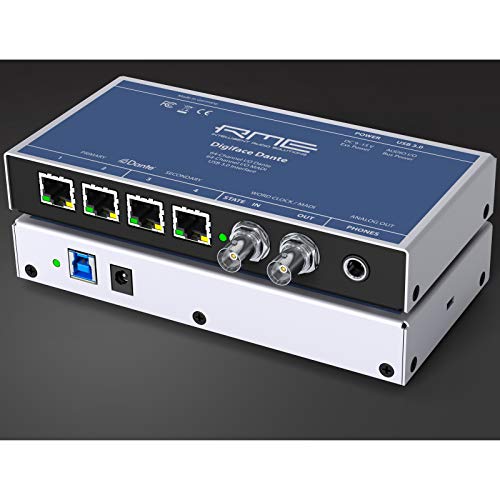
The RME Digiface Dante is a high-density interface bridging Dante networks with MADI and USB 3.0. It offers up to 128-in/128-out channels and bus-powered operation, catering to large studios and installations that require substantial I/O flexibility. Its robust driver support for Mac and PC makes it a versatile backbone for complex sessions.
Best for: large-scale projects or broadcast setups needing extensive Dante routing with additional MADI compatibility. Choose this if you require massive channel counts and a reliable, low-latency bridge between networks and workstations.
Limitations: The high I/O count can introduce complexity in routing; plan your Dante topology carefully to maximize efficiency.
ESI planet 22c | Reference Quality Dante Audio Interface

The ESI planet 22c emphasizes reference-quality audio with Dante connectivity and a focus on dependable after-sales support. It’s positioned as a reliable mid-range option backed by a two-year warranty and US- and Germany-based service teams. This makes it appealing for studios that value long-term service during critical production cycles.
Best for: studios seeking solid Dante performance with strong regional support and a straightforward feature set. Use this if you want dependable warranty coverage alongside professional-grade audio I/O.
Limitations: Warranty support is a highlight, but verify exact I/O counts and compatibility with your preferred DAW and network setup before purchase.
Audinate ADP-USBC-AU-2X2 Dante AVIO USB-C IO Adapter

The Audinate ADP-USBC-AU-2X2 is a Dante AVIO USB-C adapter that connects a computer to a Dante network without drivers. It is powered via PoE or USB, making it a convenient, driverless option for quick network integration. Its rugged ABS enclosure suits field deployments or touring setups requiring reliable connectivity.
Best for: users who need a quick, driverless USB-C to Dante bridge for laptops or compact workstations. Choose this if you want plug-and-play Dante integration without adding a full multi-port interface.
Limitations: It’s not a multi-channel interface; use it as a bridge rather than primary I/O in large sessions.
MAXSQUARE Dante Audio 4 Channel Box MSQ-3900D
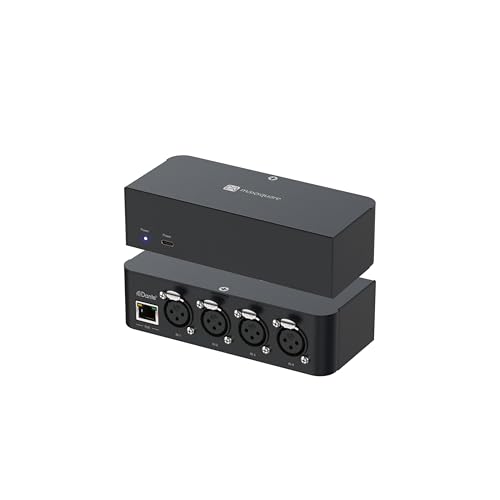
The MAXSQUARE MSQ-3900D provides four analog XLR inputs in a compact, PoE-powered box with Dante transport. It’s designed for flexible placement in installations or small stage setups where reliable Dante-based analog input is needed. The aluminum housing adds durability for gig and touring environments.
Best for: compact venues or studios needing a simple, reliable 4-channel analog input solution over Dante. It’s ideal when you want a PoE-powered, networked option without a full-size interface.
Limitations: Limited to four analog inputs; plan your mic/line needs accordingly and consider future expansion if you expect growth.
Buying Guide: Key Considerations For Dante Interfaces
What should you evaluate before buying a Dante-enabled interface? Consider these practical points to match your setup with the right device.
- Channel count and routing: Determine how many input and output channels you need, and whether you will route through a network switch or a direct computer interface.
- Latency and clocking: Look for low-latency performance and reliable clock distribution, especially for live sound or realtime monitoring.
- Networking and compatibility: Confirm compatibility with your DAW, operating system, and any MADI or USB bridges you may use in the same system.
- Power and placement: Determine if you need PoE power or a traditional power supply, and whether the device’s footprint fits your rack or live setup.
- Warranty and support: A solid warranty and responsive support help in the event of field failures, especially in professional environments.
- Future expandability: If you anticipate growth, prioritize higher channel counts or flexible I/O that can bridge multiple formats over Dante.
Choosing By Use Case
- Studio post-production: A device with built-in DSP and plugin support can streamline workflows (example: RUio16-D).
- Live sound and venues: Bridges with robust I/O counts and durable build are preferred (example: Digiface Dante).
- Remote and drive-by setups: Driverless and portable options are valuable (example: ADP-USBC-AU-2X2).
- Small studios with limited budget: A compact, four-channel option can be cost-effective (example: MAXSQUARE MSQ-3900D).
FAQ
- What is Dante, and why use it with an audio interface?
Dante is a high-performance audio-over-IP network protocol that carries multi-channel audio with low latency, enabling centralized routing and flexible setups in studios and venues. - Do I need a dedicated Dante switch?
Often yes for large networks; however, smaller setups may work with standard gigabit switches, depending on channel count and performance needs. - Can Dante interfaces work with non-Dante devices?
Yes, through bridges or adapters that convert Dante to other formats (MADI, USB, etc.), or by using Dante-enabled hubs. - Is driverless operation important?
Driverless options simplify setup and reduce compatibility concerns, especially for portable or quick-install scenarios. - Which product is best for a home studio on a budget?
A compact four-channel option like MAXSQUARE MSQ-3900D can provide essential Dante I/O at a lower cost while still offering networked flexibility. - Can I mix Dante with non-Dante interfaces on the same network?
Yes, through appropriate network planning and software routing, but ensure compatibility and latency targets are maintained.