Best 5.2 Channel AV Receiver for Home Theater: Top Picks for 2026
Answering the buyer’s search intent: these 5.2 channel AV receivers deliver solid surround sound, strong HDMI 2.1/4K capabilities, and reliable streaming for a balanced home theater. They suit movie lovers, gaming enthusiasts, and music listeners seeking multi-room audio. Below, you’ll find concise comparisons and clear guidance to choose the right model for your room size and audio goals.
| Product | Best For | Key Feature |
|---|---|---|
| Denon AVR-S570BT | Budgets minded movie lovers and Bluetooth streaming fans | 4x 8K HDMI inputs, eARC, 5.1/7.1 potential |
| Pyle 5.2 Channel Hi-Fi Receiver (PT875BT) | Value seekers who want basic 5.2 with Bluetooth | 4K pass-through, USB/MP3, Bluetooth |
| Sony STRDH590 | Entry-level home theater with easy setup | 4K HDR, Bluetooth, virtual surround |
| Denon AVR-S670H | 8K-ready, feature-rich home theaters | 8K/60Hz pass-through, HEOS, Dolby TrueHD |
| Yamaha RX-V385 | Compact, affordable entry with Bluetooth | 4K video pass-through, Bluetooth |
Denon AVR-S570BT 5.2 Channel AVR

Best for budget-conscious home theaters that still demand modern video and audio capability. The Denon AVR-S570BT supports 8K/HDR content through its four HDMI 2.1 inputs and offers eARC for high-quality TV audio return. It delivers up to 70W per channel for immersive living-room sound and includes built-in Bluetooth for easy wireless streaming. This model suits movie lovers and gamers who want robust features without a premium price.
Who it’s best for: small-to-mid-sized living rooms, budget-conscious buyers, and households prioritizing 8K-ready video paths and wireless music integration. Why chosen: strong HDMI 8K inputs, eARC, and Dolby/DTS support provide a balanced, future-proofed core for 5.2-channel setups.
Caution: While strong on video, it may not include everything a hi-fi purist seeks in high-resolution audio formats; consider room acoustics to maximize dialogue clarity and bass response.
Pyle 5.2 Channel Hi-Fi Home Theater Receiver PT875BT

Best for value-focused setups that still want 5.2 surround and Bluetooth streaming. The PT875BT supports 4K passthrough, 5.2 channels, and USB/MP3 playback with a built-in DAC for straightforward audio feeding from digital sources. It’s a fit for casual movie nights and music playback in compact spaces.
Who it’s best for: budget-minded buyers needing a simple, multi-source receiver. Why chosen: competitive power per channel for the price and broad device input compatibility.
Caution: Built-in power and feature set may exceed entry-level needs; ensure speaker impedance compatibility and room size match the expected output.
Sony STRDH590 5.2 Channel AV Receiver

Best for readers seeking an approachable interface with virtual surround options. The Sony STRDH590 provides 4K HDR pass-through with Bluetooth and a virtual surround system to simulate a larger space with a two-speaker setup. It’s a practical choice for small living rooms and entry-level home theaters.
Who it’s best for: first-time buyers, compact rooms, and straightforward setup. Why chosen: reliable 4K/HDR compatibility and ease-of-use with virtual surround for a modest space.
Caution: Virtual surround is not a true 5.1 setup; for larger rooms or cinema-grade sound, consider upgrading to a physical 5.2 configuration or adding external speakers.
Pyle 5.2 Channel BT Home Theater Amplifier PT875BT
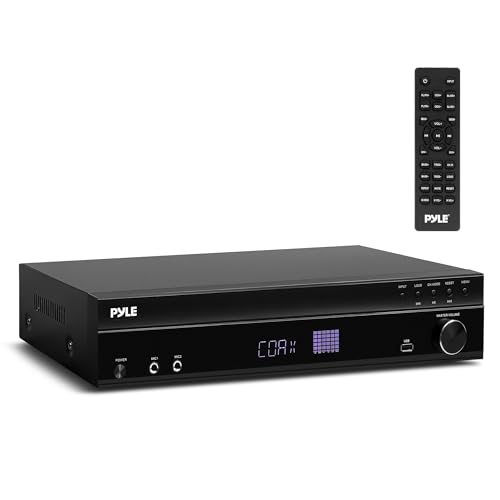
Best for users who want Bluetooth streaming with a 5.2 channel setup and simple control. The PT875BT emphasizes Bluetooth-based music playback, FM radio, and USB audio input, making it a solid choice for casual music listening and multi-source playback in smaller spaces.
Who it’s best for: Bluetooth-first households and casual movie nights. Why chosen: versatile wireless streaming and convenient USB/MP3 support in a single chassis.
Caution: Audio performance might lag behind higher-end AVR models in dynamic range and bass control; consider room acoustics or an additional subwoofer for deeper lows.
Denon AVR-S670H 5.2 Channel Receiver

Best for 8K-ready, feature-rich setups that need robust streaming and Dolby/DTS formatting. The AVR-S670H offers 8K/60Hz and 4K/120 pass-through, with HEOS multi-room audio and built-in Bluetooth/Wi‑Fi. It’s a fit for larger rooms and enthusiasts who want premium sound shaping with flexible speaker configurations.
Who it’s best for: bigger living rooms, home theater enthusiasts, and users needing integrated wireless audio across zones. Why chosen: extensive video capabilities, immersive surround formats, and reliable streaming integration.
Caution: The feature set is broad; ensure you have a compatible display and speaker arrangement to maximize 8K/4K benefits.
Yamaha RX-V4A 5.2-Channel AV Receiver

Best for users who want MusicCast ecosystem features with flexible HDMI 2.1/ARC/eARC. The RX-V4A includes Dolby Atmos readiness (via model setup), MusicCast for multi-room audio, and 4K/8K video support. It’s a practical, moderately powered solution for living rooms that value streaming and smart integration.
Who it’s best for: homes using Apple AirPlay 2 or Spotify Connect, and readers who value wireless audio zones. Why chosen: broad streaming compatibility and future-ready HDMI 2.1 features.
Caution: While capable, it may not deliver the most immersive theater dynamics in large rooms unless paired with proper speaker placement and room treatment.
Yamaha RX300A 5.2-Channel Receiver

Best for feature-rich value with Dolby Atmos and 8K/4K HDMI support in a 5.2 layout. The RX300A delivers robust power with 70W per channel and supports Dolby Atmos, plus advanced HDMI switching and gaming features like ALLM and VRR. It fits mid-sized rooms needing immersive sound without overspending.
Who it’s best for: fans of Atmos-enabled audio, multi-format video, and adaptable speaker configurations. Why chosen: strong video support and modern audio processing at a compelling price point.
Caution: Atmos experiences depend on speaker layout; ensure you have ceiling speakers or up-firing modules to realize true height effects.
Buying Guide: How to Choose a 5.2 Channel Receiver
- Room size and listening goals: Smaller rooms can prioritise compact models with efficient power; larger spaces may benefit from higher wattage and advanced room calibration.
- HDMI and video support: Look for HDMI 2.1 inputs, eARC, and 4K/8K compatibility to future-proof video passthrough and TV integration.
- Audio formats: If you want cinematic sound, choose receivers with Dolby TrueHD, DTS:X or DTS Neo:6 upmixing, and Dolby Atmos compatibility when using compatible speakers.
- Streaming and smart features: Built-in Bluetooth, Wi-Fi, HEOS/Multi-room, AirPlay 2, or MusicCast add convenient wireless music distribution across zones.
- Speaker compatibility and expansion: Verify the receiver supports your speaker impedance and can drive your desired 5.2 configuration, with room to add a subwoofer or additional channels later.
- Future upgrades vs. budget: Denon and Yamaha offer feature-rich, future-ready options; Sony provides solid entry-level choices with practical functionality.
Frequently Asked Questions
- What is a 5.2-channel AV receiver?
A 5.2 channel receiver powers five main channels for front left/right, center, and two rear surrounds, plus a single subwoofer channel (the .2). It supports surround sound formats and often includes HDMI switching and streaming features.
- Do I need 8K support in a receiver today?
8K readiness helps future-proof video passthrough and ensures compatibility with newer TVs. If you aren’t upgrading your display soon, a model with 4K/120 and HDR support may be sufficient.
- Is multi-room audio worth it?
Multi-room integrations like HEOS, MusicCast, or AirPlay 2 let you play synchronized or independent music across rooms, enhancing daily listening and home entertainment.
- Should I buy a more powerful receiver than I need?
Not necessarily. Choose based on room size, speaker efficiency, and headroom needs. Overpowering an undersized room can lead to harsh sound, while underpowering a large room can reduce dynamics.
- What is eARC and why is it important?
eARC provides higher bandwidth for lossless audio between the TV and the AV receiver, improving sound quality for streaming apps and broadcast content.