Best Input Cables for Speakers to Match Your Setup
Looking for the right input cable for speakers? This guide highlights five solid options across common connection types to fit home audio, PA setups, and car stereos. Best for portable listening, studio work, or fixed home theaters, these cables emphasize reliability, clarity, and ease of use. Each pick targets a specific buyer: casual listeners, live performers, home theater enthusiasts, and professionals needing durable, long runs.
| Product | ||
|---|---|---|
| Syncwire 3.5mm Nylon Braided Aux Cable | 3.5mm AUX, gold-plated | Casual listening on phones, laptops, cars |
| Yoico 2Pcs 50 Feet Speaker Cables | 12 Gauge, 1/4″ TS, heavy duty | Live performances, stage, PA with long runs |
| GLS Audio 1/4″ to 1/4″ Speaker Cable | 12 AWG, guitar/bass style | Studio or amps to speakers |
| Amazon Basics 2 RCA Audio Cable (8 ft) | 2RCA to 2RCA, hi-fi ready | Hi-fi systems, subwoofers, active speakers |
| KOMITASUI 3-Feet 12 AWG Speaker Cables | 1/4″ TS, heavy-duty | Guitar/bass amps, PA, DJ gear |
Syncwire 3.5mm Nylon Braided Aux Cable

Best for portable devices and daily listening. The Syncwire cable uses 24K gold-plated connectors to reduce signal loss and maintain stereo clarity, and a nylon braid delivers durability for active use. The universal 3.5mm compatibility covers iPhone, iPad, Android devices, headphones, car stereos, and home speakers. Best for users who value clean, reliable sound in everyday scenarios.
Who this is for: casual listeners who want a sturdy, tangle-resistant 3.5mm cable for phones or car stereos. Limitations: compatibility notes exclude certain rugged cases like LifeProof or OtterBox.
Key features:
- Universal 3.5mm compatibility
- Polished gold-plated connectors
- 15000+ bend lifespan for durability
Yoico 50 Feet Speaker Cables (2 Pack, 12 Gauge)

Best for stage and long-distance speaker connections. These 12-gauge professional cables provide robust, low-impedance transmission with minimal noise, suited for gigs, rehearsal spaces, or fixed venues. The product highlights copper conductors and a durable jacket to resist wear in heavy-use environments.
Who this is for: performers and installers needing long runs with strong power handling. Limitation: data notes emphasize general performance; real-world outcomes depend on connector quality and equipment compatibility.
Key features:
- Premium copper wire, heavy-duty jacket
- Low-noise, high-durability construction
- 12 gauge, 50 ft length per cable
GLS Audio 1/4″ to 1/4″ Cable (6 Ft, 12 AWG)

Best for amps and guitar/bass setups. This 12 AWG 1/4″ to 1/4″ cable uses high-grade copper and a flexible rubber jacket, designed for reliable connections between amplifiers and speakers or musical gear. It emphasizes durability for repeated plug/unplug cycles in studio or rehearsal rooms.
Who this is for: musicians and home studios needing a rugged, mid-length cable with stable conductivity. Caution: primarily designed for instrument-level or input connections; verify impedance match for line-level applications.
Key features:
- 12 AWG copper conductors
- Flexible rubber jacket
- 1/4″ TS connectors for amps and speakers
KOMITASUI 3 Foot 12 AWG Speaker Cables (2 Pack)
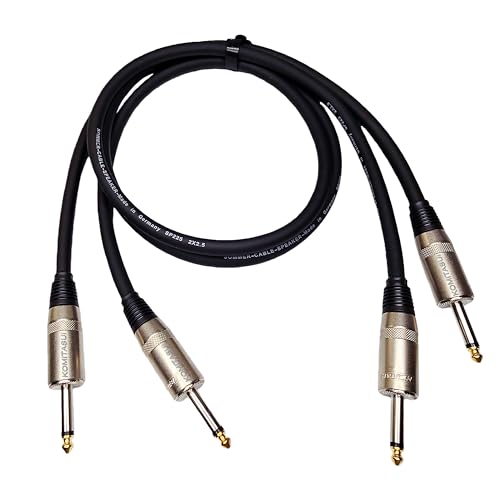
Best for compact setups and quick speaker connections. This 3-foot, 12 AWG TS cable is built for high-power handling and compatibility with standard speaker inputs. The heavy-duty jacket protects against abrasion while maintaining flexibility for easy placement in tight spaces.
Who this is for: DJs, small studios, or personal home setups needing a short, sturdy patch cable. Limitation: primarily designed for speaker-level signals; not ideal for line-level connections or very long runs.
Key features:
- Premium oxygen-free copper conductors
- Gold-plated 1/4″ TS connectors
- Heavy-duty PVC jacket for protection
Buying Guide
What cable type do I need?
Choose based on your gear connections: 3.5mm AUX for phones, laptops, and car stereos; 1/4″ TS for guitar amplifiers and PA gear; RCA for hi-fi components and subwoofers. Match the connector types to your devices’ inputs and outputs.
How long should the cable be?
For headphones, cars, or desktop setups, shorter cables (3–6 ft) reduce signal loss. For stage or room-scale listening, longer runs (25–50 ft) are practical, but ensure shielding and buffer capacity to minimize noise.
Why is gauge and shielding important?
Higher gauge (lower AWG number) supports more current with less resistance, which helps with louder, cleaner signals over longer distances. Durable jackets and shielding minimize interference from other electronics or ambient noise.
What about durability and portability?
Nylon-braided jackets and gold-plated connectors increase lifespan and reduce corrosion. If you travel or set up often, look for tangle-free designs and strain relief to prevent connector failures.
Should I prefer DIY or ready-made cables?
Pre-made cables often come with proven connectors and shielding. For critical audio chains or fixed installations, consider professional-grade cables with longer warranties or custom lengths.
FAQ
-
What is the difference between 1/4″ TS and RCA cables?
1/4″ TS cables carry instrument-level or speaker-level signals and are common for amps and speakers. RCA cables carry line-level audio for hi-fi components, subwoofers, and home theater gear.
-
Are gold-plated connectors worth it?
Gold plating reduces oxidation and can improve signal integrity in some setups, especially where connections are frequent or exposed to moisture.
-
Is longer always better for audio cables?
No. Longer cables can introduce more capacitance, which may affect high-frequency response. Choose the shortest cable that fits your layout while meeting distance needs.
-
Should I buy two identical cables for stereo systems?
For some configurations like two-channel hi-fi, using matched cables helps maintain consistent impedance and timing between channels.
-
Can I use speaker cables for line-level connections?
Some high-quality speaker cables can be used for line-level paths in controlled setups, but impedance and connector type should match the equipment’s input/output specifications.
-
Do cables affect overall sound quality?
Quality, shielding, and connector integrity influence noise, hum, and high-frequency loss. In most typical consumer setups, differences may be subtle, but good cables support cleaner signal transmission.