Best in-Ear Aviation Headsets for Clear Communication and Comfort
Looking for in-ear aviation headsets that combine noise reduction, lightweight design, and crisp communication? This guide profiles five top in-ear aviation headsets suited for pilots seeking comfort during long flights, strong noise suppression, and reliable microphone performance. Best for frequent flyers, student pilots, or professionals needing compact, travel-friendly units.
| Product | Best For | Key Benefit |
|---|---|---|
| UFQ ANR L2 Hi-Lite | Active-noise environment pilots | 52 dB NRR with ANR/PNR, very light |
| UFQ L1 in-Ear Headset | Pilot seeking ultra-light PNR | 130 g weight with Hi-Fi speakers |
| Bose Proflight Series 2 with Bluetooth | Bluetooth-enabled cockpit users | Thin, flexible cable and easy mic adjustment |
| FARO AIR in-Ear Aviation Headset | Budget-conscious pilots needing ANR-like performance | Up to 50 dB noise reduction with light design |
| R SPIDER WIRELESS in-Ear Headset | Versatile GA pilots with dual plugs | Mono/Stereo compatibility and lightweight build |
UFQ ANR L2 Hi-Lite In-Ear Aviation Headset
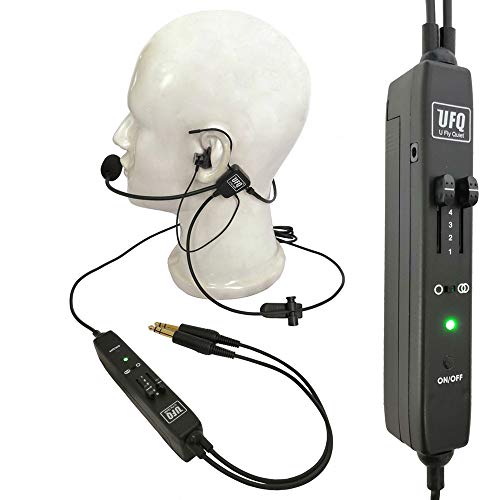
The UFQ ANR L2 is designed for pilots who need strong noise reduction in a compact, in-ear form factor. It delivers 52 dB NRR with both ANR and PNR features, helping to minimize cockpit noise and reduce fatigue on long flights. It is noted as Bluetooth-free, so choose the UFQ BT L2 if wireless connectivity is required. Best for pilots prioritizing effective noise suppression and a lightweight profile for extended wear.
- Best for: pilots in loud, pressurized cockpits who want long-wear comfort without Bluetooth.
- Why selected: superior noise reduction in a compact, in-ear design.
Caution: Does not include Bluetooth; consider UFQ BT L2 for wireless needs. The new version emphasizes reinforced cables for durability.
UFQ L1 In-Ear Aviation Headset

UFQ L1 offers ultra-lightweight construction at about 130 g, making it another strong option for long flights. It uses passive noise reduction (PNR) but provides clear microphone audio through the M-7U element and a flexible boom. It also includes Hi-Fi speakers for enjoyable audio during non-critical segments. Best for pilots who value a featherweight headset with good audio clarity and music-friendly features.
- Best for: pilots prioritizing ultra-light comfort and clear voice transmission.
- Why selected: one of the lightest headsets with solid mic performance and added music-friendly features.
Caution: It uses PNR rather than active noise reduction; consider L2 for stronger ambient noise cancellation if needed.
Bose Proflight Series 2 Aviation Headset with Bluetooth
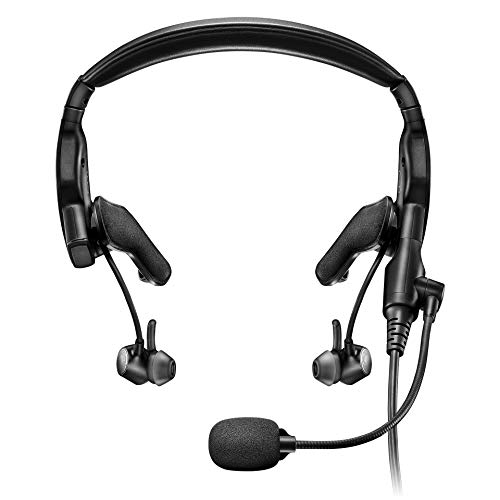
Bose Proflight Series 2 with Bluetooth delivers a Bluetooth-capable solution for pilots who want wireless audio alongside a robust cockpit mic. It features a thinner, lighter cable and improved tap control for talk-through communication. It’s a solid choice for those who need seamless integration with mobile devices and easy mic adjustment. Best for pilots prioritizing Bluetooth connectivity and simplified cockpit controls.
- Best for: pilots who want wireless connectivity in the cockpit.
- Why selected: mature Bose noise management and practical Bluetooth capability.
Caution: Ensure earbud tips fit properly for optimal sound and call quality; incorrect fit can affect performance.
FARO AIR In-Ear Aviation Headset

FARO AIR offers a lightweight solution with up to 50 dB of noise reduction in an in-ear design. It includes an auxiliary/music input and notes that fit can impact performance. Best for pilots looking for an affordable option with strong ANR-like capabilities and the flexibility to listen to music or external audio during flights.
- Best for: budget-conscious pilots seeking good noise reduction and music input.
- Why selected: competitive noise suppression in a compact in-ear form.
Caution: Fit consistency matters for achieving the claimed audio performance; adjust ear tips accordingly.
R SPIDER WIRELESS In-Ear Aviation Headset

The R SPIDER WIRELESS headset emphasizes ultra-lightweight design at 125 g and offers GA dual-plug compatibility, along with mono/stereo switching. It targets pilots who require flexibility across different aircraft configurations and a simple control setup. Best for pilots who value dual-plug versatility and minimal bulk in the cockpit.
- Best for: pilots needing dual-plug compatibility and light wear.
- Why selected: good flexibility for various GA aircraft and straightforward controls.
Caution: Check compatibility with your specific aircraft’s microphone impedance settings to ensure optimal performance.
Buying Guide: Key Considerations For In-Ear Aviation Headsets
What matters most depends on mission needs, but these factors consistently affect comfort, clarity, and usability in the cockpit.
- Active vs Passive Noise Reduction: ANR reduces cockpit noise more effectively but may add weight and cost. Choose ANR headsets like UFQ L2 when flying in high-noise environments; pick PNR options like UFQ L1 for lighter wear and simplicity.
- Weight and Comfort: Ultra-light models (e.g., UFQ L1 at ~130 g; R SPIDER WIRELESS at ~125 g) are better for long flights. Heavier units can cause fatigue over time.
- Microphone Quality and Boom Positioning: Look for flexible booms and mono/stereo configurations. A stable position improves voice transmission in loud cockpits.
- Connectivity: Bluetooth adds convenience for calls and media, but wired connections can be more reliable in noisy environments. Consider Bose Proflight Series 2 for Bluetooth in-cockpit work.
- Compatibility: Dual-plug GA setups and universal adapters expand aircraft compatibility. Ensure impedance and plug types match your cockpit.
- Durability and Cables: Reinforced cables and protective housings reduce wear during frequent travel or helmet use.
- Fit and Tips: Proper ear tips ensure seal and sound quality. If sound or call quality is off, swap ear tips to better fit your ears.
FAQ
- What is the difference between ANR and PNR in in-ear headsets?
ANR actively cancels noise using electronic processing, while PNR relies on passive sealing and physical isolation.
- Are Bluetooth headsets better for cockpits?
Bluetooth adds convenience for wireless audio, but some pilots prefer wired headsets for reliability in noisy environments.
- What should I consider for long-flight comfort?
Weight, clamp force, and ear tip comfort matter most; lighter headsets reduce fatigue.
- How important is microphone placement?
A stable, flexible boom that stays in place improves voice clarity, especially in loud cockpits.
- Can I use normal ear tips with aviation headsets?
Yes, but ensure they seal properly; ill-fitting tips can degrade both noise reduction and call quality.
- Do in-ear headsets work with all aircraft?
Most GA aircraft use standard dual-plug or 6-pin interfaces; verify the headset’s compatibility with your cockpit jack types.