Best Distortion Pedals for Electric Violins: Top Guitar-Style Units for Rich, Dynamic Tones
Looking for distortion pedals that work well with electric violins? This guide highlights five guitar-style pedals that can translate to violin setups, offering rich crunch, controlled grit, and expressive sustain. Each option suits different players: beginners may prefer straightforward controls, while advanced players may seek wide dynamic ranges for intricate bowing and phrasing. Below you’ll find a quick buyer’s table and in-depth notes to help you choose.
| Product | Best For | Key Benefit |
|---|---|---|
| Donner Morpher Mini | Beginners to intermediate players seeking versatile modes | Three distortion modes with clear indicators |
| RVONE High Gain Distortion | Studio players needing vintage amp breakup | Analog tone without digital artifacts |
| JOYO High Gain Distortion (JF-04) | players desiring precise tone sculpting | Full-range EQ and dynamic response |
| EX Inferno Death Metal Distortion | Metal/hard rock players craving extreme gain | Three distinct modes for aggressive tones |
| AFOT Heavy Metal Distortion | Versatile metal/rock players | Wide control set for edgy, tight tones |
Donner Morpher Mini Distortion Pedal

The Donner Morpher Mini offers a high-gain distortion with three distinct modes: Natural, Tight, and Classic Crunch. It’s a compact, aluminum-alloy unit designed for stable stage use. This pedal is best for players seeking a versatile mid-range distortion that can complement violin-driven leads or rhythm lines without overpowering acoustic textures. A caution: the compact size means fewer knobs, so quick, precise dialing may require some familiarity with the mode differences.
Best for: Players who want a flexible, mid-range distortion suitable for both shredding and riffing on electric violin setups. The three modes help tailor dynamics to attack speed, bow pressure, and string selection, making it easier to dial in glassy clean to crunchy tones.
RVONE High Gain Distortion Pedal

The RVONE pedal emphasizes tube-amp inspired breakup in a compact form. Its analog circuits aim to reproduce classic distortion tones without digital artifacts, which can be favorable for violinists seeking natural saturation without brittle highs. Note that it requires a standard DC 9V supply (center-negative) for operation, which is not included. This makes it a good pick for studio builds where a stable power setup is available.
Best for: Players who want vintage-inspired distortion with smooth note definition and clear sustain on electric violin. It’s better for studio patches and controlled live tones where the guitarist’s dynamics translate well to violin bowing and plucking.
JOYO High Gain Distortion (JF-04)

The JOYO JF-04 provides a full-range EQ with dedicated Treble and Mid controls, allowing precise tone shaping from bluesy crunch to thick modern metal tones. This dynamic analog circuit responds to picking attack and volume changes, giving violin players expressive control over attack and sustain. Caution: as with any high-gain pedal, excessive gain can compress dynamics; use the volume knob to blend clean signals when needed.
Best for: Violinists who need strong midrange presence and a tunable tone stack to carve out leads that cut through a mix. It’s particularly effective when you want a punchy rhythm sound or a screaming lead with preserved dynamic feel.
EX Inferno Death Metal Distortion
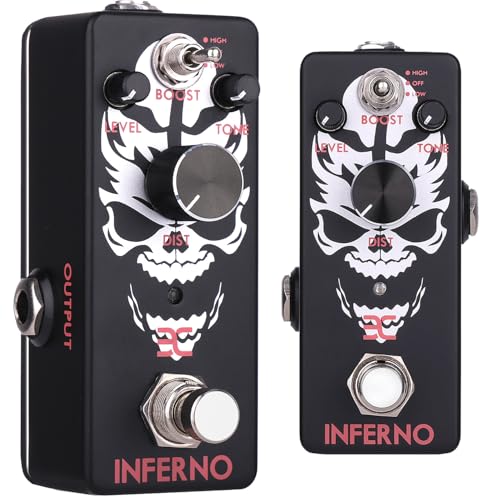
The EX Inferno Death Metal Distortion offers three distortion modes—Raw, Brutal, and Inferno—providing a broad range from tight, controlled tones to searing high-gain chaos. Level, Tone, and Dist knobs let you dial precise tonal balance. For violin applications, this pedal excels when you want aggressive lead lines or thunderous backing textures that sustain under heavy bow work. Caution: extreme modes can overwhelm delicate violin harmonics if not dialed carefully.
Best for: Violin players seeking extreme metal textures and maximal sustain. Use the Brutal or Inferno modes for dramatic, concert-ready solos or rhythm layers that require a hard-edged presence in the mix.
AFOT Heavy Metal Distortion

AFOT’s Heavy Metal Distortion focuses on clarity and range, aiming to deliver strong definition even at higher gain. It features a wide tone-control set designed to cover metal and punk styles, with independent EQ sections to sculpt treble, mids, bass, boost, volume, and distortion. For violinists, the pedal can yield singing statements in solos or gritty yet articulate backing tones. A caution: the data notes versatility but real-world headroom may vary with guitar-violin interfaces and pickups.
Best for: Violinists who want a flexible, all-purpose metal distortion with ample tonal shaping. Choose this if you want to carve aggressive rhythm tones and soaring leads without losing articulation.
Buying Guide: Key Considerations For Distortion Pedals On Electric Violins
Signal integrity is critical when amplifying violin signals. Consider headroom, output level, and how each pedal handles clean-to-distorted transitions. For violinists, dynamic responsiveness matters—look for pedals that react well to bowing pressure and bow speed.
- Gain range and headroom: A wide range helps preserve natural violin dynamics from soft passages to aggressive attacks.
- EQ flexibility: Independent treble, mid, and bass controls help carve presence in a crowded mix.
- True bypass: Minimizes signal loss when the pedal is off, important for preserving violin tone.
- Power requirements: Check DC input and whether an adapter is included; center-negative supply is common.
- Pedal size and build: Durable chassis can withstand gigging while fitting pedalboards.
How to Choose By Playing Style
- Lead-focused violin: Look for strong sustain and a smooth lead tone, such as modes offering singing distortion.
- Rhythm-heavy passages: Prefer pedals with a punchy mid-range and tight control to keep rhythm tones clear.
- Studio work: Analog tones with warm saturation and low digital artifacts can translate well to recorded violin parts.
Setup Tips
- Pair with a clean amp or direct box to retain articulation at lower volumes.
- Use a compressor before distortion to even out dynamics for violin bowing.
- Experiment with pickup placement and EQ curves to maximize note clarity in a mix.
FAQ
- Can distortion pedals be used with electric violins? Yes, many players use guitar-style distortion pedals with electric violins to expand tonal possibilities.
- What should I consider for live violin performances? Look for pedals with stable true-bypass switching and clear indicator LEDs for on-stage visibility.
- Do these pedals require special adapters? Most require a standard DC 9V adapter; check the product page for power details.
- Is analog better than digital for violin tones? Analog circuits often respond more naturally to dynamic bowing, but both types can work well depending on the desired texture.
- How do I avoid excessive noise from distortion? Use a noise-reduction strategy like proper gain staging, short cable runs, and good shielding in your violin’s electronics.