Best Audio Interface for Recording Vocals: Top Picks for Clear Studio-Quality Sound
When choosing an audio interface for recording vocals, you want clean pre-amps, low latency, and reliable compatibility. This guide highlights five USB interfaces that suit home studios, podcasters, and field-recorders alike. Best for solo vocal work, home studios, and small podcasts are highlighted with practical pros and limitations so you can pick confidently.
| Product | Best For | Key Advantage | Consideration |
|---|---|---|---|
| Focusrite Scarlett Solo 3rd Gen | Singers and podcasters | Bright pre-amps and Air mode for vocal presence | Single mic input |
| Focusrite Scarlett Solo 4th Gen | Songwriters and creators | Large dynamic range and improved Air mode | Two inputs on Solo, more versatility with guitar |
| PIYONE Audio Interface 2×2 | Travelers and laptop setups | USB-C, bus-powered, 24-bit/192kHz | Basic two-channel layout |
| Synido USB C Audio Interface 2×2 | Multi-device setups | Three monitoring modes for flexible routing | Value-focused option |
| M-AUDIO M-Track Duo | Streaming and casual recording | Two combo inputs with software suite | 24-bit/48kHz, more entry-level |
Focusrite Scarlett Solo 3rd Gen USB Audio Interface

The Focusrite Scarlett Solo 3rd Gen offers pro-quality mic pre-amps and a switchable Air mode to add clarity to vocal recordings. It features two high-headroom instrument inputs for guitar or bass and Gain Halos to help prevent clipping. This model is ideal for solo vocalists or podcasters who want simple, reliable setup with studio-like converters up to 24-bit/192kHz. Best for: singers and podcasters seeking bright, present vocal tones without complex routing.
Selected for its compact footprint and strong pre-amps, it performs best when you want a straightforward plug-and-record workflow. Caution: It provides one mic input; if you need stereo or multiple mics, consider a 2-in device.
Focusrite Scarlett Solo 4th Gen USB Audio Interface

The 4th Gen Solo aims at songwriters and new producers who need studio-grade sound with a wide dynamic range. It uses Scarlett’s updated converters and a refined Air mode to lift vocals and guitars in the mix. With an expanded gain structure and high-fidelity performance, it’s better for vocal tracking and rough mixes in smaller studios. Best for: creators needing higher fidelity than the 3rd Gen with simple, single-mic workflows.
Limitation: Like the 3rd Gen, it remains a single mic input device; if you need two mics or more inputs, look at a 2-in model.
PIYONE Audio Interface 2×2

PIYONE’s 2×2 interface is a compact, USB-C class-compliant unit that’s ideal for Mac or PC users who want plug-and-play operation. It offers 24-bit/192kHz fidelity and a modern design with LED-lit gain controls for easy visibility. Best for: mobile producers and home studios needing two inputs with high-resolution recording and a sleek look.
Note: It’s a two-channel setup, so it’s not ideal if you require more than two simultaneous inputs.
Synido USB C Audio Interface 2×2

Synido presents a value-focused 2×2 interface with 24-bit/48kHz fidelity and a USB-C interface for Mac and PC. Three monitoring modes simplify routing for recording, streaming, or post-production, and its independent control areas support easy gain and volume management. Best for: users who want flexible monitoring modes and a budget-friendly two-channel solution.
Limitation: It features standard consumer-grade latency and may require manual level monitoring adjustments in busy sessions.
M-AUDIO M-Track Duo USB Audio Interface
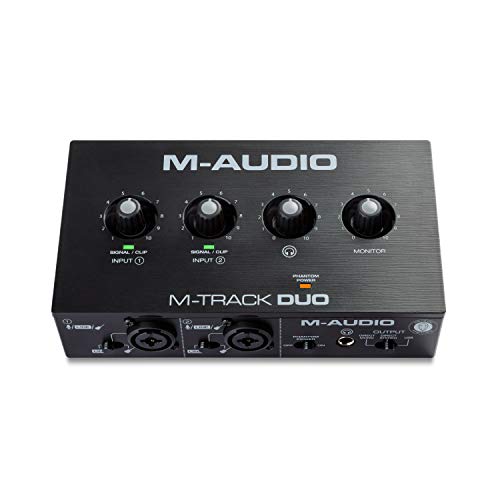
The M-AUDIO M-Track Duo is a versatile portable interface with two combo XLR/Line inputs and a software suite included. It’s designed for podcasting, streaming, and music recording at up to 48kHz. Best for: beginners and hobbyists who want an affordable, plug-and-play two-input solution with bundled software for immediate creation.
Limitation: It uses 24-bit/48kHz audio, which is sufficient for many projects but lower than high-resolution options offered by some Focusrite models.
Buying Guide
What to consider when choosing an audio interface for vocals
Input count matters. If you mainly record one vocalist, a 1-in device can be enough, but a 2-in unit provides flexibility for duets, acoustic guitar, or a second microphone.
Pre-amps and vocal clarity. Interfaces with higher-quality mic pre-amps and features like Air mode help vocals cut through the mix with warmth and presence.
Dynamic range and conversion quality. A wide dynamic range (around 120 dB or more) and high sample rates (24-bit, 192 kHz) yield better fidelity for studio-like vocal recordings.
Latency and monitoring. Look for zero-latency monitoring options or direct monitoring with clear, distortion-free signal paths during tracking.
Portability and power. USB-C interfaces with bus power are convenient for on-the-go recording; consider your laptop’s power and USB-C availability.
Software and workflow. Bundled software can streamline recording, editing, and mixing. Check compatibility with your DAW and operating system.
Future-proofing. If you might expand to multiple mics or multi-instrument setups, choose a model with more input options or expandable routing capabilities.
Practical comparisons
- Best for single-mic vocal tracking: Focusrite Scarlett Solo 3rd Gen.
- Better for vocal-heavy songs with richer front-end: Focusrite Scarlett Solo 4th Gen.
- Best value two-channel option: PIYONE or Synido depending on monitoring needs.
- Best for entry-level streaming and podcasting: M-AUDIO M-Track Duo.
FAQ
- What is the difference between 24-bit/192kHz and 24-bit/48kHz?
Answer: Higher sample rate and bit depth can capture more detail, but file sizes are larger and practical needs vary by project. - Do I need two inputs for vocal recording?
Answer: Not for a single vocalist, but two inputs allow recording a backup mic or instrument simultaneously. - Is Air mode essential for vocals?
Answer: It can enhance vocal presence by boosting brightness and harmonic content, but it’s optional based on taste and track needs. - Should I buy bundled software with the interface?
Answer: Bundled software helps start projects quickly, though you may already own a preferred DAW or plugins. - Which interface is best for travel?
Answer: Compact, bus-powered USB-C models like PIYONE or Focusrite Solo 3rd Gen are ideal for mobile setups. - Can I upgrade to higher-end interfaces later?
Answer: Yes, many brands offer scalable options; start with your current needs and plan upgrade paths as your projects grow.