Best Budget Audiophile Bookshelf Speakers for Clear, Full Sound
If you’re seeking affordable, high-fidelity sound from compact bookshelf speakers, you’ll want options that offer clean highs, solid bass, and reliable imaging without breaking the bank. The five selections below are well-suited for small living spaces, dorm rooms, and desktop setups, delivering an engaging listening experience across genres. The buyers these picks serve best include entry‑level audiophiles, students, and budget-conscious music lovers who still crave accurate sound reproduction.
| Product | Type | Why It’s a Good Budget Pick |
|---|---|---|
| Klipsch R-51M | Powered bookshelf | High sensitivity and Tractrix horn deliver clear, lively highs without a hiss; good for small rooms |
| Edifier R1280T | Active 2.0 powered | Warm, natural sound with dual inputs and easy volume control; great for desktops |
| Edifier R980T | Active 2.0 powered | Wooden enclosure, front-facing bass port; compact and versatile for desks |
| Sony SS-CS5M2 | Passive 3-way | Compact size with a 3-way design offering balanced midrange and extended bass |
| Electrohome Huntley EB10 | Powered bookshelf | Built-in amplifier, versatile inputs, well-rounded room-filling sound |
Klipsch R-51M Bookshelf Speaker Pair

Key features include 1″ Aluminum LTS tweeters and 90×90 Tractrix horn design with dual 5.25″ spun-copper IMG woofers. This configuration tends to provide bright, detailed highs with crisp imaging, useful for critical listening and near-field setups. Best for small-to-mid rooms where lively dynamics and clarity matter more than subterranean bass. A potential limitation is that the bass may feel light in very large spaces without a subwoofer.
Who it’s best for and why selected
Best for listeners who want bright, articulate highs and strong midrange performance in compact rooms. The horn-loaded tweeter and copper woofers yield engaging sound that translates well to guitar, vocals, and acoustic tracks.
Caution or limitation
The R-51M’s bass response benefits from careful placement away from walls and may require a subwoofer if you crave deep, room-shaking bass in larger spaces.
Edifier R1280T Powered Bookshelf Speakers
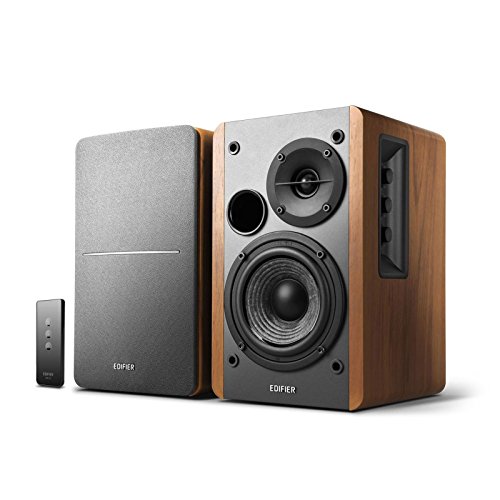
These 2.0 stereo speakers deliver 42 Watts RMS and feature dual AUX inputs for easy device switching. The 13mm silk dome tweeter and 4″ full-range woofer offer a natural sound with balanced highs and present midrange. The wooden enclosure and side-mounted bass and treble controls provide simple, accessible tone shaping. Best for desktops, dorm rooms, and small studios where a warm, inviting sound is preferred over clinical accuracy.
Who it’s best for and why selected
Best for budget-conscious listeners who want a warm, easy-to-listen-to sound with flexible connectivity for multiple devices, including turntables and computers.
Caution or limitation
As a 2.0 system, it lacks a dedicated subwoofer output, so deep bass may be limited compared with 2.1 or active sub setups.
Edifier R980T Active Bookshelf Speakers
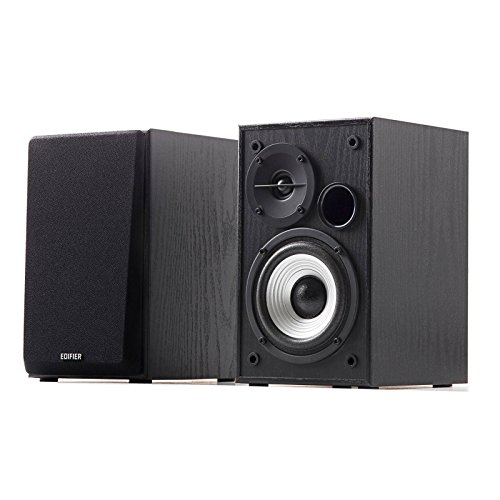
With 24 Watts RMS output and a front-firing bass reflex port, the R980T offers a compact design and warm sound. The 110V-240V universal power supply and included cables simplify setup. It suits small offices and computer desks where you want dependable, straightforward sound. Best for users seeking a cost-effective, plug-and-play solution with a touch of natural warmth in the sound signature.
Who it’s best for and why selected
Best for students or small-room listeners who want a simple active system with easy connectivity and a natural tone with minimal tuning.
Caution or limitation
The 4″ drivers focus on balanced mids and highs; very deep bass may require a separate subwoofer for music genres that emphasize low-end impact.
Electrohome Huntley EB10 Powered Bookshelf Speakers

These compact powered speakers include a built-in amplifier and 3″ drivers designed for a warm, natural sound. With Bluetooth 5 and multiple inputs, they accommodate turntables, TVs, PCs, and mobile devices. The design suits compact living spaces or desks where simplicity and versatility matter. A caveat is that the compact drivers may not deliver deep bass in larger rooms without additional help from a subwoofer.
Who it’s best for and why selected
Best for users who want an all-in-one, plug-and-play setup with wireless streaming options and a straightforward control scheme for casual listening and multimedia use.
Caution or limitation
bass depth may be limited in larger rooms; placement away from walls improves overall balance.
Buying Guide: Budget-Friendly Provisions for Audiophile-Grade Sound
- Speaker type and amplification: Decide between powered (active) vs passive. Powered options simplify setup and reduce the need for a separate amp, while passive speakers paired with a compatible amplifier can offer upgrade paths.
- Drivers and crossover design: Look for a combination of tweeters and woofers that complements your room size. Horn-loaded tweeters tend to deliver sharper highs; larger woofers favor deeper bass.
- Room size and placement: Smaller rooms benefit from bookshelf speakers with efficient sensitivity. Place speakers at ear level and angle toward the listening position for better imaging.
- Connectivity: Consider inputs such as dual AUX, Bluetooth, or RCA. If you plan to use a turntable, ensure your setup includes proper phono input options or a built-in phono stage in powered models.
- Sound signature preferences: If you prefer a bright, detailed sound, look for models with horn tweeters. For a warmer, more forgiving tone ideal for long listening sessions, wooden enclosures and silk-dome tweeters help.
- Budget-balanced upgrades: If you later want deeper bass, choose speakers that pair well with a compact subwoofer to preserve space and minimize clutter.
Practical buying questions
- Is a powered bookshelf speaker better for beginners? Yes, because it reduces the number of components needed and simplifies setup.
- Do I need a subwoofer with budget bookshelf speakers? It depends on bass preference and room size; small rooms may not require one.
- Which brand offers the best value for audiophile-like detail at a budget? Brands like Edifier and Klipsch are commonly cited for engaging sound at lower costs.
- Can passive speakers still be a good budget choice? Yes, if you already own an amplifier or plan to buy one within your budget.
- Are wooden enclosures important for sound quality? Wood helps reduce resonances and can contribute to a warmer tone, though enclosure design matters too.
- What’s a good first step to compare sound at home? Listen to two or three models side by side in a similar room setup and note differences in treble clarity, midrange detail, and bass impact.
FAQ
- What defines “budget audiophile” in bookshelf speakers? A blend of affordable price and high-fidelity sound, with clear highs, balanced mids, and usable bass for typical rooms.
- Do bookshelf speakers require stands? Not strictly, but stands or proper isolation help minimize desk vibrations and improve imaging.
- Are all the recommended models suitable for desktop use? Yes, all listed are compact enough for desktop or small room setups.
- Can I upgrade speakers without changing my amplifier? Yes, especially with powered speakers; if you use passive models, ensure your amp has enough power handling.
- Which speaker should I buy if I want more bass without a subwoofer? Look for models with larger woofers and tuned enclosures designed for deep bass response in small rooms.
- How important is speaker placement? Placement significantly affects imaging and bass response; experiment with toe-in and distance from walls to optimize sound.