Best Receivers With Optical Input for Home Theater and Karaoke
Answer: If you need an audio/video receiver (AVR) or stereo amplifier that includes an optical input, look for models that offer digital optical or coaxial connections in addition to traditional RCA or Bluetooth inputs. Optical input is ideal for connecting modern TVs and some streaming devices with reliable, high-quality digital audio. The following five models are well-suited for different setups, from compact living rooms to larger karaoke spaces. They balance power, input versatility, and user-friendly controls for everyday listening and entertainment.
Who this is for: This guide helps several buyer types. Home theater enthusiasts seeking multi-channel surround capability will favor higher power and optical inputs. Karaoke hosts benefit from multiple mic inputs and echo effects. Small apartments or dorm rooms benefit from compact, feature-rich amplifiers with USB/SD and Bluetooth. Reviewers and casual listeners gain value from clear, flexible inputs and easy remotes. The table below highlights the core strengths of each recommended product.
| Product | Peak Power | Inputs (Key) | Best For |
|---|---|---|---|
| Donner MAMP2 | 600W | Optical, Coaxial, Bluetooth 5.3, USB, FM, RCA, 2 Mic-in | Versatile karaoke and home theater on a budget |
| Donner MAMP6 | 1000W | Optical, Coaxial, Bluetooth 5.3, USB, FM, 2 Mic-in | Mid-sized rooms, multi-room or party use |
| Joengoep BT-398A | 450W + 450W | Bluetooth 5.0, USB/SD, Optical, Coaxial, FM, RCA, 2 Mic-in | HiFi stereo and casual party settings |
| Yamaha RX-V385 | Not specified here | HDMI, Bluetooth, Optical/Coaxial, 5.1-channel | Small to medium home theater with surround sound |
| Pyle PDA99BU | 300W | HDMI, Optical/Coaxial, Bluetooth, USB/SD | Budget home theater with flexible inputs |
Donner MAMP2 Stereo Receiver With Optical Input

The Donner MAMP2 provides 600W peak power (60W × 2 RMS) for two-channel audio. It includes optical and coaxial inputs, Bluetooth 5.3, USB, FM, two mic inputs, AUX, RCA, and a phono input. This model is best for small to mid-sized rooms where bright guitar or vocal performances are common. It supports up to two speaker groups and one subwoofer with 4–8 ohms impedance.
Who it’s best for: This is ideal for home karaoke, small living rooms, and casual movie nights where you need a single unit to drive a pair of speakers and a mic setup without HDMI complexity.
Limitation: No HDMI input is available, so certain TV setups may require optical or coaxial connections instead. The included remote offers multiple EQ settings but batteries are not included.
Donner MAMP6 Premium 1000W 6-Channel Receiver

The MAMP6 delivers 1000W peak power across six channels for multi-room or home theater use. It supports Bluetooth 5.0, USB up to 64 GB, two mic inputs, RCA pairs, AUX, FM, and digital optical fiber and coaxial work with smart TVs. The six-channel configuration is suited for larger rooms or people building a more immersive audio system.
Who it’s best for: Choose this if you plan to run multiple speaker groups or want a robust karaoke setup with echo and mic control across several zones. It’s better for larger living spaces and more complex audio layouts.
Caution: The model notes “no HDMI input,” so users relying on HDMI-ARC for TV audio should consider optical/coaxial routing or an alternative HDMI-enabled receiver for integrated TV sound.
Joengoep BT-398A Stereo Amplifier

This amplifier offers up to 900W total (450W per channel) with Bluetooth 5.0, USB/SD, and Optical/Coaxial inputs. It delivers HiFi-grade sound with low distortion and a high signal-to-noise ratio. It also includes two microphone inputs and dedicated tone controls, making it a strong pick for room-filling music and karaoke sessions in mid-sized spaces.
Who it’s best for: Choose this for a balanced home stereo or karaoke setup where you want flexible input methods, reliable Bluetooth streaming, and a simple, user-friendly control scheme.
Limitation: The Bluetooth range is typical for home use; large rooms or obstacles may reduce connectivity performance.
Yamaha RX-V385 5.1-Channel AV Receiver

The Yamaha RX-V385 is a compact 5.1-channel AV receiver with Bluetooth and HDMI 2.1 support (HDCP 2.2). It includes optical and coaxial inputs for digital audio, enabling clean TV-to-speaker connections. It’s designed for small-to-medium home theaters and supports multiple HDMI inputs for easy gaming and streaming device integration.
Who it’s best for: Best for shoppers seeking a straightforward, surround-sound-enabled TV audio solution with modern HDMI input support and reliable performance in smaller rooms.
Limitation: Fewer mic options and room for only one subwoofer, which may limit karaoke setups requiring multiple mics or extended bass control.
Pyle PDA99BU 300W Multi-Input Amplifier
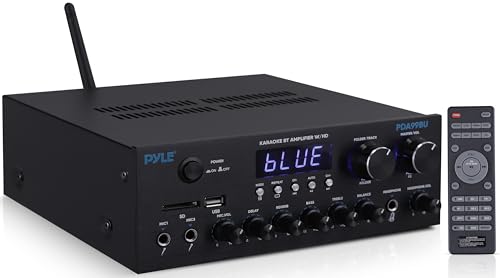
The PDA99BU offers 300W peak power and multi-input versatility, including optical and coaxial digital inputs, Bluetooth, and USB/SD. It’s a cost-effective option for basic home theaters or music rooms that still require reliable digital audio paths from a TV or streaming device.
Who it’s best for: Choose this when you want budget-friendly, flexible inputs and a compact footprint for small rooms or dorm setups.
Limitation: Lower overall power compared to higher-end models, which can limit room-filling sound in larger spaces or heavy bass demands.
Buying Guide: Key Considerations For Choosing A Receiver With Optical Input
- Power needs: Match peak and RMS power to room size and speaker impedance. Higher power models support larger rooms and more speakers, but require proper room calibration.
- Input versatility: Optical inputs are ideal for TV connections. Ensure the unit also has coaxial, USB, Bluetooth, and RCA options if you plan to connect multiple devices.
- Mic capabilities: If karaoke or public speaking is a goal, look for models with multiple mic inputs and echo effects. Check for talkover or vocal-enhancement features.
- TV compatibility: Some models note HDMI absence or require external adapters. Optical and coaxial connections are reliable substitutes for digital TV audio.
- Room layout: Six-channel or multi-zone receivers are great for larger spaces or multi-room setups but may add complexity. Consider whether you need independent zone control.
- Remote and controls: A responsive multifunction remote and clear on-device controls facilitate easy day-to-day use, especially when adjusting input modes during lively gatherings.
- Future-proofing: Look for models that support current audio formats and streaming options, while offering straightforward upgrade paths or modular components if your system grows.
Frequently Asked Questions
- What is an optical input good for on a receiver? Optical input carries digital audio from TVs and streaming devices with clean signal transfer and minimal interference.
- Do I need HDMI if I have optical input? HDMI can carry video and audio, including newer audio formats. If you mainly need TV audio with simple stereo output, optical can suffice, but HDMI adds convenience.
- Can these receivers power multiple speakers? Some models support multiple speaker groups; check the number of channels and impedance requirements for your setup.
- Is Bluetooth enough for streaming music? Bluetooth is convenient, but for best audio quality, consider devices with USB, optical, or coaxial inputs and high-quality DACs.
- What’s the difference between peak power and RMS power? Peak power describes momentary output, while RMS (continuous) power reflects sustained performance. RMS is a better indicator of everyday use.
- What should I consider for karaoke use? Look for multiple mic inputs, echo effects, and adjustable mic sensitivity to ensure clear vocal performance.