Best Volume Control Switches for Speakers: Top Picks for Home Audio
Answering the need for precise, reliable control over speaker output, these volume control switches are designed for home theaters, outdoor spaces, and multi-room systems. This guide highlights five top picks, clarifying who each product is best for, plus practical considerations like impedance matching, power handling, and ease of installation. Ideal buyers include home theater enthusiasts, outdoor entertaining setups, and anyone expanding a multi-zone audio system.
Summary table of featured products
| Product | Best For | Key Benefit | Impedance/Power |
|---|---|---|---|
| OSD Audio SVC100 | Small to mid-sized homes | Front-mounted jumpers for multiple speakers | 100W/chan, 8 speaker pairs |
| STUDIOFINIX ST-VC100 | Outdoor or large spaces | 100W, passive design, versatile mounting | 100W, up to 8 pairs |
| OSD Audio VMS100 | Dining rooms, patios | Slider control with impedance protection | 100W peak, 8 speaker pairs |
| OSD Audio SVC300 | High-demand setups | 300W per channel, robust | 300W/chan, 8 pairs |
| Herdio 100W | Home theaters and terraces | 12-position precision, 8-speaker support | 100W, multi-speaker |
OSD Audio SVC100 100W In Wall Volume Control
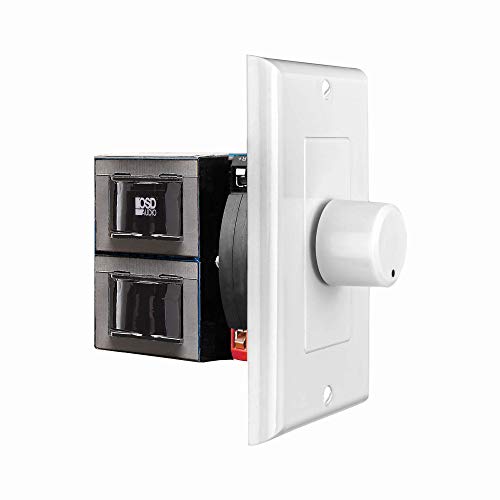
The SVC100 is a high-power, in-wall volume controller designed for impedance matching and multi-speaker setups. It features front-mounted jumpers that let you add up to eight pairs of eight-ohm speakers, making it suitable for distributed home audio across rooms or a large patio area. Best for: homeowners who want centralized, simple control across several zones without external power supplies. Caution: ensure your amp can support parallel connections to avoid overstressing the output stage.
STUDIOFINIX ST-VC100 100W In-Wall Volume Controller

STUDIOFINIX offers a 100W passive in-wall volume controller with impedance-matching capabilities and up to eight speaker pairs. Its compact, wall-mount design is ideal for spaces where a clean look matters, such as living rooms or outdoor walls. Best for: systems that require a discreet, easy-install solution with scalable speaker connections. Caution: as a passive device, it relies entirely on your amplifier’s available headroom.
OSD Audio VMS100 100W In Wall Volume Control
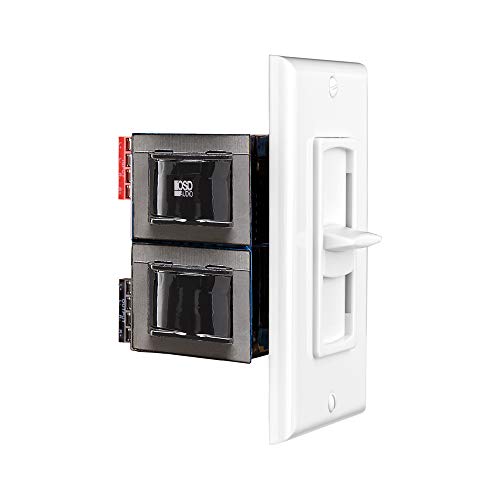
The VMS100 emphasizes precise control with a 100W rating and eight pairs of eight-ohm speakers. It provides adjustable jumpers for flexible zone configurations and is noted for maintaining full hi-fi frequency response with minimal bass loss. Best for: dining rooms, porches, or outdoor areas where consistent audio across zones matters. Limitation: as with most in-wall controls, maximum performance depends on the amplifier’s capacity to handle parallel connections.
OSD Audio SVC300 300W In Wall Volume Control

The SVC300 delivers a high 300W per channel and includes front-mounted impedance jumpers, enabling up to eight speaker pairs. It is best for large homes or home theaters with demanding power needs. Choose this if you require strong headroom and centralized control across multiple zones. Caution: higher power devices may require careful wiring to avoid impedance mismatches that could stress amplifiers.
Herdio 100W In-Wall Volume Controller

The Herdio 100W volume control features 12-position adjustment, supports up to eight speakers, and emphasizes clean, precise control with smooth operation. Best for: smaller to mid-sized spaces where fine-tuning the listening level matters, such as living rooms and patios. Limitation: as with most knob-based controls, rapid changes in volume can introduce brief audible transients if the amplifier output is near limits.
Pyle PVCD15 In-Wall 2-Channel Volume Controller

The Pyle PVCD15 supports two separate stereo channels and can handle a significant load. It is best for setups where two zones require independent control with straightforward, reliable operation. Caution: verify compatibility with your existing amp and wiring plan, since this unit focuses on two-channel control rather than multiple zones.
Pyle PVC2 In-Wall Volume Controller

This unit uses a vertical sliding control to adjust volume in a simple, space-saving package. Best for: basic multi-room installations where a compact, easy-to-install control is prioritized. Constraint: it offers straightforward control without advanced impedance management, so ensure your system remains within safe load ranges for your amplifier.
Pyle PSPVC6 6-Channel Volume Controller
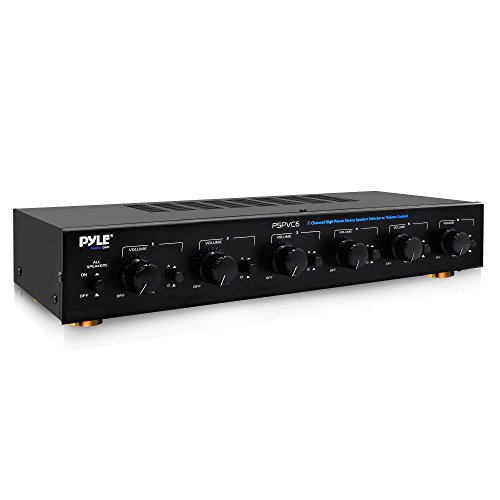
The PSPVC6 is designed for multi-room, multi-speaker applications, handling six pairs of speakers. Best for: larger multi-zone systems needing centralized, single-point volume control. Limitation: the listing notes pricing per unit and per order, which may influence budgeting for larger installations.
Buying Guide: Key Considerations For Volume Control Switches
- Power handling: Match the controller’s wattage rating with your amplifier’s output to avoid distortion or damage. Higher wattage supports larger rooms and more speakers.
- Impedance matching: Look for models with impedance protection to stabilize the load and protect your gear when wiring multiple speakers in parallel.
- Number of zones: Decide how many independent listening zones you need. Some controllers support 2 channels, others support up to 8 speaker pairs.
- Installation style: In-wall volume controls provide a clean look but require electrical work; consider whether a surface-mounted or plug-in option better fits your space.
- Control type: Rotary knobs are intuitive for tactile adjustments, while sliders offer quick, granular control. Choose based on user preference and room layout.
- Outdoor and indoor use: If you plan to place units outdoors or in humid areas, verify weather resistance and enclosure ratings where applicable.
- System compatibility: Ensure the controller is compatible with your existing amplifier, receiver, and speaker impedance to avoid mismatches.
- Maintenance and accessibility: Consider whether you want easy access for frequent adjustments or a discreet installation with hidden controls.
FAQ
- What is impedance matching and why is it important?
Impedance matching helps prevent overloading amplifiers when multiple speakers are wired in parallel. It maintains stable operation and protects both speakers and amps from overheating.
- Can I use any volume control with any amplifier?
Not exactly. Check power rating and impedance compatibility. An underpowered controller can limit volume or distort, while a mismatch can stress the amp.
- How many zones do I need for a home system?
For small homes, 2–4 zones may be enough. Larger homes or outdoor areas might require 6–8 speaker pairs to cover all spaces adequately.
- Are passive volume controllers better than active ones?
Passive controllers rely on the amplifier for power and are simple, while active models may offer additional features. Choose based on installation needs and system power.
- Is installation urgent to hire a professional?
In-wall installations involve electrical work and must comply with local codes. When in doubt, hire a licensed electrician to ensure safety and correct wiring.