Best Marine Cell Phone Booster Solutions for On‑Deck Connectivity
If you need reliable cell service on a boat or near coastal areas, a marine cell phone booster can dramatically improve voice calls, text reliability, and data speeds. These devices amplify weak signals from nearby cell towers, making them ideal for boaters, anglers, and crew members who spend time offshore or on the water. The top picks below are suited for different needs: compact marine antennas, all‑weather boosters for boats, and multi‑room home or vehicle setups that still support marine use in coastal regions. This guide highlights five strong options with practical pros and limits to help you choose.
Product snapshot table (quick comparison):
| Product | Best For | Key Advantage | Limitations |
|---|---|---|---|
| Wilson Electronics 9.88-inch Marine Antenna | Small boats needing omni‑directional reception | Omni‑directional for steady all‑around signal | Requires separate booster for gain |
| weBoost Drive Reach Overland | Vehicle and boat trailers with outdoor mounting | Rugged outdoor antenna and all‑carrier support | Designed for vehicles; marine use not explicitly stated |
| Metarepeater Home Booster | Coastal homes or marinas with indoor reception | Up to 5,000 sq. ftCoverage | Household focus, not marine‑specific |
| SignalBrick Cell Booster | Rugged RVs and boats with constant motion | Good multi‑carrier performance | Data on installation specifics limited |
| HiBoost Home Office Booster | Coastal homes and docks with outdoor to indoor needs | 5G capable, wide carrier support | Indoor focus; outdoor marine environment considerations |
Wilson Electronics Marine Omni-Directional Antenna
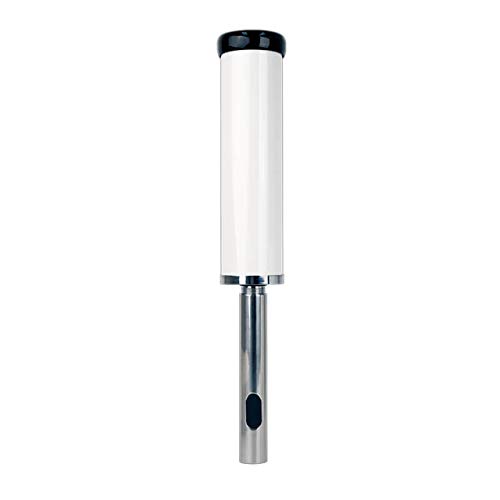
The Wilson Electronics marine antenna offers true omni‑directional performance in a weather‑resistant package. Its threaded ferrule/post supports side or bottom cable exits, making it adaptable for compact deck installations. Best for small boats or yachts needing reliable on‑water reception without precise orientation. A limitation is that this is an antenna component; pairing with a separate booster is necessary to increase gain in weak signal areas.
weBoost Drive Reach Overland

Designed for adventure, this booster package includes a rugged outdoor antenna and a versatile mounting bracket. It offers cross‑carrier compatibility across major U.S. networks, including 5G support. Choose this if you need a robust, all‑terrain solution that can be mounted on a vehicle or a boat trailer. Best for mobile marine use where an outdoor antenna is feasible. A potential limitation is that its official emphasis is on vehicles; marine specifics like saltwater exposure aren’t explicitly documented.
Metarepeater Home Booster

This five‑band booster covers bands used by major U.S. carriers and supports up to 5,000 sq. ft. ideal for coastal homes, marinas, or shorefront property with indoor reception challenges. Best for boats docked near shore or homes with indoor dead zones. It can improve call quality, text reliability, and data. A caveat is the need to confirm outdoor signal strength before purchasing to ensure adequate amplification at the indoor location.
SignalBrick Cell Booster For Vehicle

Designed for trucks, RVs, and marine trailers, this booster advertises extended reach (5–8 miles) and multi‑user support across networks. Best for boats and RVs that require strong in‑motion performance and multiple devices. A notable limitation is that the listing emphasizes extended range and multi‑user use, but exact coastal or marine environmental specs aren’t detailed.
Cellet Car Antenna and Repeater Kit

Cellet provides a car‑oriented antenna/repeater setup that can be adapted for near‑shore boats when placed near windows. Best for budget installations and quick deployments. The main caution is that this kit is described for automotive use; marine applications require careful securing and weatherproofing to avoid water exposure to electronics.
Buying Guide: Key Considerations For Marine Use
What signal area do you need to cover?
Mariners often require stronger signals at the helm and cabins. For small boats, a compact antenna at the highest practical outdoor point paired with a booster can deliver meaningful gains. For larger boats or marinas, consider systems that cover multi‑thousand square feet or multiple cabins.
Should you prioritize omni‑directional or directional antennas?
Omni‑directional antennas work well when your boat moves through signal sources in multiple directions. Directional antennas can provide higher gains when you know the direction of the strongest tower, but require aiming and adjustment as you move.
What about compatibility and bands?
Look for multi‑band support (bands 12/17/13/5/2/25) to ensure compatibility with major U.S. carriers. 5G capability is desirable, but verify that service in your area is available on the relevant bands.
Weather and mounting considerations
Marine environments demand weatherproof components and corrosion‑resistant fittings. Ensure mounts and cables are rated for outdoor use and salt exposure. Cable exits should minimize water intrusion and allow flexible routing on deck or in cabins.
Indoor vs. outdoor placement
Home and marina installations benefit from outdoor antennas near shorelines, with indoor units placed to maximize coverage while avoiding signal reflections inside compartments. Vehicle and trailer setups should consider vibration resistance and secure cable management.
Safety and compliance
Choose FCC‑approved devices and follow manufacturer installation guidelines. Improper installation can cause interference or reduced performance. In maritime contexts, ensure any external antenna is securely mounted and does not obstruct navigation or hull integrity.
Choosing the right kit for your scenario
For a small boat near the dock, a compact marine antenna paired with a booster can offer noticeable gains with straightforward installation. For mid‑size to large boats or coastal homes, a system that covers multiple rooms or deck areas with solid outdoor mounting provides the best value. If you frequently travel with a camper or trailer, a rugged all‑terrain booster with a weatherproof outdoor antenna is advantageous.
FAQ
- Do marine boosters work offshore? They can improve signal when there is any tower coverage within range, but performance depends on outside signal strength and antenna placement.
- Can I install these by myself? Yes, many kits are designed for DIY installation, but follow safety guidelines and local regulations.
- Will boosters affect others’ signals? Properly installed FCC‑compliant boosters should not interfere with nearby networks when used correctly.
- Is 5G support essential for marine use? 5G improves future data speeds but may not be available in all coastal areas; a solid 4G LTE foundation is often sufficient.
- What is the typical coverage you can expect? Indoor coverage varies by exterior signal; strong exterior signals can deliver broader indoor coverage, often in thousands of square feet for home setups and smaller but meaningful gains on boats.