Best Self-Playing Baby Grand Pianos for Home Play and Learning
Answering the buyer’s search intent, this guide highlights compact, kid-friendly piano options that blend playful learning with authentic playing experiences. The top picks range from digital grand-style pianos with expressive action to toy-grade grand setups that introduce music basics to children. Choose this overview if you want clear, comparison-friendly help on which model suits a child’s age, space, and learning goals. The table below summarizes the five selected products and their key strengths for quick reference.
| Product | Best For | Key Benefit |
|---|---|---|
| Kawai DG30 88-Key Digital Grand Piano | Older kids and teens seeking authentic grand feel | Responsive Hammer III and PHI sampling for realism |
| Best Choice Kids Classic Wooden 30-Key Mini Grand (Black) | Young beginners needing a real-looking piano | 30 keys, wooden build, familiar grand silhouette |
| Best Choice Kids Classic Wooden 30-Key Mini Grand (Pink) | Young learners who enjoy a colorful setup | Bright finish, same 30-key educational design |
| KAWAI Grand Piano Natural | Compact display with a traditional look | 32-key range, natural wood styling for decor |
| Baby Einstein Cal’s First Melodies Magic Touch Piano | Infants and toddlers exploring cause-and-effect | Magic touch surface and Montessori-inspired play |
This article uses objective details from the product listings to help caregivers decide which self-playing or child-friendly piano best fits their space, age range, and learning goals. The sections below present each option with a concise snapshot of who it’s best for and practical buying notes.
Kawai DG30 88-Key Digital Grand Piano

Best For: Intermediate players or households seeking a high-quality grand-like experience in a compact form. This model uses Progressive Harmonic Imaging with 88-key stereo sampling for lifelike tone and a Responsive Hammer III action with graded hammers and Ivory Touch surfaces for a realistic feel.
Why selected: It mirrors the dynamics of a grand piano, helping developing players build technique and touch sensitivity. Acoustic Rendering adds resonance to dampers, strings, and cabinets for expressive performances.
Caution: This is a digital instrument, so it may require power and care to maintain the feel of a concert grand in a living space. Best for users who prioritize authentic touch and nuanced sound.
My Baby Piano

Best For: Toddlers and preschoolers exploring basic tunes and motor skills. Features include multi-touch interactions and a drum system to engage early music learning.
Why selected: A simple entry point for youngsters to discover rhythm and finger placement. This option suits households prioritizing playful discovery over advanced playing technique.
Caution: Limited key count means fewer scales and less range for growing players; not a long-term instrument for serious practice early on.
Best Choice Products Kids Classic Wooden 30-Key Mini Grand (Black)
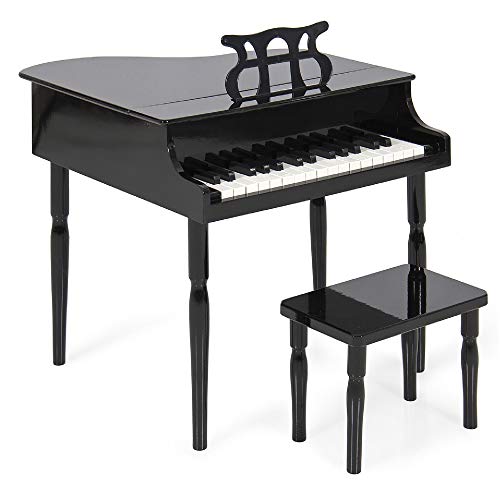
Best For: Kids just starting to learn piano who want a kid-friendly, sturdy mini grand with visual appeal. Features include 30 keys, MDF wood construction, and a piano lid with a foldable music rack.
Why selected: The wooden finish and grand look encourage serious practice habits while remaining child-sized. Note stickers and a lid visually reinforce instrument orientation and acoustics when opened.
Caution: Limited keyboard range means students will eventually outgrow it; ideal as a first instrument or decor-friendly learning tool.
Best Choice Products Kids Classic Wooden 30-Key Mini Grand (Pink)
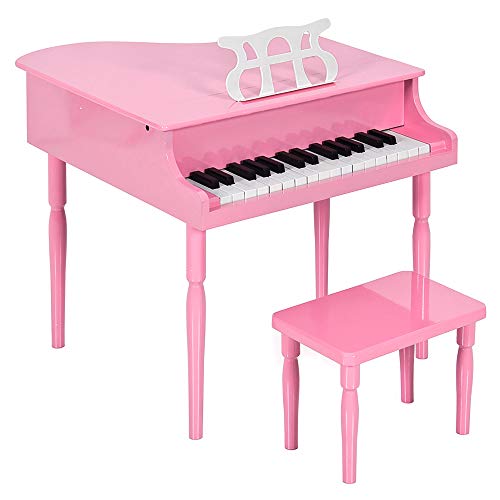
Best For: Young learners who enjoy a playful, colorful instrument that mirrors a real grand aesthetic. Pink finish adds a friendly, approachable look.
Why selected: Like the black version, it offers a 30-key setup with learning aids. Color can increase engagement for children who respond to visual cues and fun aesthetics.
Caution: Similar to other mini grands, it’s best used as an introduction before transitioning to full-sized keyboards or classroom pianos.
KAWAI Grand Piano Natural
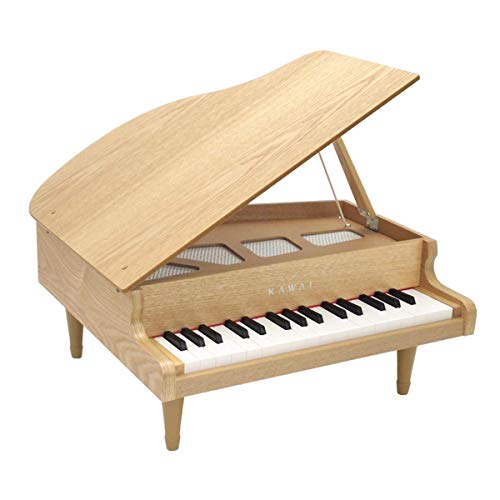
Best For: Home decor-minded buyers seeking a compact, natural-wood aesthetic with a traditional look. This option focuses on style and simplicity with a 32-key range.
Why selected: The natural finish integrates well with living spaces, while the listing notes a sturdy build and a compact footprint appropriate for smaller rooms.
Caution: Keyboard range is limited compared to full-length pianos; suited for basic melodies and early repertoire rather than advanced concert pieces.
Baby Einstein Cal’s First Melodies Magic Touch Piano

Best For: Infants and toddlers exploring cause-effect relationships through music. The Magic Touch surface invites quick musical results with simple actions.
Why selected: This toy supports early cognitive and motor development, aligning with Montessori-inspired play. The surface interaction encourages curiosity and hand-eye coordination.
Caution: Not a traditional instrument; best used as a stepping stone toward more tactile keyboard interaction as a child grows.
Buying Guide
What should I consider when choosing a self-playing or child-friendly grand piano?
- Age and skill level: Younger children benefit from toy-style pianos, while older kids may benefit from more realistic action and a larger key count.
- Key count and range: 32-key and 30-key mini grands are common for kids; 88-key or full-length keyboards suit serious practice later.
- Action and feel: Look for graded hammer action and ivory-like key surfaces for a more authentic touch on digital models.
- Sound and resonance: Digital pianos with PHI sampling and Acoustic Rendering simulate real piano tone; toy options emphasize fun sounds and learning modes.
- Durability and safety: Choose sturdy builds with non-toxic finishes and rounded edges for younger children.
- Space and decor: Consider the instrument’s footprint and visual design to complement living spaces or playrooms.
- Future growth: A modular approach—starting with a mini grand or toy piano and transitioning to a larger keyboard—can ease progression.
How do I compare these options quickly?
- Best for realism and technique: Kawai DG30 Digital Grand Piano with 88 keys and advanced action.
- Best for younger beginners with real-wood feel: Best Choice 30-key mini grands (Black or Pink).
- Best for decor-friendly spaces: KAWAI Grand Piano Natural with compact footprint.
- Best for early music exploration: Baby Einstein Cal’s First Melodies Magic Touch Piano.
- Best budget, broad learning features: My Baby Piano and similar multi-sensory toys.
Frequently asked questions
- What is the difference between a digital grand and a toy piano? A digital grand uses electronic sampling and keys with realistic action; toy pianos emphasize play features and simple learning aids.
- What age is best for a 30-key mini grand? Suitable for ages 3–8, depending on the child’s coordination and interest in learning the piano.
- Do mini grands help with transitioning to a full-size piano? Yes, by teaching finger placement and basic musical familiarity, though a full-size keyboard will still be needed later.
- Is a higher key count always better for beginners? Not necessarily; early learners benefit from approachable size and design before expanding to more keys.
- Are digital pianos a good substitute for acoustic pianos? For practice and learning basics, yes; for auditioning and acoustic tone nuance, a real piano or high-fidelity digital sound is preferable.