Best Guitar to Phone Adapters for Mobile Recording and Practice
Answering the need for simple, portable guitar capture, these guitar-to-phone adapters let players record or practice with minimal setup. The following picks are best for solo practice, mobile recording, live streaming, or jamming with backing tracks. Each option emphasizes direct listening, easy plugging, and compatibility with iPhone, Android, or tablets.
Overview table: Selected adapters
- JOYO MOMIX CAB — Direct monitoring, plug-and-play, pocket-sized, works with USB-C and Lightning.
- IK Multimedia iRig 2 — Classic plug-and-play with 1/4″ output for amps, works across devices.
- Ueteto Audio Interface — Ultra-compact, no driver needed, compatible with multiple platforms.
- KYXAIN — 24-bit/48kHz, Type-C and Lightning ready, ideal for live streaming.
- IK Multimedia iRig HD 2 — High-resolution 96 kHz recording, versatile outputs.
JOYO MOMIX CAB Guitar Audio Interface

The MOMIX CAB is a direct monitoring interface with zero-latency signal flow from guitar to headphones while simultaneously sending a clean signal to the connected phone. This is best for recording dry guitar tracks, practicing with backing tracks, or streaming live performances. Important: the dry signal cannot be muted, and it is not designed for real-time amp sims or effects processing.
Best for: players who need immediate, clean guitar monitoring while recording or streaming, without software or driver setup. The device is ideal for on-the-go ideas and quick demos where latency must be avoided.
Limitation: No battery or driver requirements; if you need on-device amp modeling or effects in real time, this may not meet those needs.
IK Multimedia iRig 2 Portable Guitar Interface
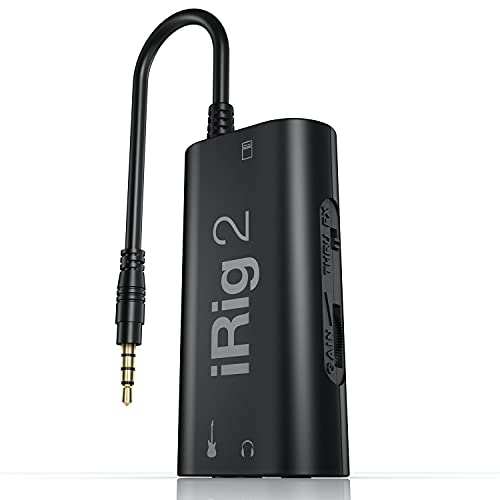
iRig 2 offers plug-and-play simplicity on every device, with a gain dial and a 1/8″ TRRS output for true mobile recording. It supports connecting to an amplifier via its 1/4″ output jack, making it a versatile choice for mobile rigs and practice setups. It works well with Apple devices using appropriate adapters.
Best for: users who want a straightforward interface that can feed a guitar signal to both headphones and an external amp. It’s particularly suitable for those who plan to jam with an amp or monitor through a separate device.
Caution: Some newer devices may require adapters to maintain compatibility with iOS power and connectors.
Ueteto Audio Interface For Guitar

The Ueteto interface emphasizes portability and a driver-free setup, designed for quick live streaming and simple recording. It’s advertised as compatible with iPhone, iPad, and Android devices, with OTG adjustments on Android. Note that it’s described as a basic recording interface without editing or mixing capabilities, making it a strong fit for beginners or quick practice sessions.
Best for: beginners or travelers who want a compact, no-fuss recording option for quick guitar ideas or live streams. It’s a solid minimal setup when you don’t need advanced editing features.
Limitation: Some apps may not support all features; compatibility can vary by app and device.
KYXAIN Guitar Audio Interface Pocket

KYXAIN’s pocket-size interface offers 24-bit/48kHz internal recording, with Type-C for Android and Lightning adapters for iPhone users. It’s designed for live streaming and direct-to-smartphone audio. It uses a standard 1/4″ 6.35mm jack for guitar input and includes a monitoring path via 3.5mm headphone output.
Best for: mobile live streamers who want good fidelity with broad device compatibility and a simple plug-and-play design.
Caution: It emphasizes recording only (no built-in editing or mixing), so users who need processing within the device may want a different option.
IK Multimedia iRig HD 2 Guitar Interface
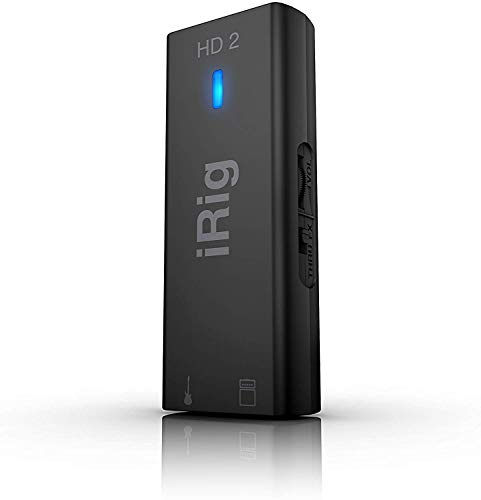
The iRig HD 2 focuses on high-resolution recording with 96 kHz sampling and optimized instrument-level input. It includes a 1/4″ amp out with FX/Thru options, allowing integration into live rigs or practice setups without extra adapters. The device is noted for distortion-free performance and a headphone preamp with level control.
Best for: players seeking high-quality digital recording and flexible routing to amps and headphones, suitable for studio-style practice and serious mobile recording.
Limitation: Some users may require additional adapters when pairing with non-Apple devices or particular setups, depending on their gear ecosystem.
Buying Guide
What to consider when choosing a guitar-to-phone adapter:
- Latency and monitoring: If you need real-time monitoring, prioritize direct monitoring or low-latency paths like the JOYO MOMIX CAB.
- Device compatibility: Check whether the adapter supports USB-C, Lightning, and 3.5mm headphone outputs to match your phone or tablet.
- Outputs and routing: Decide if you want 1/4″ amp outs, 3.5mm headphone outs, or both for live practice and monitoring through external gear.
- Portability: Pocket-sized designs favor travel, rehearsals, and on-the-go recording; consider clip-on or tiny form factors for mobility.
- Recording fidelity: Look for 24-bit/48kHz or higher specs for higher-quality capture, especially if you plan to share or publish recordings.
- Driver and app requirements: Some interfaces are truly plug-and-play with no software, while others may require apps or drivers for full feature sets.
Common scenarios
- Mobile practice: Choose compact, battery-free interfaces with direct monitoring for immediate feedback.
- Mobile streaming: Prioritize devices with reliable headphone monitoring and clean Gt-to-phone signal paths, plus straightforward setup.
- Home hobby recording: A USB-C or Lightning interface with 24-bit/48kHz capture and amp-out options supports layering with external amps or speakers.
How to decide among the options
- Direct monitoring priority: JOYO MOMIX CAB fits best for zero-latency listening while recording.
- Amp integration: IK Multimedia iRig 2 and iRig HD 2 offer 1/4″ outputs for amps, useful in live rigs or loud practice spaces.
- Ultra-compact travel: Ueteto and KYXAIN emphasize small size with broad device compatibility for quick ideas.
- High-resolution capture: iRig HD 2 provides higher sampling rates and a robust monitoring path for serious practice.
FAQ
- What is latency in guitar interfaces? Latency is the delay between playing a note and hearing it. Direct monitoring minimizes this delay.
- Do I need drivers for these adapters? Most listed models are plug-and-play and do not require drivers, but some may benefit from companion apps on certain devices.
- Can these interfaces work with Android devices? Several options include Type-C or adapters to support Android devices; check compatibility of each model.
- Can I use these with a real amplifier? Some interfaces provide 1/4″ amp outs, allowing you to connect to a guitar amplifier directly.
- Are these suitable for live streaming? Yes, many models are designed for mobile streaming, with stable audio paths and portable form factors.
- Do these require batteries? Most listed options are USB-powered or bus-powered and do not need separate batteries.