Best 11 Gauge Acoustic Guitar Strings for Rich Tone and Longevity
If you’re seeking steady, balanced tone with reliable playability, 11-52 gauge strings are a solid choice for many acoustic players. This guide highlights five top options that deliver clear projection, comfortable feel, and dependable durability for stage, studio, or casual jam sessions. Suitable for players who want bright to warm tones, good sustain, and easy fingering without sacrificing longevity.
| Product | Brand | Best For |
|---|---|---|
| Elixir Phosphor Bronze with NANOWEB | Elixir | All-around players who value long-lasting tone and a smooth feel |
| D’Addario 80/20 Bronze EJ13 | D’Addario | Bright, bold projection for strumming and rhythm |
| Ernie Ball Earthwood Light Phosphor Bronze | Ernie Ball | Warm, expressive tone with easy playability |
| D’Addario Phosphor Bronze EJ26-3D | D’Addario | Balanced warmth suitable for multiple genres |
| Martin Authentic 80/20 Bronze | Martin | Bright-punchy attack that mellows with playtime |
Elixir Phosphor Bronze Strings With NANOWEB Technology

Best for players who want longest-lasting tone with a smooth feel. Elixir’s phosphor bronze wrap wire and NANOWEB coating resist sweat, humidity, and corrosion, helping the strings stay sounding fresh longer. The set features a Custom Light gauge of 11-52, designed for comfortable fretting and reliable intonation across the fretboard. This option is ideal for performers who tour or record, and value a consistent, bright-to-warm acoustic voice over time.
Who it’s best for: stage and studio players who need steady tone and extended life, plus a comfortable feel for long practice sessions. Limitation: coatings can mute some brightness compared with uncoated options in extreme playing styles, though NANOWEB aims to minimize this effect.
D’Addario 80/20 Bronze EJ13 Custom Light 11-52
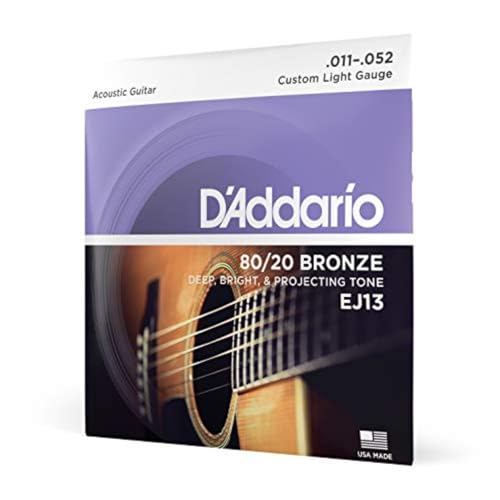
Best for players who want a classic, bright acoustic voice with crisp projection. The 80/20 bronze wrap uses a precision-wound core for a resonant, lively acoustic tone that fills rooms. It’s a longstanding standard in acoustic sets, offering reliable brightness and strong sparkle across strumming and fingerpicking styles. Choose this if you prefer a traditional bright top-end with a solid, steady foundational punch.
Best for: bright, articulate rhythm parts and solo playing. Caution: may feel a touch stiffer for beginners compared to lighter gauges, requiring a little more finger pressure.
Ernie Ball Earthwood Light Phosphor Bronze 80/20 11-52

Best for players seeking a warm, expressive tone with easy playability. The light gauge emphasizes comfortable fretting while preserving the classic phosphor bronze warmth. The 80/20 bronze composition yields a bright, projecting sound with crisp dynamics, ideal for light strumming and fingerstyle practice. Best for players who want a traditional acoustic tone with a gentle touch.
Note: Wound around a high-carbon steel core, these strings deliver dependable durability but may require occasional intonation checks on certain guitars after significant tension changes.
D’Addario Phosphor Bronze EJ26 11-52
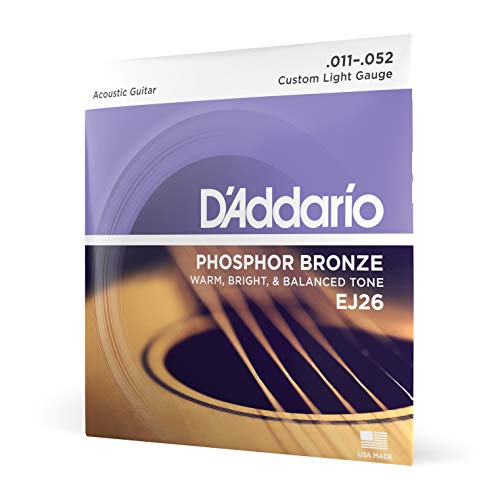
Best for players who want a warm, balanced tone with strong all-around versatility. Phosphor bronze wrap wire offers a timeless acoustic sound with a responsive attack and rich sustain. The custom light gauge remains comfortable for beginners and intermediate players, while satisfying players who need clarity across lead and chord work. Choose this if you want a familiar, dependable phosphor bronze voice for many genres.
Martin Authentic Acoustic Strings (80/20 Bronze) 11-52

Best for players seeking a bright, punchy attack with quick response and solid tuning stability. Martin’s 80/20 bronze strings are designed with high-tensile strength and tin-plated core wire to deliver a clear, crisp tone that suits aggressive strumming and articulate fingerpicking. The set favors players who want a classic, lively voice that matures with playing time.
Buying Guide
- Gauge and tension considerations: 11-52 gauges are mid-light, offering easier fretting and comfortable play, while still delivering solid projection. Beginners often prefer these for reduced finger fatigue; experienced players may choose them for versatility across strumming and fingerstyle.
- Bronze vs phosphor bronze vs 80/20: Phosphor bronze provides warmth with strong brightness and durability, while 80/20 bronze tends to be brighter and crisper. Phosphor bronze strings last longer due to corrosion resistance in coated options like Elixir. Uncoated bronze sets can sound more bright initially but may wear faster.
- Coated vs uncoated: Coated options extend life and resist sweat and moisture, but some players note a slight decrease in brightness or dynamic response. Non-coated strings often feel more “alive” initially but wear faster. Consider your playing environment and sweat levels.
- Intended use: For stage performers, longevity and consistent tone over time matter. Studio players may prioritize brightness and even response across the fretboard. Beginners should value ease of playability and tension that won’t induce fatigue.
- Guitar compatibility: While most 11-52 sets fit standard dreadnought and concert body sizes, some acoustic guitars with lighter bracing or unique scale lengths may respond differently. Always check your guitar’s scale and tension range.
- Maintenance tips: Wipe strings after playing to reduce oils and sweat. Periodically wash and dry the neck to extend string life, especially when using coated sets. Replacing strings every few weeks for frequent players helps maintain tone consistency.
FAQ
- What makes 11-52 gauge popular? It offers a balanced tension that is comfortable to play and provides clear projection across a range of styles without excessive stiffness.
- Are coated strings worth choosing for 11-52 sets? Coated strings last longer and resist corrosion, making them good for players who play daily or in humid environments, though they may feel less bright to some players.
- Which brand is best for beginner players? Brands offering consistent tension and easy playability, like D’Addario EJ13 or Ernie Ball Earthwood Light, are commonly recommended for beginners.
- Can I mix brands in a single guitar set? Mixing brands is possible, but may yield uneven tone and feel across strings. It’s usually best to stay within one brand and gauge for consistent performance.
- How often should I replace 11-52 strings? Frequency depends on playing style, environment, and guitar setup. Stage players may replace weekly; casual players every 1–3 months is common.
- Do 11-52 sets suit fingerpicking? Yes, they offer clear articulation and comfortable tension, though some players may prefer lighter gauges for very intricate fingerstyle.