Best Distortion Pedal for Bass: Unlock Heavy Bass Tones With Clarity
Looking for the right distortion pedal to push your bass into bold, guitar-like grit without losing your low end? This guide highlights five top options that work well with bass, explaining who each pedal is best for and why. Whether you’re after light overdrive, chunky fuzz, or high-gain crunch, these picks balance tight lows with articulate mids and defined highs. Use this to choose pedals that preserve your fundamental tone while adding harmonic texture for live bands and studio sessions.
| Product | Best For | Key Benefit |
|---|---|---|
| JOYO Bass Overdrive DOUBLE THRUSTER | Bass players seeking blend-friendly grit | Preserves low end with blend control; mid/gain boosts offer versatile voicing |
| Electro-Harmonix Bass Big Muff Pi | Bassists needing classic fuzz with bass-friendly EQ | Distinct fuzz with a dry mix and bass boost to reclaim lows |
| Boss DS-1 Distortion | Players seeking classic hard distortion tones | Bright, cutting distortion with a broad tone range |
| AFOT Heavy Metal Distortion | Bass players chasing extreme metal tones | Wide gain and EQ controls for aggressive metal sounds |
| JOYO High Gain Metal Distortion (JF-17) | Players after tight mids and high gain | 3-band EQ for mid sculpting plus aggressive drive |
JOYO Bass Overdrive DOUBLE THRUSTER

The JOYO DOUBLE THRUSTER is designed specifically for bass with a dedicated Blend control. It preserves low-end punch while adding grit, making it suitable for bassists who want edge without thinning the bass. The separate Mid Boost and Gain Boost switches expand tonal possibilities, giving four distinct voicings when used alone or together. The 4-knob layout—Tone, Blend, Volume, and Gain—allows precise shaping of character and output. Best for players who want clean-blended distortion with defined mids and a robust bottom end; avoid if you require guitar-specific, high-gain fuzz only. Limitations include potential interaction between boost toggles at extreme settings, which may require careful gain staging.
Boss DS-1 Distortion Bundle
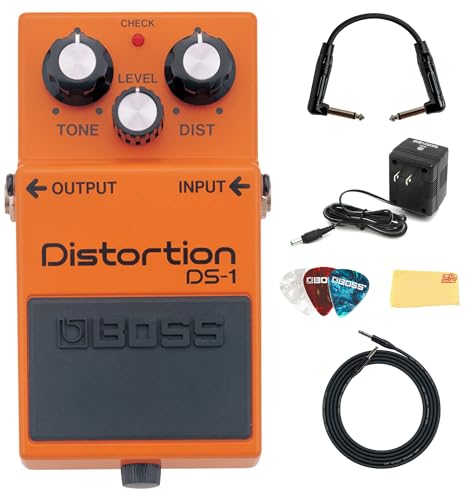
The Boss DS-1 bundle delivers the classic hard-distortion voice and a durable build. It offers a bright attack with a wide tonal sweep; this makes it a versatile option for players who want to tailor from sharp, cutting highs to fuller, bolder lows. While primarily marketed for guitar, many bassists use DS-1 for aggressive, rock-oriented textures. Best for players seeking a long-standing, easily dialed-in distortion tone; best for those who don’t require sub-bass emphasis at extreme gain. Note that the DS-1 is not inherently bass-optimized, so the low end may require EQ compensation on bass-heavy riffs.
AFOT Heavy Metal Distortion

The AFOT Heavy Metal Distortion is built to deliver a wide, high-gain metal voice with independent EQ controls that facilitate a variety of metal and hard rock tones. Six rotary knobs—Treble, Mid, Bass, Boost, Volume, and Dist—alongside a 3-section EQ configuration offer precise shaping to achieve metal textures from bluesy crunch to high-velocity leads. Best for players who want a defined midrange and aggressive drive; choose this if you need scoop or boostable mids for cutting through a dense mix. Caution: at very high gain, clarity can reduce if tone controls are not properly balanced.
JOYO High Gain Distortion (JF-04)

The JOYO JF-04 High Gain Distortion covers classic rock to modern metal with a full-range EQ system. Treble and Mid controls enable midrange punch for bass lines, while the dedicated Bass control helps preserve bottom end under heavy drive. Best for players who want a solid analog feel with a broad gain sweep; better for mid-forward riffs and crunch than for ultra-tight low-end, which can be a limitation at very high gain settings. This pedal is a practical choice for players needing aggressive distortion with flexible tone shaping.
Buying Guide: Key Purchase Considerations
- What bass tone are you chasing? Light overdrive preserves most of your low end, while fuzz and high gain emphasize harmonic saturation and grit. Match the pedal’s character to your genre.
- Blend and EQ controls: Pedals with Blend or dry mix help retain bass clarity. Look for mid/low EQ controls to dial in how the pedal interacts with your bass range.
- Boost options: Independent mid boost or drive boosts can help you cut through a mix without sacrificing lows. Consider whether you need a quick on/off boost for solos or accents.
- Durability and form factor: For live use, a compact, road-ready chassis reduces wear from stomping. All-metal enclosures tend to withstand heavy gigging.
- Compatibility with basses: Some pedals are guitar-oriented. Check whether the distortion voice preserves bass frequencies and whether a dry-bass mix is available.
FAQ
- Can guitar distortion pedals be used with bass?
- Yes, but you may need compensation to preserve low end. Look for pedals with blend/dry mix or a dedicated bass-friendly EQ section.
- Which pedal is best for classic fuzz on bass?
- Electro-Harmonix Bass Big Muff Pi is a strong option due to its bass-friendly fuzz and dry mix control.
- What should I consider for live use?
- Focus on durability, consistent tone across venues, and a pedal with clear mids and a controllable low end to stay audible in a full band mix.
- Are boosts necessary on distortion for bass?
- Boost switches help push solos or accent notes without increasing overall gain, which can muddy the bass if not balanced.
- Which pedal offers the best overall tone clarity at high gain?
- Pedals with tight low-end and responsive mids—like high-gain units with dedicated EQ—tend to maintain note definition when pushed hard.