Best New Guitar Strings for Clear, Bright Tones in 2026
If you’re searching for fresh strings that improve tone, playability, and longevity, this guide helps you pick the right set for your guitar and playing style. It highlights five top options, from bright phosphor-bronze to long-lasting nano-coated formulas, so you can match strings to your music, whether you’re a beginner, a stage performer, or a casual player.
Summary of chosen products:
| Product | Best For | Coating/Material | Gauge |
|---|---|---|---|
| D’Addario EJ11 Acoustic, 80/20 Bronze, Light | Bright, vintage tone; easy playability | 80/20 Bronze | 12-53 |
| Belfort Acoustic Strings, 6-String, Light | Flexible playability; comfortable feel | 80/20 Phosphor Bronze | Light |
| Elixir Acoustic Strings, 80/20 Bronze NANOWEB | Longest-lasting bright tone | 80/20 Bronze with NANOWEB | Light |
| Havendi Acoustic Strings, Phosphor Bronze | Bright, balanced tone; beginner-friendly | Phosphor Bronze | Light |
| Ernie Ball Regular Slinky Nickel Wound (Electric) | Popular standard for electrics | Nickel | 10-46 |
D’Addario Acoustic Guitar Strings, EJ11, 80/20 Bronze — Light Gauge
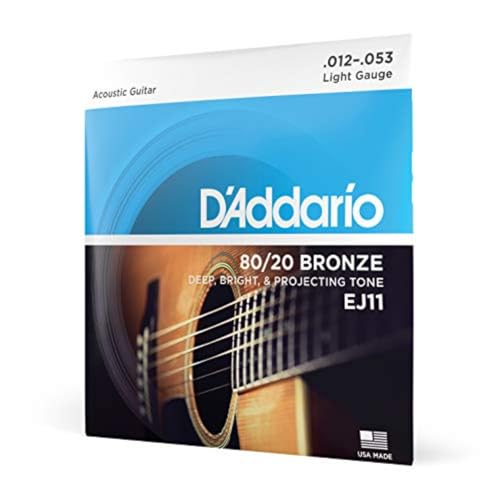
These strings use precision wound 80/20 bronze wire over a hexagonal high-carbon steel core, delivering a bold, bright acoustic voice with crisp projection. This original acoustic string set, rooted in the 1930s, is favored by players seeking a classic tone with easy playability. Best for players who want brightness and sparkle without sacrificing projection. Caution: stainless or hard-wearing players may prefer a slightly heavier gauge for aggressive strumming.
BELFORT Quality Acoustic Strings — 6 String Set, Light

Designed in Germany, these 80/20 phosphor-bronze strings emphasize durability, tuning stability, and rust resistance. The LightForce set is described as very soft to press, reducing finger fatigue and offering a comfortable playing experience. Best for players who want a smooth feel and long life across varied styles. Avoid this if you need ultra-heavy gauges for alternate tunings or aggressive rhythm picking.
Elixir Acoustic Strings, 80/20 Bronze NANOWEB — Light

Elixir’s NANOWEB-coated 80/20 bronze strings provide a bright, focused tone with lasting performance. The coating protects from sweat and humidity, helping maintain a fresh, clear voice longer. Best for players who perform live or record, needing consistent brightness over time. Choose this if you want a smoother feel and extended tone life; note that coated strings can feel slightly slick at first for new players.
D’Addario Acoustic Strings, EJ11-3D, 80/20 Bronze — Light (Pack of 3)

This trio-pack mirrors the classic EJ11 set with precision wound 80/20 bronze for a bold, bright acoustic tone and room-filling projection. It’s ideal for players who want a reliable supply of the familiar acoustic sound and easy restringing. Best for students or gigging players who change strings frequently; caution: more string sets mean more packaging waste.
HAVENDI Acoustic Strings Phosphor Bronze — Premium Coated

HAVENDI’s phosphor bronze coating aims for a brilliant, durable tone with a smooth playing feel. The set is described as rust-resistant and comfortable, making it suitable for beginners and players who value steady tuning and less finger fatigue. Best for players who want a bright, strong acoustic voice without frequent retuning. Limitation: some players report a slightly stiffer feel than ultra-soft unknown brands.
Ernie Ball Regular Slinky Nickel Wound Electric Strings — 10-46

Ernie Ball Slinky nickel-wound electric strings are a global standard for many genres, offering reliable tone and longevity. The 10-46 gauge is widely used for versatility across styles and playing techniques. Best for electric players seeking classic feel and dependable intonation. Caution: these are electric strings and not suitable for acoustic guitars unless specifically designed for electric use.
Buying Guide: Key Considerations For New String Sets
Purpose and tone: Choose by tone target—bright and sparkling vs. warm and balanced. Phosphor bronze and 80/20 bronze produce different brightness and warmth. Coated vs uncoated options trade off tone life and feel.
Gauges and playability: Lighter gauges (like 12-53) are easier on the fingers and good for beginners or delicate picking; heavier gauges offer more volume and tension for aggressive strumming. Consider your playing style and string tension on your guitar neck.
Durability and longevity: If you play live or tend to sweat, coated strings (like NANOWEB) resist corrosion and stay bright longer. For pure tone and a DIY aesthetic, uncoated strings are often preferred by traditionalists.
Instrument compatibility: The list includes both acoustic and electric string sets. Use acoustic sets for acoustic guitars and electric sets for electric guitars. Mixing strings across types can cause tuning instability and poor intonation.
Maintenance: Regular cleaning and proper winding techniques help strings last longer. Wipe strings after playing and replace them before they feel dull or lost of brightness.
Frequently Asked Questions
- What string type gives the brightest acoustic tone? 80/20 bronze strings typically produce a brighter, more brilliant tone than phosphor bronze on many acoustic guitars.
- How long do coated acoustic strings usually last? Coated strings generally last longer than uncoated strings due to protective coatings that resist corrosion from sweat and humidity.
- Should beginners choose lighter gauge strings? Yes, lighter gauges reduce finger fatigue and are easier to press down, making them a common choice for beginners.
- Can I use electric strings on an acoustic guitar? No. Electric strings are designed for different tensions, windings, and core constructions and may damage an acoustic guitar neck or bridge if used inappropriately.
- What’s the advantage of a long-life coating like NANOWEB? It maintains brightness and reduces tonal dulling over time, keeping the guitar sounding more consistent between changes.
- Is there a significant difference between 80/20 bronze and phosphor bronze? Yes. 80/20 bronze tends to be brighter with crisper overtones, while phosphor bronze offers a warmer, more balanced tone with stronger midrange.”