Best Power Amp for Studio Monitors and Essential Power Colutions
Answering the question: the best power options for studio monitors combine solid amps or amps-ready interfaces with reliable, safe power delivery. This guide highlights five products that help you power studio monitors and related gear effectively, whether you need a compact amplifier, replacement cords, or premium power cables. The choices are suited for home studios, professional setups, and workspaces seeking clean, dependable power delivery.
Overview of selected products:
| Product | Type | Best For | Why It Stands Out | Limitations |
|---|---|---|---|---|
| Nobsound 300Wx2 Stereo Amplifier | Class D Power Amplifier | Small to mid-size studios needing extra amplification for active monitors | High power output, low distortion, phono input compatibility; compact form | Requires proper cooling and speaker matching |
| Power Cord Replacement for Presonus Eris E3.5 / E4.5 | Replacement AC Power Cord | Studio monitors in tight setups or when cords wear out | Prevents power interruptions; practical distance extension | Non-polarized figure-8 connect may limit some outlets |
| 3 Prong Power Cord Replacement for KRK Rokit | 3-Prong IEC Power Cable | KRK Rokit and other 3-prong powered monitors | Sturdy 18AWG build; reliable NEMA to IEC C13 connection | Not universal for all monitor models without C13 sockets |
| StarTech 12ft Computer Power Cord | NEMA 5-15P to IEC C13 | Long-distance, organized power runs for workstations | UL listed, durable, fully molded; ample length | 18AWG may be less flexible in tight spaces |
| RUHTXOW 5N OFC Audiophile Power Cable | Audiophile Power Cable | High-end studio or home theater setups | 5N OFC core with 24K gold plugs for low resistance | Premium option; benefit may vary by system |
Nobsound 300Wx2 Stereo Amplifier with Phono Input

Best for: Small to mid-size studios needing extra amplification for active studio monitors. This 600W total output power (300W per channel into 4 ohms) supports driving multiple monitors with clear, low-distortion sound. The unit uses the TI TPA3255 chip, which offers high efficiency and low THD. It includes RCA inputs and a phono option for turntables, enabling integrated audio from turntables and digital sources. The chassis design emphasizes heat management for quieter operation.
Why selected: It provides robust amplification in a compact form and offers a mix of line-level and turntable connectivity, useful for a versatile studio setup. The inclusion of a high-quality preamp stage helps maintain signal integrity when driving studio monitors and related speakers.
Best for: Audiophiles and project studios seeking clean power delivery with minimal footprint. Choose this if you need a dedicated power amp that can double as a front-end for monitoring and playback sources. Avoid if you require built-in DSP, wireless streaming, or a consumer-grade consumer-friendly interface.
Caution: Ensure proper speaker impedance matching and adequate ventilation near the amplifier to prevent thermal throttling during extended sessions.
Power Cord Replacement for Presonus Eris E3.5 / E4.5

Best for: Monitors with worn or damaged AC cords, or setups needing extra cable length. This Figure-8 AC 2-prong IEC C7 power cord offers a flexible option to replace aging cords and extend reach between devices. The 18AWG cabling supports typical studio load, while the non-polarized connector simplifies compatibility with common outlets.
Why selected: A practical, budget-friendly replacement that reduces downtime and keeps monitors powered reliably. It’s particularly useful for small desks or home studios where outlets are close to equipment but cords have become frayed or lost.
Best for: Budget-conscious studios and portable setups. If you need a standard distance extension, this cord provides a straightforward fix. Avoid if your device requires a 3-prong C13 or a polarized cord for safety reasons.
Caution: Confirm outlet polarity and ensure the cable’s voltage and amperage align with local electrical standards before use.
Cable Matters 2-Pack 16 AWG 3 Prong Power Cord

Best for: Desktop computers, monitors, and multiple devices requiring a 3-prong plug at the wall. The 10-foot length provides flexibility for organized cable runs in larger desks or racks. The two-pack offers a spare for backups or synchronized cable aesthetics in multi-device setups.
Why selected: Durable 16 AWG construction rated for 13A offers improved safety and reliability compared to thinner cords. The 3-prong IEC connection to IEC C13 system aligns with many monitors and equipment power supplies, reducing the risk of loose connections.
Best for: Users needing reliable backups or neat multi-device arrangements. Choose this if you want consistent cable length across devices. Avoid if your monitor uses a C7 or a non-IEC socket requiring different adapters.
StarTech 12ft Computer Power Cord (PXT10112)

Best for: Long power runs in workstations or studio desks where outlets are distant from gear. This 12-foot output cord is ideal for organized power distribution across multiple devices, including monitors and audio interfaces.
Why selected: UL-listed and fully molded with copper conductors, it emphasizes safety and durability. The 3-conductor design supports stable power delivery with reinforced strain relief in a long reach cord, reducing tension on sockets.
Best for: Professionals requiring extended reach and reliable power delivery. Avoid if you only need a short connection or if your equipment uses a different power standard or connector than IEC C13.
RUHTXOW 5N OFC Audiophile Power Cable
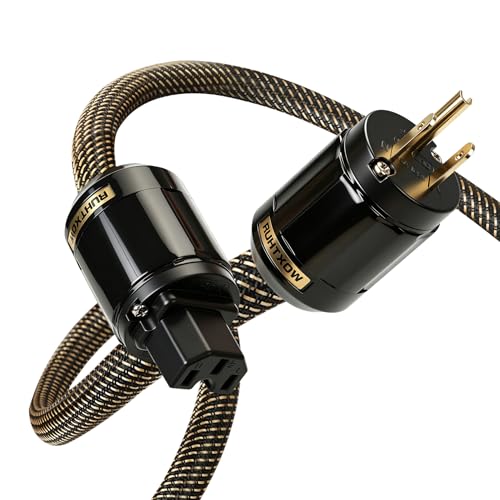
Best for: High-end studio or home theater setups seeking premium, low-noise power delivery to amplifiers and monitors. The 5N OFC copper core and 24K gold-plated plug design aim for minimal resistance and robust signal transmission.
Why selected: The cable’s stiff braided construction reduces tangling and bending, supporting longevity and consistent conductivity. It’s designed to minimize EMI/RFI interference, which can improve overall clarity in a sensitive monitoring chain.
Best for: Users who want the premium build and potential tonal benefits of audiophile-grade cabling. Avoid if the perceived gain of high-end cables doesn’t justify the price in a given room or gear combination.
Buying Guide: Power Solutions For Studio Monitors
- Power needs and impedance: Match amplifier output to monitor impedance and ensure the power supply can deliver clean, steady current without distortion.
- Connector compatibility: Check whether your monitors use 2-prong (C7) or 3-prong (C13) connectors and choose cords accordingly.
- Cable quality vs. cost: Premium audio cables can reduce noise and preserve signal integrity, but the gains vary by system. Balance budget with real-world needs.
- Length and organization: Longer cords help with layout but may introduce more potential for induced noise or tangling. Plan your rack or desk setup first.
- Safety and compliance: Look for UL listings, proper gauge (18 AWG is common for many monitors), and fire-rated jackets when possible.
Frequently Asked Questions
- Do I need a dedicated power amp for studio monitors? Yes, for passive monitors or when you need more control over volume and dynamics. Active monitors have built-in amplification, while passive ones require a separate amp.
- Can I use any power cord with studio monitors?
- What gauge power cord is best for monitors and amplifiers?
- Are audiophile power cables worth it for studio use?
- How do I know if my power setup is introducing noise to my monitors?
Note: This article uses product data from the provided listings. Always verify connector types, voltage, and amperage before purchasing cables or power supplies for studio gear.