Best Electronic Keyboard Musical Instrument Picks for Beginners and Learners
Finding the right electronic keyboard for beginners, students, or casual players requires balancing keys, features, and practicality. This guide highlights five solid options that cover a range of needs—from sturdy bundles with benches and lessons to portable 61-key models with built-in teaching tools. Each entry notes who it’s best for, why it stands out, and a practical caveat to consider before buying.
Summary of Selected Products
| Product | Best For | Key Benefit |
|---|---|---|
| RockJam 61 Key Keyboard Kit | Beginner to intermediate players seeking a full kit | Includes bench, headphones, and teaching tools |
| Alesis 88 Key Keyboard | Aspiring players wanting full 88 keys | Rich sounds library and lessons support |
| JIKADA 61 Key Light-Up Keyboard | Young learners and classroom practice | Three teaching modes and memory features |
| Alesis Melody 61 MK4 | Students needing online lessons and stand | Integrated lesson access and 300 sounds |
| Yamaha 61-Key Portable | Beginner who prioritizes quiz mode | Two ear-training games for memory |
RockJam 61 Key Keyboard Piano Kit

The RockJam 5061 keyboard piano kit offers a portable 61-key keyboard with a traditional-feel layout and a complete bundle for learners. Best for beginners who want a ready-to-use setup—power options include mains or batteries. The LED panel shows rhythm and tone options, along with a teaching function and 30 demo songs. It also supports recording and playback for layering ideas. An aux input allows playing along with favorite tracks, making it a practical first studio tool.
Who it’s best for: learners who value a full starter kit and the option to practice with built-in rhythms and demo songs. Why selected: the bundle reduces the need for extra purchases while keeping the keyboard compact and portable. Caution: the 61-key size limits repertoire compared to full 88-key models, which may matter for advancing pianists.
Alesis 88 Key Keyboard Piano

Designed for beginners who want the feel of an acoustic piano, this 88-key model from Alesis delivers a robust practice experience with built-in speakers and a rich library of sounds. The 88 full-size, touch-sensitive keys simulate piano dynamics, supporting finger strength development and dexterity. It also offers a large sound library, adjustable effects, and a one-touch song mode with rhythms, plus built-in demos to aid learning. It’s well-suited for home studios or practice rooms where space and weight are manageable.
Who it’s best for: learners aiming to transition to authentic piano technique and who benefit from a broad sound palate. Why selected: the 88-key layout mirrors a real piano, useful for long-term playing. Caution: this model can be heavier and less portable than 61-key options, which may matter for travel or kids.
JIKADA 61 Key Lighted Keyboard

The JIKADA 61-key electronic keyboard emphasizes teaching support with three modes and lighted keys to assist learning. It includes two built-in stereo speakers, 255 tones, 255 rhythms, and 50 demo songs, plus a status memory function to save tone and rhythm settings. The package supports audio input/output and a microphone, enabling singing along without disturbing others. Perfect for students who benefit from guided practice and visible cues.
Who it’s best for: beginners and classroom use where teaching modes and visual keys help retention. Why selected: strong teaching features and a memory function provide a structured learning path. Caution: feature-rich models can have steeper setup or menu navigation for younger users.
Alesis Melody 61 MK4 Keyboard
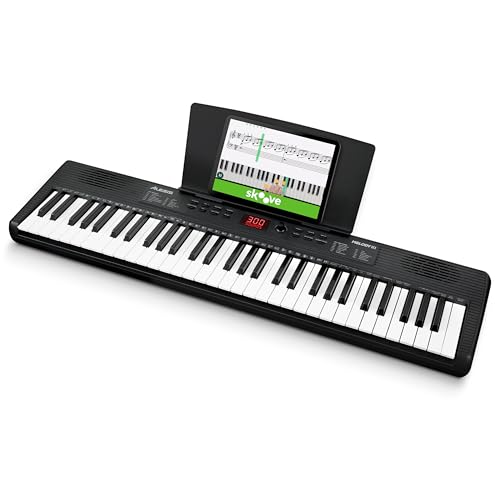
The Alesis Melody 61 MK4 focuses on beginners who want integrated lessons and a complete setup. It offers 61 keys, a broad sound library with 300 sounds, and 300 accompaniment rhythms with auto-chord functions. The package includes a sheet music/tablet stand and power adapter, plus access to online piano lessons, making it a strong all-in-one option for home practice and early curriculum use.
Who it’s best for: learners who prefer built-in lessons or structured practice through online courses. Why selected: the combination of a sizable sound library and ready-to-use lesson access accelerates early skill building. Caution: you may rely on online lessons for deeper progress, which requires internet access.
Yamaha 61-Key Portable Keyboard

The Yamaha 61-key portable keyboard balances compact design with engaging learning features. It includes quiz mode to help with ear training and melodic recall, plus a portable grand piano button to quickly access a high-quality Yamaha piano sound. This model suits students who want a straightforward instrument with structured practice challenges and simple portability.
Who it’s best for: beginners who enjoy interactive training and a reliable brand experience. Why selected: Yamaha’s teaching-oriented features and dependable sound profile make it a clear starter choice. Caution: the 61-key format may limit repertoire expansion compared with 88-key models for advanced players.
Raimy 37 Keys Keyboard For Kids
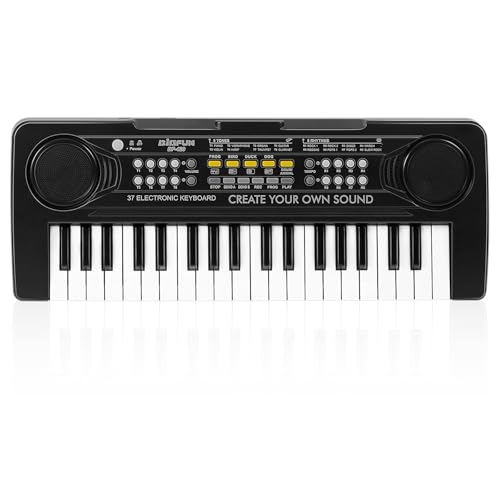
The Raimy 37-key keyboard focuses on very young players and early learning. It uses non-toxic materials with child-safe edges and a compact size. It features 11 demonstration songs, 8 rhythms, and 8 tones, plus record/playback, sustain, vibrato, and learning modes. It’s ideal for introductory exploration and basic music theory introduction in a kid-friendly format.
Who it’s best for: parents seeking a safe, inexpensive intro instrument for preschool to early elementary ages. Why selected: its simplified 37-key design and kid-friendly features align with early learning goals. Caution: limited keys may constrain future piano progression; consider this as a preliminary tool rather than a long-term solution.
Buying Guide
What to consider when choosing an electronic keyboard:
- Key count and feel: 61-key models are portable and good for beginners; 88-key keyboards are closer to real pianos and better for long-term growth.
- Teaching features: look for lighted keys, built-in lessons, quiz modes, and access to online courses to accelerate progress.
- Sound library and effects: more tones, rhythms, and adjustable reverb or chorus can inspire creativity and practice variety.
- Bundle contents: kits with stands, benches, headphones, and sheet music stands reduce additional purchases.
- Portability and power: consider whether you’ll play on the go or primarily at home; some models run on batteries for travel.
- Learning path: if you plan to take formal lessons, choose a model with easy connection options to MIDI or lesson apps.
Frequently Asked Questions
- What is the difference between 61-key and 88-key keyboards?
- Are bundled lesson features important for beginners?
- Should I choose a model with built-in speakers?
- Is a headset useful for practice?
- What extra accessories help beginners most?
- Can I use these keyboards with online lessons?
61-key keyboards are lighter and more portable, suitable for beginners. 88-key keyboards mimic a full piano range and better prepare players for advanced pieces.
Yes. Built-in lessons, teaching modes, and online course access can help establish practice routines and improve technique.
Built-in speakers are convenient for practice without external gear, though you may want to connect to external speakers or headphones for better sound in shared spaces.
Headphones reduce noise for late-night practice and allow solo focus on fingers and rhythm.
A sturdy stand or bench, sheet music stand, and note stickers can improve posture, accessibility, and learning efficiency.
Yes. Many models support MIDI or USB connectivity and are compatible with popular lesson platforms, although features vary by model.