Best Low Pass Filter Subwoofers for Precise Bass
Answer: For buyers seeking cleaner, more controlled bass from subwoofers, a low pass filter (LPF) is essential. The right LPF helps separate subband frequencies, reduces distortion, and protects speakers by preventing high-frequency content from reaching woofers. This guide highlights five reliable LPF/subwoofer filter options suitable for DIY projects, car audio, and PA setups. Best for: hobbyists installing custom subwoofer circuits, DJs enhancing bass clarity, and budget-conscious buyers seeking straightforward, install-ready boards.
| Product | Best For | Key Benefit |
|---|---|---|
| NOYITO NE5532 LPF Board | DIY hobbyists, single/dual-channel mono setups | Customizable op-amp upshift with NE5532 chip |
| GODIYMODULES Low Pass Filter | Compact dual-channel bass projects | Wide DC voltage range, bass volume control |
| Sound Town XO-1S | PA/DJ sub systems | 180 Hz 18 dB/octave crossover |
| Nippon HC-101 | Classic single-channel crossovers | Low 120 Hz passband for tight bass |
| Rolls SX95 | Studio/road subwoofers | Dual outputs, 12 dB/octave |
NOYITO NE5532 Single Supply LPF Board

Best for: DIY enthusiasts who want to customize tone using a replaceable op-amp and a single-supply design. This board supports 10–24V and offers a 22 Hz–300 Hz passband, making it suitable for small- to mid-sized subs. The NE5532 op-amp enables swap-out flexibility for experimenting with different sonic characteristics. The wiring uses copper terminals for reliable connections. A potential limitation is that user-driven op-amp swaps require basic soldering and knowledge of op-amp circuits.
GODIYMODULES Low Pass Filter Bass Subwoofer Board

Best for: Compact dual-channel bass projects with a straightforward setup. This board operates on DC 18–32V and includes a bass volume control, making it convenient to dial in low-end output. The recommended operating window is DC 24–30V for optimum performance. The caveat: users should confirm compatibility with their specific amp stages and ensure adequate heat dissipation for sustained high-output use.
Sound Town High-Power 1000W LPF Crossover

Best for: Larger PA or DJ subwoofer setups needing robust frequency distribution. This unit provides an 180 Hz low-pass filter with an 18 dB/octave slope, suitable for driving 15″ to 18″ subs with strong bass control. The limitation is that it emphasizes higher power handling and may be a heavier, purpose-built module. Use this if you require reliable performance in demanding environments.
Nippon HC-101 4 Ohm Subwoofer Crossover

Best for: One-channel subwoofers needing a straightforward 120 Hz low-pass crossover. This unit supports 4-ohm impedance and offers 200 W RMS to 400 W peak capacity according to its speclist. It’s a simple, focused option for compact subs. A potential limitation is that it is a single-channel crossover, which may limit multi-speaker configurations without additional routing hardware.
wandalu Car Home Amplifier Subwoofer Equalizer Crossover
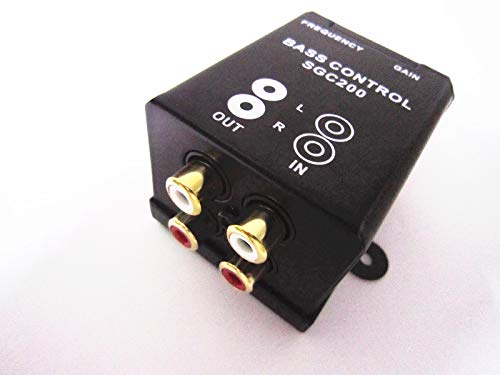
Best for: Car or home audio integrators needing a 2-channel RCA interface and a tangible bass control. This board includes gold-plated RCA connections and a dedicated bass/volume control with a 150 Hz–40 Hz range. The primary caution is that the description notes a broad range; verify actual frequency response and enclosure compatibility with your system before installation.
Skar Audio SK150HZBB-PR Elite Frequency Filters

Best for: Pair-based bass filtering for 8″–12″ speakers in subwoofer projects. These elite filters target 0–150 Hz at 4 Ω (0–75 Hz at 8 Ω) and are designed for low-frequency attenuation. A caveat is that these are pair options; ensure your impedance matches and plan for stereo pairing if required.
Coliao 2pcs 200W Subwoofer Crossover

Best for: Two-unit sub systems needing second-order crossovers. This pair handles up to 200W (4–8 ohms) and provides a second-order crossover to help maintain a clean bass response. If you only need a single-channel solution, use one unit and pair with a suitable amp. Limitation: double units are needed for stereo configurations, increasing total cost and footprint.
Buying Guide
What should you consider when choosing a low pass filter for subwoofers?
- Impedance and Power Handling: Match the crossover to your speaker impedance (4–8 ohms) and the expected power to avoid clipping or overheating.
- Slope and Crossover Point: Common slopes are 12 dB/Octave or 18 dB/Octave. Lower crossover points yield tighter bass; higher points ease integration with midrange drivers.
- Channel Configuration: Decide between single-channel, dual-channel, or stereo configurations based on your subwoofer setup (mono or stereo subwoofers).
- Voltage and Power Supply: Check voltage range (DC input) and ensure your system can provide stable power without hum or noise.
- Firmware/Op-Amp Replaceability: Some boards allow op-amp swaps for tonal shaping. This is more advanced and suited for DIY enthusiasts.
- Mounting and Enclosure: Consider physical size, heat dissipation, and how the unit will be mounted inside your cabinet or vehicle dash.
Practical comparisons
- Best for beginners: GODIYMODULES LPF Board—simple dual-channel design with a built-in bass control.
- Best for experimentation: NOYITO NE5532 LPF Board—op-amp swap capability allows sonic experimentation.
- Best for PA/DJ setups: Sound Town XO-1S—higher power handling and a clear 180 Hz point for large subs.
- Best compact single-channel: Nippon HC-101—straightforward single-channel 120 Hz crossover for small subs.
- Best for dual-sub systems: Skar Audio Elite Filters or Coliao pairs—paired filters for consistent bass across two subs.
Frequently asked questions
- What is a low pass filter for subwoofers? A device that allows low-frequency signals to pass while attenuating higher frequencies, helping protect and optimize subwoofer performance.
- Do I need a separate LPF if my amplifier has one built in? If the amp’s LPF meets your target crossover point and slope, a separate LPF may be unnecessary. If you need finer control, a dedicated LPF can offer better tuning options.
- What crossover point should I use for a 12″ sub? Common starting points are 80–120 Hz for 12″ subs, but this depends on your main speakers and enclosure. Aim for a seamless blend.
- Is a higher slope better? Higher slopes (18 dB/octave) provide steeper attenuation of highs, yielding clearer bass integration but can be less forgiving with room modes.
- Can LPFs cause phase issues? Yes, some crossovers introduce phase shifts. If possible, select a unit with phase control or test in your setup to achieve coherent imaging.
- Are vintage crossovers still useful? Yes, for classic car audio builds or retro rigs, though compatibility with modern amps should be verified.