Best 100′ XLR Cables for Stage and Studio
Direct answer: If you need a 100-foot XLR cable, choose models that emphasize durability, reliable Neutrik or equivalent connectors, robust shielding, and flexible construction for stage or studio use. The top picks below are organized by usage style and buyer type to help you compare quickly. This guide targets musicians, live sound engineers, podcasters, and content creators who require long runs with low noise and sturdy builds.
Summary of selected products:
| Product | Brand | Type | Best For |
|---|---|---|---|
| 20AWG 99.99% OFC XLR Cables 100ft Nylon Braided | AA AUDIO ACCESSORY | Professional XLR Cable | Stage performances needing durable, self-locking connections |
| GEARit XLR Cables 100ft OFC | GEARit | Shielded Studio/Stage Cable | Studio and live setups seeking low-noise shielding |
| AuxLink 100ft 4Pack XLR Cables | AuxLink | Color-coded 4-pack | Multiple gear setups and easy tracking on stage |
| Bietrun XLR Cables 100FT 2 Pack | Bietrun | Heavy-duty balanced cable | Durability-focused use across frequent connections |
| Elecan XLR Cable 100 Feet | Elecan | Self-locking XLR performance cable | Reliable connections with stable plugging |
20AWG 99.99% OFC XLR Cables 100ft Nylon Braided
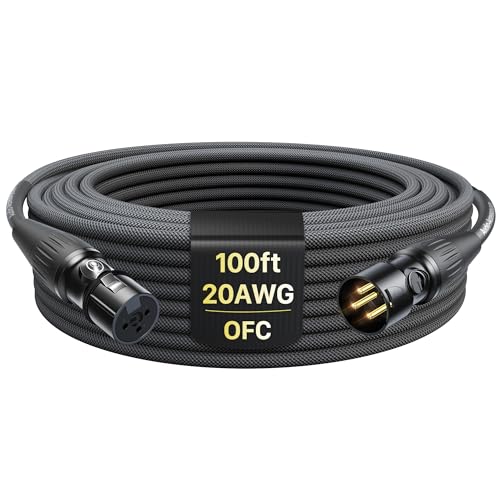
Summary: This professional-grade XLR cable uses Neutrik gold-plated connectors, Kevlar reinforcement, and a self-locking design for stage reliability. The nylon braid adds abrasion resistance for frequent setup/takedown. Best for performers and engineers who need a secure fit and long-term durability in live environments.
Best for: Stage performers and touring technicians who require robust connectors and clear signal transmission over long distances. Why selected: The genuine Neutrik connectors and Kevlar reinforcement address common failure points in mobile rigs. Caution: Self-locking design helps keep connections secure, but verify connector compatibility with your particular equipment before heavy use.
GEARit XLR Cables 100ft OFC

Summary: This cable emphasizes premium shielding and durable metal housings to minimize EMI/RFI noise. It’s suited for both studio and live settings where clean, noiseless signal transmission is critical. Best for: Recording and broadcast environments needing low-noise performance over long runs. Why selected: Effective shielding helps reduce interference, supporting high-fidelity sound in complex setups. Caution: Shielding performance can vary with extreme environmental interference; ensure proper guarding against EMI sources.
AuxLink 100ft 4Pack XLR Cables

Summary: A 4-pack with color-coded connectors simplifies stage management and cable routing. It uses 24AWG OFC conductors with dual shielding for reduced noise and robust performance in live and DMX lighting contexts. Best for: Band rigs or multi-gear studios needing easy color-tracking and reliable runs. Why selected: The color coding aids quick identification, reducing setup time. Caution: Track color codes to avoid mismatches when sharing cables among devices.
XLR Cables 100FT 2 Pack – Bietrun

Summary: Bietrun offers high-fidelity 24AWG copper conductors with double shielding and a rugged metal spring SR design for flexible durability. Best for: Users who frequently move gear and require long runs with minimal signal degradation. Why selected: The combination of shielding layers and durable connectors minimizes hum and interference during performances. Caution: Some users may prefer lighter-weight cables for compact setups.
AuxLink XLR Cable 100ft 2Pack

Summary: This two-pack by AuxLink features two color options and 24AWG OFC conductors with dual shielding to reduce hum and hiss. Best for: Stage and studio setups requiring quick identification and dependable signal transmission. Why selected: Color-coding and solid shielding support organized, efficient layouts on busy stages. Caution: Impedance may vary slightly between batches; confirm compatibility with your audio interface.
Buying Guide: Key Purchase Considerations
What should you look for when buying a 100-foot XLR cable?
- Connector quality: Look for gold-plated or high-grade gold connectors from reputable brands to minimize contact resistance and wear.
- Conductor material: Oxygen-free copper (OFC) is common for low-noise performance; avoid cheap alloys if possible.
- Shielding: Dual shielding (foil and copper braid) helps suppress EMI/RFI and external noise, especially in crowded venues.
- Durability features: Kevlar reinforcement, braided jackets, and self-locking connectors reduce breakage and signal loss during live use.
- Length handling: 100 feet is long enough for stage layouts but consider cable management accessories (ties, sleeves) to prevent tangling.
- Flexibility and weight: A balance between sturdiness and flexibility improves handling on the road and in studios.
- Color-coding and organization: Color options or multi-pack bundles help manage multiple devices and avoid cross-connection errors.
Which features matter most for your setup?
- Live stage: Prioritize rugged construction, self-locking connectors, and a robust outer jacket.
- Studio: Emphasize shielding, low-noise performance, and stable connections for critical listening.
- Portable rigs: Favor lighter cables with durable, flexible jackets and easy cable management.
Practical questions to guide your choice
- Do you need color-coding to manage multiple runs on stage?
- Is shielding a priority due to EMI from lighting and other gear?
- Will these cables endure frequent plug/unplug cycles and transport?
- Do you require self-locking connectors for stability during performances?
FAQ
- Q: Are 100-foot XLR cables suitable for small venues? A: Yes, they provide longer reach for stage setups while maintaining signal integrity when properly shielded.
- Q: What’s the advantage of self-locking connectors? A: They resist accidental unplugging during movement and stage activity, reducing signal dropouts.
- Q: Should I choose color-coded cables? A: Color coding helps organize gear and speeds up setup, especially with multiple runs.
- Q: Is OFC material necessary? A: OFC offers good conductivity and noise performance; it’s a common standard for pro cables.
- Q: How important is shielding for live sound? A: Very important; effective shielding minimizes interference from lighting rigs and nearby electronics.
- Q: Can I mix brands for a production? A: It’s possible, but aim for consistent performance characteristics to avoid mismatched impedance or noise issues.