Best Electric Guitar Strings for Crisp Tone and Longevity
Answering your search: these electric guitar strings are chosen for versatile tones, smooth playability, and reliable intonation across styles. Best for players seeking reliable all-around sets, lightweight gauge options for beginners, and strong nickel-wound formats for bright, cutting tones. The top five selections below cover standard 10-46 sets, lighter and heavier gauges, and a bundled starter package to suit learners, intermediate players, and performers. A quick buyer’s table follows to compare essentials at a glance.
| Product | Brand | Gauge / Type | Use Case |
|---|---|---|---|
| Ernie Ball Regular Slinky Nickel Wound | Ernie Ball | 10-46 | All-around performer, versatile genres |
| Ernie Ball Nickel Plain .010 (6-Pack) | Ernie Ball | Plain .010 | Low-Buzz, bright high E, easy bending |
| Ernie Ball Nickel Plain .009 (6-Pack) | Ernie Ball | Plain .009 | Super light touch, smooth upfront feel |
| D’Addario XL Nickel EXL110 | D’Addario | 10-46 | Bright tone, durable, consistent intonation |
| HAVENDI Electric Guitar Strings (6‑string) | Havendi | 6-string set, nickel-coated | Value bundle with accessories, beginner-friendly |
Ernie Ball Regular Slinky Nickel Wound Electric Strings, 10-46 Gauge

Reference features: Ernie Ball Slinkys are played by legends worldwide; industry-standard 10-46 gauge; Element Shield Packaging prolongs string life and keeps strings fresh. Best for players seeking a reliable, well-balanced tone across rock, blues, and pop styles.
Best for: Players who want a classic, versatile set with dependable intonation and a bright but balanced attack. Choose this if you play across genres and value a long-standing, mainstream gauge family.
Caution: This set is nickel-wound; it may feel stiffer to players who prefer very light gauge strings, particularly beginners aiming for minimal finger fatigue.
Ernie Ball Nickel Plain Single 0.010 String (6-Pack)

Reference features: Plain gauge string in a 6-pack for quick replacement; bright high E with strong snap and easier bendability than heavier sets. Best for: Players seeking a bright high string to complement mid-range gauges in a mixed set or for drop-tuned blues/rock tones.
Limitation: Plain strings wear quicker at the end nearest the tuner posts; ensure your nut slots and tremolo blocks are properly lubricated to minimize binding.
Ernie Ball Nickel Plain Single 0.009 String
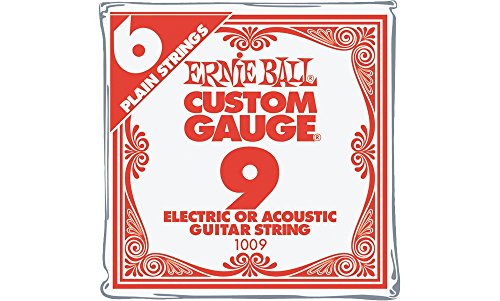
Reference features: Lightweight plain gauge for great early response and effortless fretting; compatible with electric guitars, and some players use 0.009s for fast-playing styles. Best for: Beginners or players seeking a very light touch for smooth solos and reduced finger fatigue.
Caution: Not ideal for heavy, aggressive picking; may require more frequent tuning stability checks with trem systems or tremolo bridges.
D’Addario XL Nickel EXL110 Regular Light 10-46
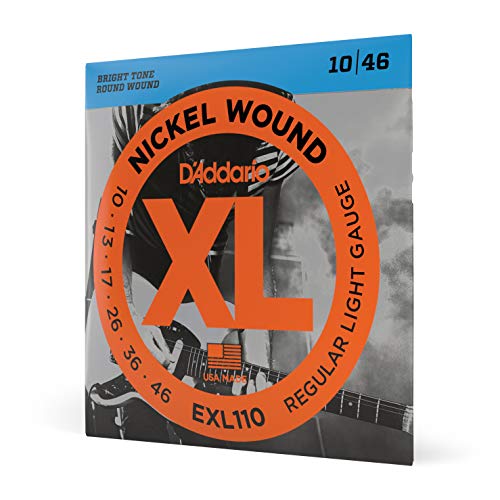
Reference features: Pro-grade hex-core construction for intonation consistency and long life; bright yet versatile tone suitable for many genres; durable nickel wrap wire. Best for: Players seeking reliable intonation, strong projection, and a widely compatible set for styles from blues to metal.
Caution: Slightly stiffer feel than ultra-light gauges; players with a light touch may prefer 9-46 or single-light sets for comfort.
HAVENDI Guitar Strings Electric Guitar (6-String Set)

Reference features: German-designed product with durable steel and nickel coating; rust-proof and tuned for stability; includes accessory bundle (picks, tuner, capos, and tools). Best for: Beginners or intermediate players looking for a value bundle that covers playing essentials beyond strings alone.
Caution: Bundled accessories vary in quality; the included tuner and tools should be tested separately to ensure reliability for important performances.
Buying Guide: Key Considerations For Electric Guitar Strings
- Gauge choice: Light gauges (9-46, 10-46) are easier to play and ideal for beginners, while medium gauges offer a balance of tone and tension for versatile players. Heavy gauges increase tension and sustain for aggressive playing; consider your genre and comfort level.
- Material and winding: Nickel-wound sets provide bright, balanced tone with good intonation. Plain strings (0.009–0.010) offer snappy feel and higher clarity on treble notes but wear faster and require more frequent changes in some playing styles.
- Coatings and life: Non-coated vs coated strings affect feel and longevity. Coated strings last longer but can feel slicker and slightly duller in brightness; choose based on playing frequency and tone preference.
- Tone and playability goals: For blues and rock, typical 10-46 or 9-46 sets produce strong midrange punch. For metal, a slightly heavier set or high-output pickups paired with nickel-wound strings can yield tighter lows and brighter highs.
- Durability and installation: Hex-core construction tends to offer stable intonation and longer life. If you swap strings often, consider standard sets with robust packaging and easy installation.
- Maintenance practices: Regular cleaning of strings and frets, wiping strings after playing, and proper winding around tuners help extend life and tuning stability.
Frequently Asked Questions
- What gauge is best for a beginner? Answer: Light gauge sets like 9-46 or 10-46 are commonly recommended for ease of playability and quick finger adaptation.
- Are coated strings worth it? Answer: Coated strings last longer and resist corrosion, but can feel slicker and slightly less bright; choose based on playing frequency and tone preference.
- How often should I change electric guitar strings? Answer: Depends on playing style and environment; players who play aggressively or sweat heavily may change weekly, while casual players may do so every 1–3 months.
- Should I mix plain and wound strings? Answer: Some players mix gauges within a set for a custom feel (e.g., lighter highs with steadier lows); this is common in experimentation but is not typical for beginners.
- What is a hex-core string? Answer: Hex-core strings have a hexagonal inner core that improves winding stability and intonation consistency, especially under bending and tremolo use.
- Can I use electric strings on semi-acoustic guitars? Answer: Electric strings are designed for solid-body electric guitars; semi-acoustic guitars can work with similar gauges, but tone and response may vary.