Best Left-Handed Mini Guitars for Young Players and Beginners
Answering the most common buying question: which left-handed mini guitars offer comfortable playability and solid tone for beginners or younger players? This guide highlights five well-suited options, detailing who they’re best for, and why they stand out. The list prioritizes compact, left-handed models and beginner-friendly kits that fit smaller hands or early-stage practice. The quick summary table below helps you compare key points at a glance.
| Product | Type | Best For | Notes |
|---|---|---|---|
| Fender Squier 3/4-Size Left-Handed Kids Mini Strat | Electric Mini | Younger players (6–12) seeking a compact bass of Strat-style tones | 3/4-size, lightweight, versatile SSS pickups |
| Taylor GS Mini Mahogany LH | Acoustic Mini | Beginners and travelers wanting a high-quality mini acoustic | Mahogany top; compact dreadnought feel |
| Taylor GS Mini Sapele LH | Acoustic Mini | Beginners who prefer darker Sapele tone and a small guitar | ebony fingerboard; natural finish |
| Pyle Left Handed Beginner 3/4 Size Hybrid | Acoustic Kit | Budget-friendly starter kit for kids or adults with smaller hands | 3/4 scale, full accessory bundle |
| Donner DST-80 Left-Handed Electric Kit | Electric Kit | Beginning players who want an all-in-one practice package | Left-handed, 39” with amp and lessons |
Fender Squier 3/4-Size Left-Handed Kids Mini Strat Bundle
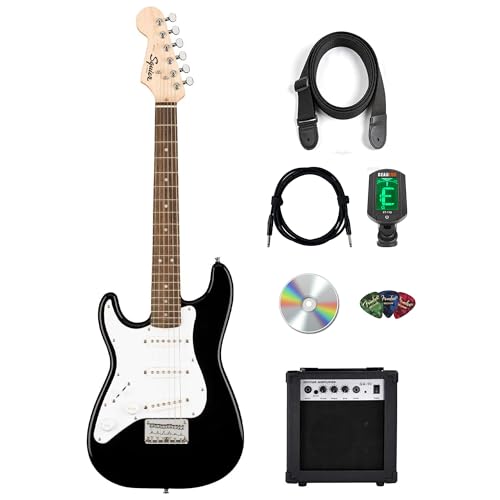
The Squier Mini Strat is a compact, 3/4-size electric guitar designed for left-handed players ages 6–12. It features a lightweight body and a maple neck with a 22.75″ scale length for comfortable reach. Three Squier single-coil pickups with 5-way switching deliver bright, versatile tones suitable for rock, pop, and blues. This bundle includes an amplifier, cable, tuner, strap, picks, and an instructional DVD, making it a complete starter kit. Best for young beginners who want a rugged, travel-friendly electric option with classic Strat-style tones.
Best for: Young left-handed players taking on early riffs and who want a full beginner package. Caution: 3/4 size may feel cramped for some older beginners with larger hands.
Taylor GS Mini Mahogany Left-Handed Acoustic Guitar

The GS Mini Mahogany LH is an ultra-compact acoustic with a solid mahogany top, offering a warm, balanced tone in a small body. The ebony fingerboard complements the natural finish and provides smooth playability for beginners. Its compact scale makes it a practical choice for travelers and learners who want a high-quality guitar without a full-sized body. Best for: Left-handed beginners seeking a premium mini acoustic with comfortable neck feel and a resonant voice. Limitation: The smaller body has less projection than a full-size dreadnought, which may matter in group settings.
Taylor GS Mini Sapele Left-Handed Acoustic Guitar

The GS Mini Sapele LH shares the same compact size as the Mahogany model but uses Sapele back and sides for a slightly brighter, more present midrange. It includes an ebony fingerboard and a natural finish, making it a practical pick for learners who want a high-quality mini with a different tonal character. Best for: Left-handed players who want a crisp, balanced mini acoustic suitable for practice and small performances. Caution: The scale and size can feel different for players transitioning from a 3/4-size electric guitar.
Donner 39 Inch Left-Handed Electric Guitar Kit DST-100BL

The DST-100BL is a complete beginner electric guitar kit for left-handed players. It features an H-S-S pickup configuration, a Canadian maple neck with a C-shaped profile, and a solid body suitable for a range of genres. Included are a 5-watt amplifier, gig bag, tuner, capo, strap, extra strings, and online lessons. Best for: Left-handed beginners who want a full starter kit and flexible tone options. Limitation: 39″ scale is still a full-size instrument, which may be less comfortable for very young learners or players seeking an actual mini feel.
Buying Guide: Key Factors To Compare
- Size and playability: Mini or 3/4-size guitars suit younger players or adults with smaller hands. Ensure neck width and string tension feel comfortable for the player’s hand size.
- Type and tone: Electric minis offer brighter, more versatile tones and quick setup, while mini acoustics provide a natural, resonant sound in a compact form.
- Left-handed configuration: Confirm that the guitar is designed for left-handed players, including nut width, bridge placement, and pickup orientation where applicable.
- Beginner-friendly features: Look for lightweight bodies, easy-playing necks, and included accessories (amp, tuner, case) for a complete learning setup.
- Durability and portability: For kids and travel use, choose models with sturdy builds and secure hardware that withstands practice sessions and transport.
- Upgrade path: Consider whether the instrument allows easy upgrades (new strings, strap, or electronics) as skills grow.
Frequently Asked Questions
- What size is best for a beginner left-handed player? Answer: A 3/4-size or GS Mini-style instrument is often best for younger players or adults with smaller hands, offering comfortable reach without a full-sized body.
- Are mini acoustics louder than mini electrics? Answer: Mini acoustics rely on body resonance for volume, while mini electrics rely on amplification. For practice rooms, both can be adequate; for stage use, electrics require a separate amp.
- Is a beginner kit a good value? Answer: Yes, beginner kits bundle essential accessories, which can simplify setup and reduce upfront costs for new players.
- Should a left-handed player start on a right-handed instrument? Answer: It’s generally better to start on a left-handed model to ensure comfortable fretting and chord shapes, especially for kids.
- What maintenance is needed for mini guitars? Answer: Regular tuning, neck relief checks, basic cleaning, and proper humidity control help preserve playability and tone.
- Can a beginner switch from a mini to a full-size guitar later? Answer: Yes. Many players transition to full-size guitars as technique and reach improve, though adjustments to neck width and scale length will occur.