Best 50 Ft XLR Cables for Clear, Noise-Free Audio on Stage and in Studio
When choosing a 50 ft XLR cable, you want a balance of durability, shielding, and signal integrity. This guide spotlights five top options that suit different setups: studio environments, live performances, and portable rigs. Best for large stages or long runs, studio workflows, or budget-conscious projects, these picks emphasize low noise, robust construction, and long reach. The following product blocks include why each cable is a solid choice and who benefits most from it.
| Product | Best For | Key Benefit |
|---|---|---|
| Cable Matters 2-Pack Premium 50ft XLR Cables | Studios and live rigs needing two reliable cables | Low noise with OFC conductors and balanced design |
| Amazon Basics XLR Microphone Cable, 50 ft | Budget setups and general PA use | All-copper conductors with shielding for clear transmission |
| Pig Hog PHM50 Series 50′ XLR Cables | Stage and live sound with rugged needs | High-quality rubber outer casing and protective connectors |
| Jozzai XLR Cable 50ft 2 Packs | Large venues and reliable redundancy | Pure copper and gold-plated connectors with dual shielding |
| EBXYA XLR Cable 50ft 2 Packs | Anti-noise, studio and stage | Copper core with braided shield for interference resistance |
Cable Matters 50ft XLR Cables – 2 Pack

Best for professional recording and live setups that require dependable two-cable redundancy. The 21 AWG OFC conductors and balanced design provide clear audio with minimal interference. The two-pack bundle helps with spare cables for different microphone arrangements or multiple devices in a room. Cables are suitable for studio mics and PA systems, delivering consistent signal integrity across long runs. Consider these if you value a straightforward, durable option with easy replacement.
Amazon Basics 50 Foot XLR Cable

Best for budget-conscious buyers needing a solid, all-copper XLR cable for PA or studio use. The all-copper conductors with inner shielding aim to reduce noise, while the 6mm PVC jacket provides flexibility. This option is appropriate for general purposes where performance is important, but price is a major factor. Suitable for beginners and smaller setups that require reliable daily use without premium pricing.
Pig Hog PHM50 Series 50′ XLR Cables

Choose this when rugged stage reliability is critical. Pig Hog cables feature an 8mm rubber outer layer with heat-shrink protected connectors, enhancing durability under repeated plugging and unplugging. This model is best for performers and technicians who need a robust, long-run cable that can withstand travel and frequent use. A potential limitation is that heavier construction may feel stiffer in very tight stage spaces.
Jozzai XLR Cable 50ft 2 Packs

Best for large venues and long runs where signal integrity matters. Jozzai uses pure copper cores with gold-plated connectors and dual shielding for noise rejection, delivering cleaner audio across 50 feet. The two-pack option supports stereo pairs or redundant paths. Note that premium shielding can add some flex resistance; plan cable routing accordingly to avoid kinks.
EBXYA XLR Cable 50ft – 2 Pack
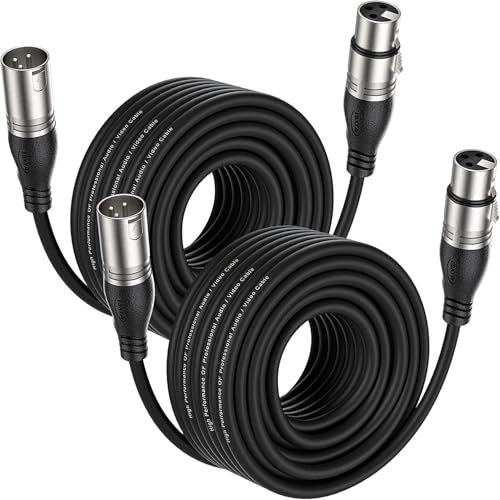
Best for anti-noise performance in both studio and stage contexts. EBXYA highlights a copper core with a high-density braided shield to reduce external interference. The 3-pin balanced connectors ensure proper signal flow, and a durable PVC jacket protects the delicate fiber core. This choice is ideal when minimizing hum and buzz is a priority in longer cable runs. A limitation to consider is that a braided shield adds some weight and may be less flexible than thinner jackets for tight setups.
Buying Guide: 50 Ft XLR Cables
- Shielding and conductors: Look for braided shielding or dual shielding and oxygen-free copper (OFC) cores for better EMI/RFI rejection and durable signal transmission over long distances.
- Connectors and durability: Gold-plated or nickel-plated 3-pin XLR connectors with robust housings reduce corrosion and mechanical wear during frequent connections.
- Jacket material and flexibility: PVC jackets are common; softer jackets improve handling in tight spaces but may wear faster. Consider the environment and handling frequency.
- Length and routing: A 50 ft run can introduce noise if poorly shielded. Plan routes away from power cables and use cable ties or clips to minimize movement noise and physical stress.
- Two-pack/value packs: If your setup requires multiple mics or speaker channels, two-packs provide ready replacements and simplifies inventory management.
FAQ
- What makes a 50 ft XLR cable better for live use?
Better shielding and robust connectors reduce noise and hum across long runs, which is crucial for stage clarity.
- Are all 50 ft XLR cables all copper?
No. Some use OFC or other conductor blends; all-copper cores generally offer stable performance with good shielding.
- Should I buy a two-pack or single cable?
A two-pack is advantageous for stereo setups, backups, or multi-mic configurations in studios or live venues.
- How important is the jacket material?
Jacket material affects flexibility and durability. Softer PVC jackets are easier to handle, while tougher jackets resist wear in demanding environments.
- Can I use these cables for DMX or lighting?
Some models advertise compatibility with DMX lighting systems, but verify impedance and shielding specifications for lighting use.