Best Electronic Drum Amplifier Speakers for Practice and Performance
If you’re shopping for an electronic drum amplifier, you want clear, punchy sound at home or on small stages. This guide highlights five reliable options and explains who each is best for, plus practical buying considerations. The top picks here are ideal for practicing in apartments, band rehearsals, or small gigs without headphones.
| Product | Best For | Key Benefit |
|---|---|---|
| Coolmusic DM20 20W | Home practice, beginners | Bluetooth stability, dual speaker design |
| Alesis Nitro Amp 70W | Rack-mounted practice, lessons | Compact, attaches to Nitro rack kit |
| Donner DDA-20 | Portable practice, multi-device control | Multimedia controls, 6.5″ woofer |
| Avatar HXW 20W | Beginner to intermediate practice | 3-band EQ, Bluetooth 5.3 |
| Roland PM-100 | Rehearsals, compact gigs | 80W full-range, dedicated V-Drums design |
Coolmusic DM20 20W Personal Monitor Amplifier
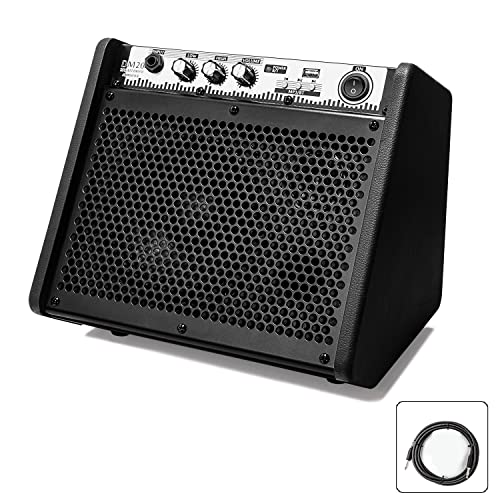
The DM20 is a compact, 20-watt amplifier designed for electronic drums and keyboards. Its two-driver arrangement (6.5″ woofer and 2″ tweeter) provides a balanced sound profile with improved bass and clear highs. Bluetooth also supports background music playback for practice sessions. This model is best for solo players practicing at home or small studios and for drummers who want a simple setup without extra cabling.
Best for: Beginners and solo players who need a portable, all-in-one monitor with Bluetooth playback. Caution: It may lack the headroom for louder, crowded rehearsal spaces.
Alesis Nitro Amp 70W Compact Drum Monitor

The Nitro Amp is a compact, 70-watt monitor designed to mount on the Nitro kit drum rack. It delivers a balanced, distortion-free sound suitable for practice and lessons, with the convenience of on-rack mounting for easy ear-level monitoring. It’s a strong choice when you want a dedicated monitor that saves bench space and keeps direct access to volume control during lessons.
Best for: Players seeking easy mounting on a drum rack and reliable practice monitoring. Limitation: It’s more kit-centric and may be less versatile for non-Nitro setups.
Donner DDA-20 Mini Electric Drum Amp

The Donner DDA-20 is a 20-watt portable amplifier designed specifically for electronic drums. It features a multimedia control knob for wireless device connection, a 6.5″ woofer, and a 2.0″ tweeter for broad frequency coverage. It’s suitable for street performances, home practice, and small gatherings. The compact design makes it easy to transport between venues.
Best for: Musicians who want wireless device control and a compact, all-around practice amp. Caution: Frequency response is broad but limited at extreme volumes, so it’s better for intimate spaces.
Avatar HXW Electric Drum Amp 20W

The HXW 20W amplifier for edrums emphasizes a 6.5″ woofer and a 2″ tweeter with a 3-band EQ for tone shaping. It’s designed to fill a room with clear, dynamic sound. The unit supports Bluetooth 5.3 for wireless playback and includes essential cables for quick setup. It suits beginners who want a versatile, easy-to-use practice amp with room to grow.
Best for: Players seeking a beginner-friendly, Bluetooth-enabled amp with straightforward tone controls. Limitation: As a compact 20W model, it may struggle in larger rooms or with louder playback.
Roland PM-100 Compact V-Drums Monitor

The Roland PM-100 is a premium 80-watt monitor designed for V-Drums and other electronic percussion. It provides a full-range audio system with a dedicated 80 watts of power and a custom 10-inch speaker and tweeter. The angled design delivers optimal sound coverage for seated players, making it a strong choice for home studios and compact rehearsal spaces. It’s best for serious players who need reliable, studio-grade monitoring in a compact form.
Best for: Drummers who want a dedicated, high-fidelity monitor for V-Drums and home studios. Caution: Higher power and price may be overkill for casual practice in small spaces.
Buying Guide: Key Considerations For Choosing An Electronic Drum Amplifier
- Power and headroom: For apartment practicing, 20–40W is often enough. For small gigs or band rehearsals, consider 70–80W for adequate headroom without loud volume.
- Speaker configuration: A woofer for bass (6.5″) and a tweeter for highs (2″) provides a balanced sound. Multi-driver designs reduce distortion at higher levels.
- Connectivity: Look for Bluetooth for wireless playback, USB for direct device connection, and line-in options for backing tracks or keyboards. 3-band EQ helps tailor tone to room acoustics.
- Mounting and placement: Rack-mount or on-desk/stand setups can affect ear-level monitoring. Some amps offer clamp-ready mounting for Nitro and other kits.
- Ports and outputs: LINE OUT or headphone out is useful for silent practice or routing to a mixer. Consider whether you need a monitor with easy studio integration.
- Portability vs. performance: Lighter, compact amps are easier to transport; larger 80W models deliver more volume and punch for rehearsals or small venues.
Frequently Asked Questions
- What amplifier should I choose for quiet apartment practice?
A compact 20–40W amplifier with Bluetooth and a 6.5″ woofer is typically suitable for apartment use and headphone-free practice. - Do I need Bluetooth on my drum amp?
Bluetooth is convenient for playing along with tracks but isn’t essential if you mainly use a direct electrical drum input or a connected mixer. - Is a dedicated Roland or high-end monitor necessary for beginners?
Not strictly. A good 20–70W monitor with clear EQ and proper connectivity will work for most beginners and hobbyists, with higher-end models offering more headroom and fidelity. - Can I attach these amps directly to a drum rack?
Some models, like the Alesis Nitro Amp, are designed for rack mounting, while others are portable on a desk or stand. Check mounting options before purchase. - What features improve practice quality?
A 3-band EQ, reliable Bluetooth, multiple inputs, and a defined bass/treble response improve practice clarity and allow you to shape your kit’s tone easily. - Should I buy a multi-purpose amp or a dedicated drum monitor?
If you frequently play other instruments besides drums, a multi-purpose amp with flexible inputs is advantageous. If you mostly play electronic drums, a dedicated drum monitor may deliver better drum-specific sound characterization.