Best Guitar Tuner Pedals for on-Stage Tuning and Quick Pitch Adjustments
Answering the need for reliable on-stage tuning, these guitar tuner pedals provide precise chromatic tuning, fast response, and easy visibility under bright or dim conditions. They’re ideal for live performers, studio players who need quiet tuning, and pedalboard setups where space and tone preservation matter. The top picks include rugged stage-tuners from trusted brands and compact models with bright displays for quick reference during performances.
| Product | Best For | Key Benefit |
|---|---|---|
| BOSS TU-3 Compact Chromatic Tuner | Live performers needing robust reliability | Tank-tough chassis and 21-segment LED meter |
| LEKATO Guitar Tuner Pedal | Budget-conscious players seeking clear display | Color LCD with high visibility |
| Donner Tuner Pedal DT-1 | Stage players needing large range and quiet switching | Wide tuning range and two modes |
| Rowin LT-901 Chromatic Tuner | Compact boards with fast tuning | Ultra-fast tuning with true bypass |
| SORAN JTU-01A Tuner Pedal | All-in-one reliability for diverse setups | Two bypass modes and bright LCD |
BOSS TU-3 Compact Chromatic Tuner

The BOSS TU-3 is a successor to the TU-2 and is built for stage reliability with a tank-tough stompbox body. It features a smooth 21-segment LED meter and a High-Brightness mode to cut through outdoor glare. Best for players who need a durable, visible tuner that can withstand aggressive performance environments. A potential limitation is its larger footprint relative to ultra-compact pedals, which may affect ultra-minimal pedalboards.
LEKATO Guitar Tuner Pedal

This tuner pedal emphasizes clarity with a high-brightness color LCD display that’s easy to read on sunny stages or dark rooms. It supports pitch calibration from 430 Hz to 450 Hz, including half-flat options, making it suitable for players working with alternate tunings or intonation preferences. It’s compact, leaving more space for other effects. A drawback is its smaller form factor, which some builders find less tactile for heavy foot-switching during fast songs.
Donner Tuner Pedal DT-1
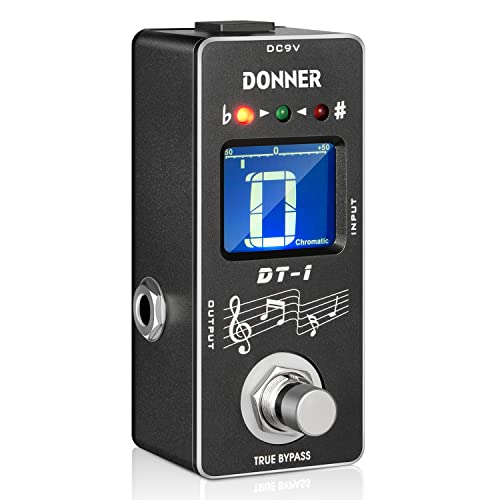
The Donner DT-1 offers a wide tuning range from A0 to C8 and provides two modes: tuning mode with signal cut and bypass mode with no change in tone when muted. Its color-accurate LED indicators help performers see tuning status clearly in bright or dim venues. Choose this if you want a flexible tuner with quiet operation and a simple bypass option. A potential limitation is that some users may prefer more advanced features found in premium models.
Rowin LT-901 Chromatic Tuner
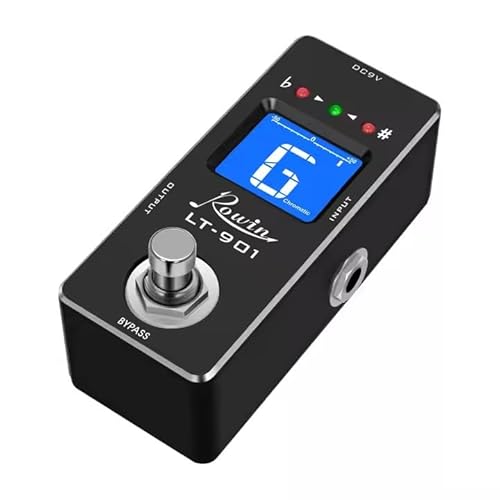
The Rowin LT-901 emphasizes speed and readability with a bright LED display and true bypass to preserve tone when disengaged. It’s compact and easy to mount on most pedalboards, making it a practical choice for players who value quick tuning in tight spaces. The small size can be a drawback for players who prefer a larger, more tactile footswitch.
SORAN JTU-01A Tuner Pedal

The SORAN JTU-01A provides chromatic tuning for guitars, basses, and more, with a 2.2″ LCD display and two bypass modes (true bypass and buffered bypass). It’s designed for reliability on pedalboards with varied signal paths. Best for players who want predictable tone behavior across different rig setups. A limitation is that it may lack some advanced calibration options found in higher-end tuners.
Buying Guide: How to Choose a Guitar Tuner Pedal
- Display visibility: If you perform outdoors or under harsh lighting, look for high-brightness LEDs or color LCD displays that stay legible at a distance.
- Tuning range and precision: Most tuners cover A0 to C8 with cent-level accuracy. If you use alternate tunings or flat tunings, choose a pedal offering fine pitch options (e.g., 0.1–1 cent precision, half-step flats).
- Bypass type: True bypass preserves your guitar’s tone when the pedal is off; buffered bypass can improve signal in long effects chains but may alter tone slightly. Decide based on your pedalboard length and signal integrity needs.
- Mode options: Some tuners include mute/tone-cut modes or performance-hardened muting for silent tuning on stage. Consider whether you need silent tuning during band passages.
- Durability: Stage-ready enclosures and secure jacks minimize failure during tours or high-gain setups. If you travel with gear, a rugged chassis matters more than cosmetic features.
- Footswitch feel: A larger, well-placed footswitch is easier to use mid-performance. Compact pedals save space but may require more precise foot placement.
FAQ
- What is a chromatic tuner pedal? A chromatic tuner pedal tunes notes across the full pitch range of the instrument, not just standard guitar notes, allowing accurate tuning for alternate tunings and drops.
- Why choose a tuner with true bypass? True bypass preserves your signal tone when the pedal is off, avoiding tone coloration in a minimal signal path.
- Can tuner pedals be used with bass guitars? Yes. Many tuners support both guitar and bass frequencies, but verify the tuning range and sensitivity for bass applications.
- Is brightness all that matters for stage tuning? Brightness improves visibility, but other factors like response time and calibration options also affect practical tuning during performances.
- Do I need a pedal with multiple bypass modes? If you have a complex pedalboard, buffered bypass can help with impedance matching across many pedals, while true bypass minimizes tone coloration when power is off.
- How important is calibration range? A wider calibration range helps with detuning in different tunings (e.g., 430 Hz to 450 Hz) or transposing instruments, offering flexibility for studio or stage work.