Best Off Road Radio Communications for Clear Trails and Safe Convoys
When you’re navigating rough terrain or coordinating a convoy on remote trails, reliable off-road radio communications are essential. This guide helps you pick the right GMRS and VHF/UHF radios for truck, ATV, Jeep, and side-by-side adventures. The top picks below are suitable for different kinds of buyers, from solo overlanders to crewed off-road teams. The summary table ahead highlights who each product is best for.
| Product | ||
|---|---|---|
| Radioddity DB20-G GMRS Mobile Radio | Crewed off-road expeditions needing long range in a vehicle | 20W output with channel name sync display |
| Midland MXT275VP4 15W MicroMobile | Small to mid-size vehicles needing durable GMRS channels | 15W, multiple GMRS channels including privacy codes |
| AnyTone AT-588Max 70W VHF Mobile Ham Radio | Long-range convoys and emergency comms | High power with AI noise cancellation and air-band receive |
| Midland MXT115 15W GMRS MicroMobile | Outdoor enthusiasts and trail groups | Compact, 15W, NOAA weather alerts, external antenna support |
| ABBREE GMRS Mobile Radio 25W | Base or vehicle installs needing more channels | 25W with 200 channels and long-distance capability |
In the sections below, each product is analyzed for who it’s best for, practical use on the trail, and any limitations to consider. This layout helps you compare options quickly and choose confidently for your next overlanding or off-road trip.
Radioddity DB20-G GMRS Mobile Radio

The Radioddity DB20-G is a plug-and-play GMRS mobile radio designed for car use. It supports access to GMRS repeaters and scans UHF, VHF, and NOAA bands, providing flexible monitoring options for off-road crews. A standout feature is the synchronized display that shows channel name, frequency, and channel number on the screen, which reduces setup time when moving between channels on the trail. The radio is geared toward drivers who want easy one-hand adjustments via a driver-friendly microphone with integrated controls.
Best for: Crews that need a long-range, vehicle-mounted GMRS radio with simple, one-handed operation and clear channel identification. The DB20-G is particularly suitable for overland teams that rely on quick channel changes and visibility of current settings while driving.
Caution: Long-range performance depends on terrain and antenna setup; in forested or urban canyons, practical range may be reduced compared to open landscapes.
Midland MXT275VP4-15W GMRS MicroMobile

The Midland MXT275VP4 is a 15-watt MicroMobile radio designed for off-road vehicles, ATVs, and UTVs. It operates on GMRS frequencies and includes 15 high-power channels (with privacy codes) to help prevent cross-talk. The kit’s roll bar mount and extension microphone are oriented toward practical installation and easy access during dynamic driving scenarios. Its privacy codes (142 CTCSS/DCS) help secure communications in busy radio environments.
Best for: Trail groups or vehicles needing a compact, fixed installation with multiple channels and privacy codes to maintain clear conversations over a convoy. The 15-watt output strikes a balance between range and power for most off-road trails.
Limitation: Broadcast range varies with terrain and antenna setup; testing in your actual trail environment is recommended to dial in the best configuration.
AnyTone AT-588Max 70W VHF Mobile Ham Radio

The AnyTone AT-588Max is a high-power VHF mobile radio designed for longer-range communications. It delivers up to 70W output and provides 510 programmable channels, making it suitable for large convoys and emergency coordination on rugged routes. It includes AI-assisted noise cancellation to improve voice clarity in loud off-road environments and offers an Air Band receive feature (AM), expanding potential monitoring opportunities. A built-in anti-theft alert supports equipment security on open trails or in remote campsites.
Best for: Off-road convoys and emergency responders needing robust long-range capability and advanced noise reduction. The 510-channel capacity makes it easy to manage multiple crews or teams on large expeditions.
Caution: As a ham-focused model, operation may require license compliance depending on your location; verify local radio licensing requirements before use.
Midland MXT115 GMRS MicroMobile

The Midland MXT115 is a compact 15-watt GMRS MicroMobile radio with eight repeaters and NOAA weather alerts. It focuses on ease of use for outdoor enthusiasts and trail teams, with an external magnetic mount antenna option and a straightforward interface for camping, hiking, and boating contexts. The device supports channel scanning to find active frequencies quickly, which is useful when scouting new routes or coordinating with a base camp.
Best for: Outdoor groups and individual explorers who want a small, reliable GMRS radio with weather alerts and simple operation for day trips or short expeditions. Its compact size makes it easy to install in smaller vehicles or backpacks for field recovery operations.
Limitation: While range can be solid with good antenna placement, it may not deliver the same long-range performance as higher-power units in very challenging terrain.
ABBREE GMRS Mobile Radio 25W
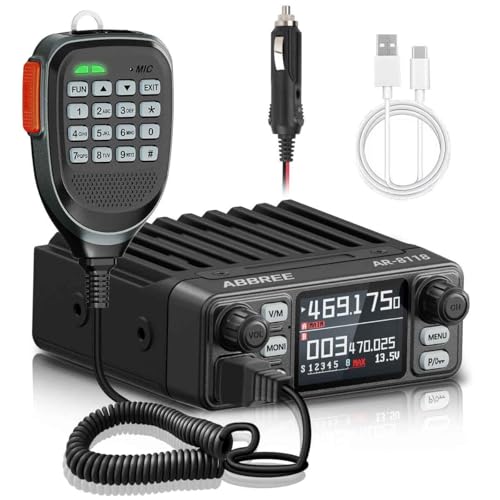
The ABBREE 25W GMRS mobile radio provides a higher power option with 200 channels for flexible group communications. It includes a dedicated programming cable and a dual PTT setup, enabling both in-vehicle and handheld microphone control. The device emphasizes long-distance capability and is positioned for easier integration into base or vehicle-mounted systems. It notes that it currently does not support Chirp programming software, but programming services are available on request.
Best for: Teams that require a higher-wattage GMRS radio with numerous channels for large convoys or fixed base setups. The dual PTT and long-distance emphasis suits professional or semi-professional use in off-road environments.
Limitation: Lack of Chirp support may affect users who rely on advanced third-party programming workflows; ensure the supplied programming path meets your needs before purchase.
Buying Guide: Key Considerations for Off Road Radio Communications
Choosing the right off-road radio depends on terrain, team size, and installation preferences. Consider these questions and factors to tailor your choice:
- Power vs. range: Do you need higher wattage for long-range communication, or is a compact, lower-power radio adequate for your trails?
- Platform and license: Are you selecting GMRS for license ease, or ham bands for broader capabilities? Verify local licensing requirements.
- Vehicle integration: Do you prefer a fixed installation, a roll-bar mounted unit, or a portable intercom system for multiple vehicles?
- Channel availability and privacy: How many channels and privacy codes do you need to keep conversations clear among multiple crews?
- Weather and environment: Is NOAA weather alert or air-band listening important for your trips or emergencies?
Practical recommendations: For smaller crews or day trips, a 15W GMRS MicroMobile with privacy codes and channel scan is often sufficient. For larger convoys or expeditions, a 25W or 70W setup with a broad channel library and easy programming helps maintain coordination. If you need reliability in loud environments, models with noise cancellation and robust speaker options are advantageous.
How to Install Quickly and Effectively
- Plan antenna placement to maximize range and minimize interference.
- Use a weatherproof mount and secure power connections to avoid vibration issues.
- Test voice clarity at different speeds and terrains; adjust mic gain and VOX sensitivity as needed.
FAQ
- What is GMRS and why choose it for off-road use? GMRS provides civilian, license-optional or simple-licensing two-way radio operation with relatively short to moderate range, ideal for coordinating small to mid-size off-road groups.
- Do I need a license for GMRS radios? In the United States, GMRS typically requires a license from the FCC, but it covers family members and multiple devices under one license; check current regulations before purchasing.
- Can I use ham radios on off-road trips? Ham radios offer long-range capabilities but may require licensing and the right bands. They are powerful but require compliance with local rules and operator certification.
- What should I look for in weather alerts? NOAA weather alerts can provide severe weather updates and trail conditions, beneficial for safety planning on remote expeditions.
- Is higher wattage always better? Higher wattage can extend range, but real-world performance depends on terrain, antenna quality, and installation. Balance power with practical installation constraints.
- Are privacy codes important? Privacy codes help reduce interruptions by filtering other users on the same channel, improving clarity in busy environments.