Best Stage Fans for Musicians: Reliable Airflow on the Go
Answer: This guide identifies five reliable stage-oriented fans that deliver strong airflow, portability, and practical features for musicians and crews. These options suit performers needing rapid cooling backstage, ventilation for small venues, or drying after spills or weather delays. The top picks balance power, noise, and versatility for live settings, rehearsal spaces, and outdoor gigs. Ideal buyers include small-to-mid-sized ensembles, touring teams, and venues seeking compact, portable air movement with useful outlets.
| Product | Best For | Key Benefit |
|---|---|---|
| Lasko U12104 High Velocity Portable Utility Fan | Stage backline crew, small venues | Pivoting airflow with built-in outlets |
| Honeywell HT900 TurboForce Air Circulator | Personal cooling, desk/booth areas | Quiet operation with three speeds |
| Lasko U15617 High Velocity Fan | Stage rooms, dressing areas | High CFM with dual outlets and pivot |
| DREO 12-Inch Table Fan | Quiet room circulation, backstage lounges | Silent operation with broad reach |
| VEVOR Pivoting Utility Fan | Large rooms, workshop/ rehearsal spaces | 300° pivot with multiple outlets |
Lasko High Velocity Portable Utility Fan U12104

This compact, powerful 12-inch fan delivers up to 289 CFM across three speeds. Its 270-degree pivot directs airflow exactly where it’s needed—perfect for backstage drying, cooling hot stages, or directing air toward performers during quick changes. It includes two grounded outlets, reducing the need for extra cords on busy stages. Best for: small backlines, dressing rooms, or tight stage corners where flexible airflow is essential.
Limitation: Mobility is strong, but the 12-inch footprint may require closer placement to maximize cooling in larger rooms.
Honeywell TurboForce Air Circulator HT900

Designed for desks, small tables, or booth corners, this 3-speed personal fan operates quietly—roughly 25% quieter than comparable models—so it won’t overpower conversations on a backstage lounge or fan area. The 90-degree pivoting head lets you target performers or equipment directly. Best for: mid-sized backstage areas or personal cooling for composers, sound techs, and managers who prefer discreet cooling.
Caution: Primarily a personal circulator; for larger rooms you’ll want a higher-CFM option elsewhere.
Lasko High Velocity Fan U15617

This 15-inch high-velocity model delivers about 375 CFM, ideal for warming rooms with humidity, drying floors, or circulating air in rehearsal spaces. It features three speeds and two grounded outlets for convenient accessory use. Best for: larger backstage rooms, small rehearsal spaces, or stage areas needing stronger airflow without occupying floor space. Selected for strong airflow and flexible outlet access.
Limitation: Bulkier footprint than compact desk fans; ensure adequate floor space in tight venues.
DREO 12-Inch Table Fan
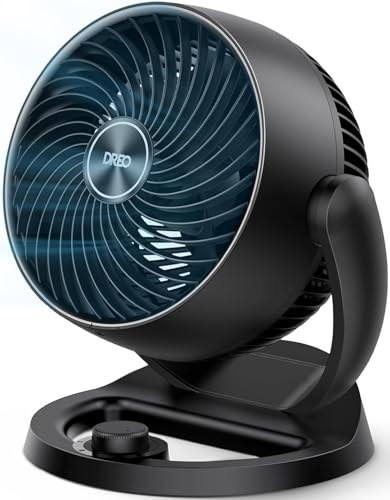
With 12 inches of spread and a 120° adjustable tilt, this unit provides strong room-wide circulation at three speeds with whisper-quiet operation. The WingBoost-style design emphasizes efficient airflow with reduced noise, supporting backstage lounges or small rehearsal zones. Best for: quiet backstage environments and personal comfort areas near the stage.
Limitation: Not designed for very large crowds or enormous venues; best used as supplemental airflow.
VEVOR Pivoting Utility Fan

This 600 CFM high-velocity floor blower offers three speeds with a 300° pivot head. Its 115V outlet allows chaining multiple units or powering accessories, making it suitable for larger rooms or extended stages. Best for: mid-to-large rehearsal spaces or venues needing flexible airflow with expansion options.
Limitation: Heavier than smaller desk fans; consider caster-friendly placement and cable management on busy stages.
Buying Guide
What size should I choose for a stage or backstage area?
For small rooms or backstage lounges, 12–15 inch fans with 300–375 CFM typically work well. For larger rehearsal spaces, consider higher-CFM models or floor blowers with pivoting heads and multiple outlets to cover more area efficiently.
Is quieter operation important for backstage comfort?
Yes. In quiet rooms or dressing areas, look for fans boasting noise reductions or specialized turbo/airflow designs. Quiet operation helps maintain communication and focus while cooling performers and crew.
Do I need built-in outlets on the fan?
Built-in outlets can reduce cord clutter when powering nearby devices or lighting equipment. Choose models with grounded outlets if you plan to daisy-chain or run multiple accessories.
Should I prioritize pivot range?
Yes. A wide pivot (up to 270–300 degrees) helps direct airflow toward specific people or equipment across the stage, changing rooms, or hallways without relocating the unit.
Is portability a factor for touring or frequent setup?
Absolutely. Look for handle design, light weight, and simple setup. Compact units with strong airflow and decent outlets offer the best balance for touring crews.
FAQ
What is the best stage fan for a small venue?
For small venues, a compact high-velocity model with pivot capability and at least one grounded outlet is ideal, such as the Lasko U12104 or the Lasko U15617, which balance airflow with portability.
Can these fans help with moisture or spill cleanup backstage?
Yes. High-velocity fans aid in drying floors after spills or rain, improving safety and speed of cleanup in busy backstage areas.
Are there any risks using fans near electronics?
Ensure outlets are not overloaded when plugging in multiple devices. Maintain airflow away from delicate equipment to prevent dust buildup or overheating.
How do I choose between a desk fan and a floor blower for a stage?
Desk fans are best for small backrooms or personal cooling; floor blowers cover larger areas with higher CFM. For stage setups with multiple zones, combine both types for versatile airflow.