Best Solar Panels to Charge Car Batteries for Reliable 12V Power
Answer: For dependable 12V charging, a 20W–50W solar panel kit with a smart MPPT controller is typically the best choice for cars, RVs, boats, and motorcycles. These kits balance efficiency, durability, and ease of use. The top options below are suited for: occasional battery maintenance for infrequent use vehicles; continuous trickle charging for stored vehicles; and portable setups for boats or outdoor gear. The table summarizes the five best picks and their core strengths.
| Product | Best For | Main Benefit |
|---|---|---|
| POWOXI Upgraded 7.5W | Light-duty charging; portable use | Smart protection; compact and waterproof |
| Voltset 12V Solar Battery Charger 20W | Cars, RVs, boats; long-term use | MPPT efficiency; universal battery compatibility |
| SOLPERK 20W 12V Kit | Trailer, RV, boat; all-weather need | High conversion; durable build |
| SUNER POWER 12W Ultra-Smart | Compact setups; quick maintenance | MPPT efficiency; automatic maintenance |
| SUNAPEX 12V Solar Battery Charge | General 12V battery upkeep | Integrated controller; rugged and weatherproof |
POWOXI Upgraded 7.5W Solar Panel Kit
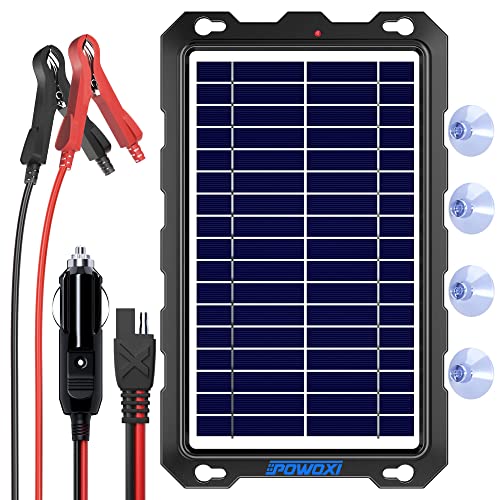
The POWOXI kit uses an intelligent charge controller with a built-in protection system. It emphasizes high conversion efficiency (25–30%) and safe charging with a blocking diode to prevent overvoltage and short circuits. It features a high-transparency glass surface and a low-iron tempered frame for durability in wind and snow. This kit is best for light-duty charging, portable use, or keeping a stored battery topped up for cars, motorcycles, boats, or RVs. Caution: It provides 7.5W, so longer charging times may be needed for larger batteries or extended storage.
Voltset 12V Solar Battery Charger 20W

The Voltset kit integrates an MPPT controller with a 20W monocrystalline panel, delivering faster charging (20–30% improvement) for 12V batteries. It’s designed for universal 12V battery compatibility, including LiFePO4, AGM, Gel, and flooded types. This makes it a strong choice for cars, RVs, boats, and trailers. A built-in protection system prevents overcharge and short circuits, while nighttime power management avoids battery drain. Consider this option if you need a versatile, long-term charger for multiple 12V batteries.
SOLPERK 20W Solar Panel Kit
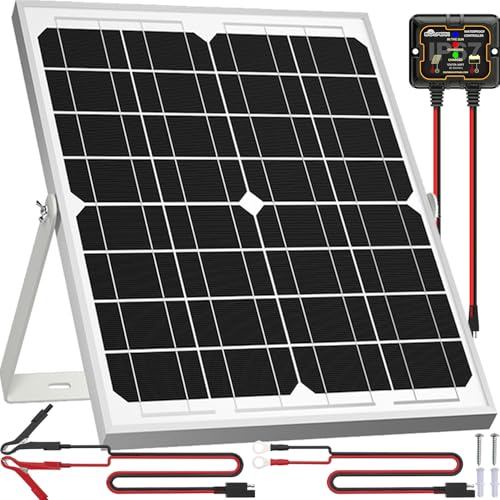
The SOLPERK kit combines a 20W mono crystalline panel with an MPPT-style controller. It highlights an 21–30% cell efficiency range and robust construction with low-iron tempered glass and an corrosion-resistant aluminum frame. It’s built to endure weather, with claims of up to 25 years lifespan and strong wind/snow load ratings. This kit suits vehicles and boats that need reliable, all-weather charging, with a focus on higher efficiency for quicker top-ups. Limitation: 20W limits rapid charging of large or very depleted batteries.
SUNER POWER 12W Ultra-Smart
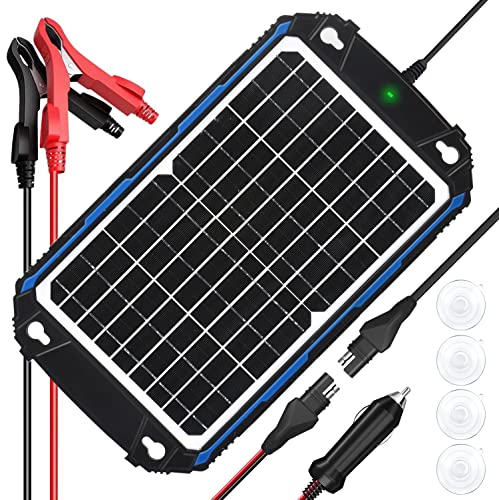
The 12W SUNER POWER module carries Ultra-Smart MPPT technology with high tracking efficiency and a 3-stage charging algorithm. It stops charging at full and resumes when discharged, offering maintenance-free operation for 12V batteries. It’s best for compact setups or as a daily maintenance charger for cars, motorcycles, and small boats. Limitation: Smaller wattage means longer time to restore a deeply discharged battery compared with higher-wattage kits.
SUNER POWER 50W PRO Solar Kit

The 50W PRO kit uses Ultra-Smart MPPT with a high-efficiency tracking system and advanced three-stage charging. It is designed for more demanding charging needs and larger 12V batteries, including multiple battery chemistries. This option suits frequent use, long-term camping setups, or heavier-duty vehicles. Caution: Higher wattage may require more setup space and secure mounting in windy environments.
Buying Guide
What should I look for when buying a solar panel charger for a car battery?
- Charge Controller Type: MPPT controllers optimize power, especially in varying sunlight. Choose an MPPT model for better efficiency in real-world conditions.
- Wattage and Battery Size: Higher wattage charges faster but requires more space. Match wattage to your battery capacity and how often you expect to charge.
- Battery Compatibility: Ensure the kit supports LiFePO4, AGM, Gel, flooded, and other 12V chemistries if you use multiple battery types.
- Durability: Look for weatherproofing, tempered glass, and corrosion-resistant frames for outdoor use.
- Maintenance and Auto-Protection: Systems with built-in protection against overcharge, short circuits, and reverse polarity reduce risk during use.
Practical buying questions
- Do I need MPPT or simple PWM? MPPT is usually better for efficiency in variable sun.
- Is portability important? Look for compact models with protective housings and easy mounting.
- Will this work for a stored vehicle? Choose a kit with a smart controller that prevents battery drain.
- Will the system work in all weather? Durable frames and waterproof housings help in outdoor setups.
FAQ
- Can I use these panels to charge a car battery overnight? Yes, if the battery is compatible and the controller is designed to manage long-term charging.
- What is MPPT and why does it matter? MPPT (Maximum Power Point Tracking) optimizes power output by adjusting the electrical load to harvest more energy from the panel.
- Will these kits recharge a deeply discharged battery? Higher wattage kits will restore charge faster; smaller kits may take longer.
- Do I need to connect to the cigarette lighter? Some kits include a cigarette lighter plug for easy startup; others use direct connections or alligator clips.
- Are these kits weatherproof? Many include rugged frames and tempered glass, but you should verify IP rating and mounting conditions for your locale.
- Can I charge multiple batteries at once? Some kits are designed for a single 12V battery; multi-battery setups require larger systems or separate controllers.