Best Small in-Ceiling Speakers for Clean, Hidden Home Audio
Small in-ceiling speakers are ideal for discreetly distributing sound in kitchens, dens, and multi-room setups without sacrificing performance. This guide highlights five compact models suited for tight spaces, decorative ceilings, or settings where a low-profile speaker is essential. Each pick targets a specific buyer—up to-date home theater fans, background music lovers, DIY installers, or moisture-prone bathrooms—so you can choose confidently.
Summary of selected products
| Product | Best For | Why Selected |
|---|---|---|
| Yamaha NS-IC400 | Compact spaces, natural tonality | 4-inch woofer, slim profile, paintable grill |
| Micca M-6C | Balanced, general-purpose rooms | 6.5″ woofer, paintable, solid build |
| Herdio 4″ Flush Mount | Budget upgrades, easy install | 4″ woofer, magnetic grills, simple mounting |
| Pyle PDIC60 | Budget two-way flush mount | 6.5″ woofer, titanium tweeter, quick install |
| Polk RC80i | Moisture-prone spaces | 8″ woofer, durable seal, outdoor-friendly design |
Yamaha NS-IC400 90 Watt 4-Inch In-Ceiling Speakers

The Yamaha NS-IC400 is a compact 4-inch two-way in-ceiling speaker designed for flush mounting with a slim profile. The grill is paintable to blend with ceilings, and a large mounting clamp helps secure the unit in place. The speaker uses Yamaha’s double-layer cone for natural tonality, making it suitable for small living rooms, kitchens, or multi-room systems where space is at a premium. Best for: small rooms where a clean look and clear, balanced sound are priorities.
Best for: users who want a discreet, aesthetically versatile speaker that preserves sound quality in tight ceilings. Limitation: 90-watt rating is per pair; actual listening levels depend on system gain and room acoustics.
Micca M-6C 2-Way In-Ceiling Round Speaker

The Micca M-6C delivers a balanced two-way design with a 6.5-inch woofer and 1-inch tweeter. It emphasizes a smooth tonal signature and robust bass suitable for whole-house audio or modest home theaters. The built-in mounting tabs simplify installation on drywall or wood, with a modern rimed grill that can be painted to match decor. Best for: rooms where easy installation and a natural sound are valued. Limitation: not the deepest bass in very large rooms when paired with smaller amplifiers.
Herdio 320 Watts 4-Inch Flush Mount Ceiling Speakers

The Herdio system pairs 4-inch drivers with a 320-watt peak capacity, offering strong performance for compact rooms and small home theaters. The magnetic grills simplify upkeep, and a large mounting clamp aids secure installation. Best for: budget-friendly upgrades where a noticeable improvement in stereo imaging is desired. Limitation: high wattage claim may be optimistic without matching amplification and proper room acoustics.
Pyle PDIC60 6.5-Inch Flush Mount In-Ceiling Speakers

The Pyle PDIC60 offers a 6.5-inch woofer with a two-way design featuring a titanium dome tweeter. It’s designed for flush mounting with a straightforward installation template. Best for: cost-conscious projects where a reliable flush mount two-way is needed. Limitation: real-world performance may vary with room acoustics and power supply.
Polk Audio RC80i 8-Inch In-Ceiling Speakers
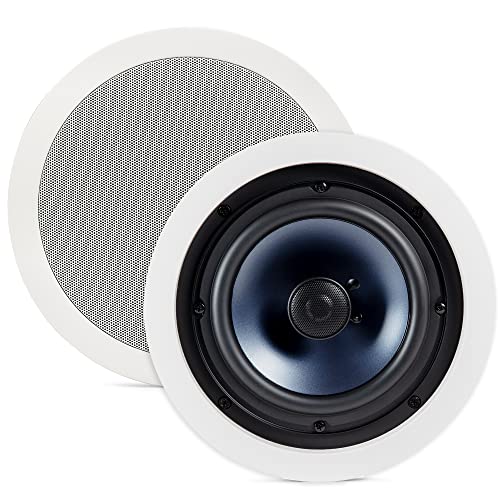
The Polk RC80i pairs an 8-inch dynamic woofer with a 1-inch aimable tweeter for more depth and detail. Designed for damp or outdoor-friendly installations, this model includes a rubber seal to reduce moisture impact. Best for: bathrooms, kitchens, or covered porches where moisture resistance is a consideration. Limitation: larger cutout and higher price may be a constraint for very tight ceilings.
Buying Guide: Practical Purchase Considerations
What size is right for your space? In-ceiling speakers range from compact 4-inch models to larger 8-inch designs. Smaller drivers are easier to fit in tight ceilings but may require more amplification or careful room placement to achieve bass depth.
What is the installation like? Look for models with paintable grills and simple mounting systems. Magnetic grills and single-clamp mounts reduce frustration for DIY installers and preserve ceiling aesthetics.
Do you need moisture resistance? Bathrooms and outdoor-covered spaces benefit from rubber seals and robust enclosures. Polk RC80i is a notable option when moisture is a concern.
Two-way versus coaxial design matters. Two-way speakers (with a dedicated tweeter) deliver clearer highs and more balanced midrange. Coaxial designs can save depth in tight ceilings but may trade off some sound staging.
How much power do you need? Wattage ratings vary, but matched system power and room acoustics determine listening levels and clarity. Larger rooms often benefit from higher sensitivity and better bass response from bigger woofers.
Finish and aesthetics. Paintable grills help the speakers blend with ceiling color. Ensure the cutout size fits your ceiling structure and existing joist layout.
Frequently Asked Questions
- Q: Are small in-ceiling speakers suitable for a home theater setup? A: Yes, when paired with a proper AV receiver and enough amplification, compact speakers can deliver clear dialogue and ambient sound without intruding on room space.
- Q: Do I need a separate subwoofer with in-ceiling speakers? A: It depends on room size and bass needs. Small rooms may suffice with full-range models, while larger spaces often benefit from a dedicated subwoofer.
- Q: How do I choose between a 4-inch and 6.5-inch ceiling speaker? A: If you have a shallow ceiling or tight space, a 4-inch model is easier to fit. For better bass and overall presence, a 6.5-inch or larger driver is preferable.
- Q: Can I install ceiling speakers myself? A: Yes, most of these models are DIY-friendly with mounting clamps and paintable grills. Follow the included template and local building codes.
- Q: Are moisture-resistant ceiling speakers worth it for bathrooms? A: Yes, moisture-sealed or outdoor-rated models help prevent corrosion and improve longevity in damp environments.
- Q: Do ceiling speakers require special wiring? A: Standard speaker wire is typically sufficient. Ensure the wiring is rated for in-wall use and comply with electrical code requirements.