Best Antenna for CB Radio: Top Picks for Reliable 27/28 MHz Communication
Direct answer: For reliable, ready-to-use CB radio performance, consider antennas that offer strong mounting, adequate coax length, and compatibility with common CB radios. The Nagoya CB-72, BINGFU magnetic base, Wilson 305-492, Prostick 4′ fiberglass, and LUITON 28-inch full-kit antennas are among the top options for varied setups—from beginner installs to mobile trucker needs. This guide compares these five, highlighting suitability, strengths, and any limitations to help buyers pick the best fit for vehicles, bases, or portable setups.
| Product | Best For | Key Benefit |
|---|---|---|
| Nagoya CB-72 High-Performance 28″ CB Antenna Kit | Beginners to seasoned users with quick installs | Includes heavy-duty magnetic mount and long 18′ coax |
| Bingfu 27MHz CB Antenna | Budget-friendly mobile setups | Lightweight, durable, easy roof/hood/trunk mounting |
| Wilson 305-492 T2000 Series | High power use on trucks | 5″ shaft, 49″ stainless whip, 3500 W rating |
| Prostick 4′ Fiberglass 1000 Watt | High-power mobile operations | Pre-tuned, VibraSorb design for durability |
| LUITON 28 inch CB Antenna Kit | Long-range, all-in-one kit | Full kit with magnet mount and 10 ft coax |
Nagoya CB-72 High-Performance 28″ Kit

The Nagoya CB-72 is designed for straightforward installation with a heavy-duty magnetic mount. It includes an 18′ RG-58A/U coaxial cable for flexible vehicle placement and easy setup. The kit is optimized for popular CB radios, making it a practical choice for users seeking broad compatibility and a ready-to-use solution. Best for: first-time installers and hobbyists who want a reliable all-in-one package. Limitation: longer coax adds bulk in tight spaces, so plan routing carefully.
BINGFU 27MHz CB Antenna With Magnetic Base
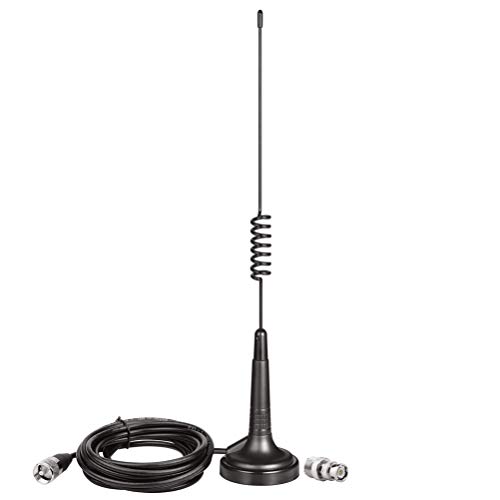
The BINGFU antenna is compatible with many CB brands and focuses on portability and ease of mounting. It uses a heavy-duty magnetic base suitable for roofs, hoods, or trunks, and includes a 3 m (10 ft) RG58/U coax. Best for: economical mobile setups that need simple, sturdy mounting. Limitation: may have lower power tolerance compared to higher-watt options.
Wilson 305-492 T2000 Series CB Antenna

The Wilson 305-492 T2000 features a 5″ shaft with a 49″ stainless steel whip, intended for AM/FM readiness and higher-power operation. It is rated for up to 3500 watts and uses a standard 3/8″ x 24 chromed brass ferrule for durability. Best for: truckers and heavy users who need a robust, high-power antenna. Limitation: bulkier profile may not suit smaller vehicles or tight mounting spaces.
Prostick 3′ Foot Fiberglass Antenna

The Prostick 3′ fiberglass antenna is pre-tuned for the 26–29.5 MHz CB range and emphasizes durability with its VibraSorb anti-breakage design. It is designed to operate when connected to a CB transmitter, making it a stable option for portable or base setups. Best for: users who value a compact, pre-tuned option with enhanced durability. Limitation: shorter length may limit extreme-range performance compared to longer models.
LUITON 28 Inch Full Kit CB Antenna
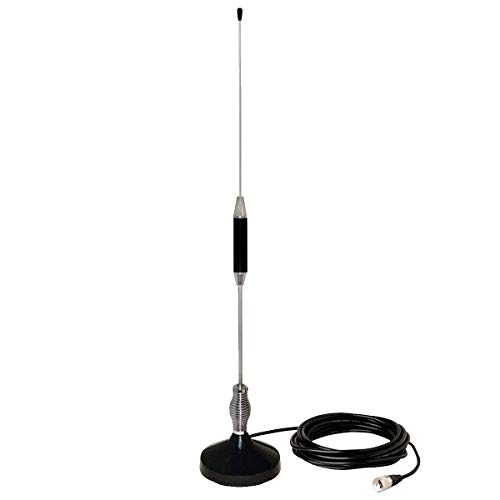
The LUITON kit centers on range with a 28-inch pole and a full magnet-mount setup, including 10 ft of coaxial cable, coil load, and a stainless steel whip. Best for: users seeking a long-range solution in a complete package. Limitation: some users may prefer higher-power capacity alternatives for extreme environments.
Buying Guide: Key Considerations For CB Antennas
- Frequency range: Most consumer CB antennas operate around 26–28 MHz. Confirm the center frequency matches your radio and local regulations.
- Mounting hardware: Magnetic mounts are common for vehicles, while base stations may require different mounting solutions. Ensure the mount is stable and won’t scratch surfaces.
- Coaxial cable length: Longer cables offer flexible placement but add signal loss if not matched to the radio. Choose a length that suits your vehicle or installation space.
- Power handling: Higher wattage antennas are preferable for high-power transmitters. Verify the antenna supports the transmitter’s output without overheating or impedance issues.
- Durability and weather resistance: Fiberglass and stainless components improve longevity in outdoor or rugged environments.
- Ease of installation: Ready-to-use kits with all-in-one components save setup time. For beginners, consider kits with clear mounting instructions.
- Size and clearance: Length and radius affect vehicle aerodynamics and clearance. Select a size that fits your mounting location and storage needs.
FAQ
- Q: Do all CB antennas require tuning before use?
A: Many are pre-tuned for CB bands and require no tuning, but some setups may need minor adjustments based on vehicle mounting and surrounding metal. - Q: Is a longer antenna always better for range?
A: Not always. While longer antennas can improve receive sensitivity and range, installation height, mounting quality, and the radio’s output power also affect performance. - Q: Can I use an automotive CB antenna on a base station?
A: Some antennas are designed for mobile use; base setups may require different mounts and coax routing to ensure stability and safety. - Q: What should I consider when choosing a high-power antenna?
A: Look for a robust mount, durable ferrule, and a cable rated for the intended transmitter power to avoid heating or impedance mismatches. - Q: Are fiberglass antennas stronger than metallic ones?
A: Fiberglass antennas tend to be more durable and flexible for mobile use, while metallic whips can offer solid performance in fixed installations. - Q: Is magnetic-mount installation safe for vehicles?
A: Magnetic mounts are generally safe when used with non-scratch surfaces and proper mounting technique, but avoid mounting on painted curved or delicate surfaces for best contact.
Product details cited above provide a concise comparison of each option’s best-use scenario. When selecting, prioritize compatibility with your CB radio, mounting space, and desired range. This guide focuses on mobility, durability, and ease of setup to help buyers identify the best fit for their particular use case.