Best 2 Channel Class D Amplifier Options for Car, Marine, and Powersports
Answering the question “which 2 channel Class D amplifier should I choose?” this guide spotlights five top options that balance power, efficiency, and space. These amps are best for compact installs in cars, motorcycles, ATVs, boats, and other small to mid-size systems. The top picks range from ultra-compact micro designs to higher-power bridgable models, helping you optimize sound without draining your electrical system. Use the summary table to compare core specs at a glance, then dive into each product’s strengths and ideal buyer fit.
| Product | Best For | Key Benefit |
|---|---|---|
| NVX VADM2v2 | Marine and powersports setups | Compact size with 600W peak (300W x 2 at 2Ω) |
| Jensen JA2CH | Budget-friendly car installs | Efficient Class-D with high power in a compact form |
| Taramps TS 400×4 | Multichannel flexibility | 4-channel power with bridged options |
| DS18 X2 | Motorcycles and tight spaces | Ultra-compact, strong 140W x 2 @ 4Ω |
| Skar Audio RP-1200.1D | Single-subwoofer emphasis | High power mono capabilities with remote sub control |
NVX VADM2v2 2-Channel Class D Amplifier

The NVX VADM2v2 delivers robust audio performance with a peak RMS power output of 600 Watts. It provides 200W x 2 at 4 ohms, 300W x 2 at 2 ohms, and 600W x 1 when bridged at 4 ohms, making it suitable for car, marine, and powersports use. Its Micro Class D design reduces size to a compact 6.49″ L x 3.3″ W x 1.48″ H, easing installation in tight spaces. The marine-certified circuit board is conformally coated to resist moisture and salt, supporting durability in harsh environments. Best for listeners who need strong bass and space-saving efficiency in outdoor or water-adjacent setups. Caution: ensure proper heat management in high-volume environments to avoid thermal throttling.
Jensen JA-Series JA2CH Class-D

The Jensen JA2CH Class-D two-channel amplifier delivers up to 600 Watts peak power with 80W RMS per channel at 4 ohms, 120W RMS per channel at 2 ohms, and 240W RMS when bridged at 4 ohms. Its compact footprint simplifies installation in trucks, motorcycles, ATVs, or golf carts. The amplifier’s efficiency reduces battery draw and minimizes heat, which is advantageous for compact vehicle setups. Choose this if you want a dependable, budget-friendly solution with straightforward bridging options. Caution: check compatibility with existing head units for signal integration.
Taramps TS 400×4 400W RMS 4 Channels
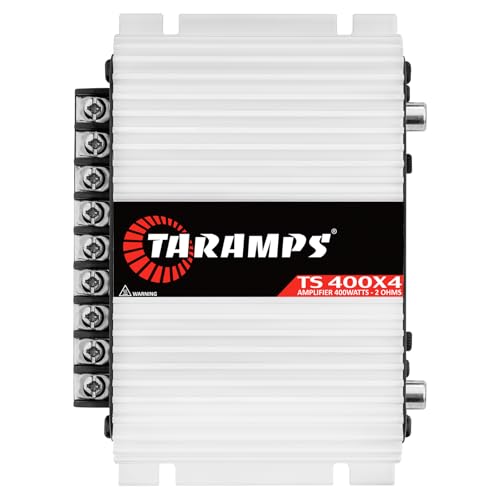
The Taramps TS 400×4 is a versatile multichannel amplifier offering 400W RMS at 2 ohms across four channels. It supports bridged configurations and provides fixed RCA input and disinfectable crossover options. This model is well-suited for multi-speaker setups that demand flexibility, such as four-door car audio systems or a subwoofer plus bookshelf configuration. Best for users who want high channel count with reliable Class D efficiency. Limitation: higher channel count may require more complex wiring and tuning.
DS18 X2 Amplifier 2-Channel Class D

The DS18 X2 Class D two-channel amplifier delivers 140W RMS per channel at 4 ohms and up to 230W RMS per channel at 2 ohms. It is notably compact, ideal for motorcycles, powersports, and tight car installations where space is at a premium. The four-layer PCB design and surface mount components emphasize reliability and stability for consistent audio performance. Best for riders and enthusiasts who need strong power in a small package. Caution: ensure adequate cooling in high-heat environments to maintain performance.
Skar Audio RP-1200.1D Monoblock
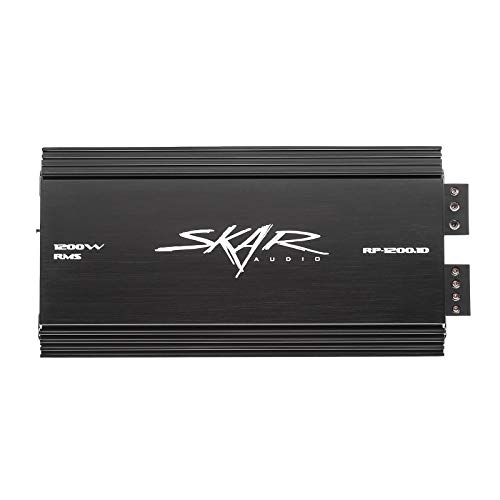
The Skar Audio RP-1200.1D is a monoblock Class D amplifier designed for subwoofers, delivering a substantial 1,200W RMS at 1 ohm and 1,600W peak. It includes a remote bass control and is optimized for tight bass response with efficient operation. Best for users prioritizing a dedicated subwoofer amp in a compact system. Limitation: being a mono amplifier, it is not suitable for powering full-range stereo speakers.
Buying Guide: How To Choose The Right 2 Channel Class D Amplifier
- Power needs: Match RMS power to your speaker ratings and vehicle electrical system. Higher RMS at 2 ohms offers more headroom for demanding setups.
- Channel configuration: Two-channel amps are ideal for stereo speakers. Look for bridged options if you plan to combine channels for a sub or higher-power mono output.
- Size and mounting: Micro and compact Class D amps save space in boats, motorcycles, and tight trunks. Check dimensions and mounting options before purchase.
- Environmental durability: Marine-grade and conformal coatings extend life in moisture-heavy or salt-air environments. Consider IP-rated enclosures for added protection.
- Inputs and wiring: RCA and remote turn-on features impact easy integration with head units. Some models offer line-level inputs or high-level inputs for older systems.
- Thermal management: Class D is efficient, but effective cooling still matters in hot vehicles or marine settings. Look for adequate heat sinks or chassis design that facilitates airflow.
- Sound goals: For subwoofer emphasis, prioritize monoblock or dedicated sub channels. For full-range setups, multi-channel models provide better balance and ease of tuning.
Frequently Asked Questions
- What is the main benefit of Class D amplifiers for cars?
Answer: Higher efficiency means less battery draw and reduced heat, enabling more power in smaller chassis. - Can two-channel amps power a subwoofer?
Answer: Yes, by bridging the channels according to the amplifier’s specifications. - Are marine-rated amps worth it for boats?
Answer: If exposed to moisture or salt, marine-rated enclosures and coatings increase longevity. - Should I choose a multi-channel amp or separate amps for components?
Answer: Multi-channel amps simplify installation for 4- to 6-speaker setups; separate amps offer flexibility for future upgrades. - What is the difference between RMS and peak power?
Answer: RMS power reflects continuous output, while peak power indicates transient capability; RMS is a better measure of real-world performance. - Do I need a head unit with high-level inputs?
Answer: High-level inputs can simplify integration with factory radios lacking preamp outputs.