Best 2.5 Mm Audio Cable: Top 5 Picks for Bose and More
Answering the common search for reliable 2.5 mm audio cables, these picks are designed for devices with 2.5 mm headphone jacks and 3.5 mm main connectors. They suit users upgrading headphone cords, replacing worn cables, or connecting mixed devices. The top products are best for multimedia listeners, travelers, and users who need durable, tangle-resistant cables. The table below highlights the five options most relevant to Bose QC headsets, JBL models, and similar gear.
| Product | Best For | Length | Key Benefit |
|---|---|---|---|
| Mr Rex 3.5mm to 2.5mm Aux Cable Cord | Active users with Bose QC series and multiple headphones | 5 ft | Oxygen-free copper, 24K gold-plated connectors for clear sound and durability |
| MCSPER 3.5mm to 2.5mm Aux Audio Cable (6.6FT) | Users needing extra length and right-angle convenience | 6.6 ft | 90-degree right-angle design; 24K gold-plated core for high fidelity |
| MCSPER 3.5mm to 2.5mm Aux Audio Cable (5FT) | General replacement for Bose and similar headsets | 5 ft | Universal compatibility; nylon braided design for durability |
| Seadream 2.5mm Audio Cable Short 2Pack | Compact setups or travel kits needing short cables | 30 cm each | Gold-plated connectors; straight-to-straight plug for simple use |
| Toeasor Replacement Audio Cable Aux Cord 3.5mm to 2.5mm | QuietComfort and SoundTrue headphone users | 5 ft | Oxygen-free copper with 24K gold-plated straight connector |
Mr Rex 3.5mm to 2.5mm Aux Cable Cord
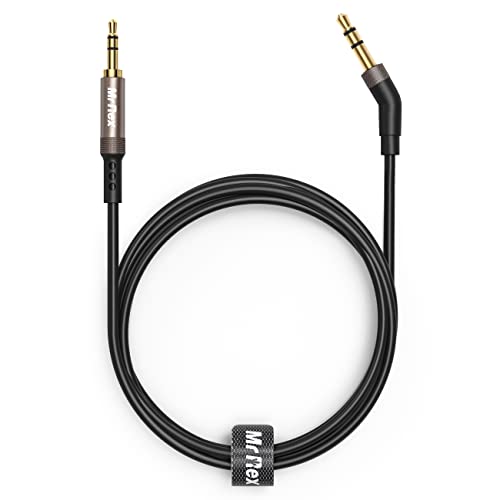
The Mr Rex cable features a 2.5 mm slim jack on one end and a 3.5 mm connector on the other, enabling compatibility with Bose QuietComfort Ultra/700, QC45, QC35 family, and many 2.5 mm port headphones. It uses oxygen-free copper with 24K gold-plated connectors for clear stereo sound and durability. The 135-degree angled end reduces wear at the connector, and the metal construction with a dual-layer connector cover extends life in daily use. Best for buyers who need a flexible, durable cord that works across multiple 2.5 mm devices and a 3.5 mm source.
Caution: Ensure your device has a matching 2.5 mm input and 3.5 mm output; some devices may require adapters for mixed jacks.
MCSPER 3.5mm to 2.5mm Aux Audio Cable (6.6FT)

This 6.6-foot MCSPER cable uses a 90-degree right-angle connector on the 2.5 mm end, ideal for constrained spaces or seating scenarios. It supports Bose QC35, QC45, QC35II, and JBL models, with a 24K gold-plated copper core for high conductivity and minimal signal loss. It is particularly suitable for users who need extra cable length and a robust connector design. Best for long-distance listening and in-bed setups where a straight cable would snag.
Limitation: The right-angle connector, while space-saving, can be less comfortable for some desk setups where straight reach is preferred.
MCSPER 3.5mm to 2.5mm Aux Audio Cable (5FT)

This 5-foot MCSPER cable emphasizes universal compatibility with Bose QC series and several JBL headphones, featuring a 24K gold-plated copper core for clean, distortion-free sound. Its nylon braided exterior adds tangle resistance and durability, making it a reliable replacement for worn or damaged cords. Best for daily use with mid-length reach and strong build quality.
Limitation: Nylon braiding adds some stiffness; may feel firmer in ultra-flexible setups.
Seadream 2.5mm Audio Cable Short 2Pack

Seadream offers compact, short cables of 30 cm in a two-pack, suitable for portable devices or in-vehicle use where space is limited. Each cable is gold-plated, with pure copper conductors to minimize signal loss and provide reliable stereo output. Best for travelers or desk setups that require short leads without excess length.
Limitation: Short length may not meet needs for desktop or entertainment centers requiring longer reach.
Toeasor Replacement Audio Cable Aux Cord (3.5mm to 2.5mm)

The Toeasor cord targets Bose QC family users and SoundTrue products, offering a 3.5 mm to 2.5 mm arrangement with a 24K gold-plated straight connector and oxygen-free copper for clear, low-distortion audio. The cable emphasizes universal compatibility with devices featuring a 2.5 mm port and an accessible 3.5 mm source jack. Best for users who want a straightforward, reliable replacement cord with strong conductor materials.
Caution: Ensure the connector orientation aligns with your device’s input/output design to avoid a loose fit.
Buying Guide
What should you consider when choosing a 2.5 mm to 3.5 mm cable?
- Compatibility: Confirm both ends match your devices—2.5 mm headphone jacks on headsets and 3.5 mm inputs on players, laptops, or phones.
- Connector quality: Gold-plated connectors reduce corrosion and preserve signal integrity over time.
- Conductor material: Oxygen-free copper typically offers better conductivity and durability than lower-cost options.
- Length: Choose a length that minimizes slack and tension while meeting your use case. Longer cables can introduce minor signal loss if poorly shielded.
- Durability features: Nylon braiding, reinforced strain relief, and angle designs can extend life in everyday use or travel.
- Right-angle vs straight: Right-angle ends save space in tight setups; straight connectors are easier for general, open setups.
Frequently Asked Questions
- Q: Will a 2.5 mm to 3.5 mm cable work with all Bose models? A: Most Bose models with a 2.5 mm jack will be compatible, but verify the specific model’s port size and intended use.
- Q: Do these cables support microphone functionality? A: Some listed cables are designed for audio only and do not include mic support.
- Q: Is gold-plated better than plain copper connectors? A: Gold plating helps resist corrosion and maintain conductivity over time, especially in frequent plug–unplug scenarios.
- Q: Can I use these cables with smartphones? A: Yes, the 3.5 mm end is designed for standard AUX inputs on many smartphones and portable players.
- Q: Are nylon braided cables more durable? A: Nylon braiding generally improves durability and resistance to tangling, though it can add stiffness.
- Q: What should I avoid when selecting a cable? A: Avoid cables with non-gold connectors or poor shielding that may introduce noise or signal loss.