Best High End Stereo Amplifier Guide: Top Picks for Audiophiles
Looking for a high end stereo amplifier that delivers serious power, low distortion, and flexible connectivity? This guide highlights five strong options for American buyers seeking premium sound without unnecessary complexity. Each pick targets common needs such as built‑in DACs, tube warmth, or robust speaker control. The buyers are best suited for enthusiasts who want transparent, dynamic audio, room‑filling performance, and durable construction. A concise comparison table follows to help you choose quickly.
| Product | Power / Channel | Key Benefit | Best For |
|---|---|---|---|
| Yamaha A‑S801BL | 100 W x 2 | Built‑in USB DAC with high‑resolution formats | Digital‑audio lovers who want flexible source options |
| Denon PMA‑600NE | 70 W x 2 | Integrated DAC with analog mode option | All‑purpose home listening with simple setup |
| Marantz MM7025 | 140 W x 2 | High current, clean power for challenging speakers | Two‑channel power for demanding setups |
| FLYINSKY Audiophile Integrated | 200 W @ 8Ω / 380 W @ 4Ω | Hybrid Class A/AB with tube‑like warmth | Listeners seeking rich mids and dynamic headroom |
| Fosi ZA3 Balanced Stereo Amplifier | Up to 180 W (stereo), 235 W mono | Balanced inputs and high SINAD for low noise | Compact, versatile system with balanced connectivity |
Yamaha A‑S801BL Natural Sound Integrated Stereo Amplifier

The Yamaha A‑S801BL is a feature‑rich integrated amplifier designed for serious music listening. It pairs 100 W per channel with a built‑in USB DAC supporting DSD and PCM formats, plus high‑quality digital inputs (coax and optical). The design emphasizes low distortion across a broad frequency range, offering precise imaging and dynamic range for demanding speakers. Best for audiophiles who want high‑fidelity digital inputs along with traditional analog connections.
- Best for digital‑audio enthusiasts who need DXD/DSD playback and robust amplification.
- Better for users who want a single‑box solution with a DAC and multiple input options.
Limitations: Its size and Class AB design can be less forgiving in ultra‑tight spaces or ultra‑high efficiency systems where ultra‑low noise is paramount.
Sony STRDH190 2‑Ch Home Stereo Receiver

The Sony STRDH190 offers a straightforward, reliable stereo experience with 2×100 W output and multiple inputs, including a phono stage. It suits buyers who want a balanced, ready‑to‑use system with Bluetooth streaming, phono pre‑amp, and a simple setup.
- Best for entry‑to‑mid level setups needing a versatile, all‑in‑one receiver.
- Better for vinyl lovers who value a built‑in phono pre‑amp.
Limitation: The unit emphasizes value and ease of use over the most refined high‑end timbre, so expect a straightforward but less “audiophile” nuance compared with boutique designs.
Denon PMA‑600NE Bluetooth Stereo Amplifier
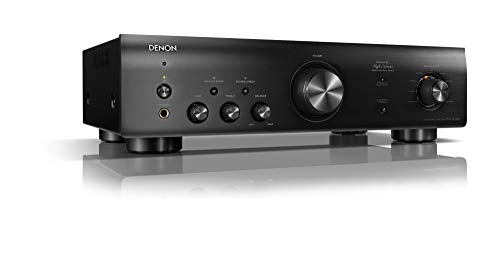
The Denon PMA‑600NE separates digital and analog paths for a clean signal, and it offers a built‑in DAC with multiple digital inputs plus a ‘Pure Analog’ mode for purist listening. This is a strong choice for those who want a balanced mix of digital versatility and analog purity.
- Best for listeners who value a dedicated analog signal path when desired.
- Better for systems requiring flexible source options (2 optical, 1 coaxial, 1 phono input).
Limitation: Power at 70 W x 2 may be less suited for very large or highly inefficient speaker loads compared to higher‑powered rivals.
FLYINSKY Audiophile Integrated Amplifier

This hybrid Class A/AB amplifier is designed for audiophiles who crave tube‑like warmth with modern solid‑state drive. It uses premium ON Semiconductor tubes, dual toroidal transformers, and a US‑market power setup for clean, dynamic sound across genres. It excels in vocal clarity and natural tonality, especially at moderate listening levels.
- Best for listeners who want a warm, detailed midrange with strong dynamic headroom.
- Better for rooms and speakers that respond well to a gentle, musical bias rather than clinical accuracy.
Limitation: Higher output power can draw more power and heat, and some listeners may prefer a purely solid‑state character at very high SPLs.
Fosi ZA3 Balanced Stereo Amplifier

The ZA3 offers balanced inputs, a 12V trigger, and strong power for a compact, versatile package. It supports stereo and mono modes with high SINAD and SNR, making it suitable for custom multi‑room or desktop setups where clean power and low noise are essential.
- Best for compact systems needing balanced I/O and strong noise performance.
- Better for users integrating with professional or hi‑fi‑style components that appreciate balanced connections.
Limitation: While robust for its size, the ZA3 may not reach the same absolute benchmark loudness as larger floor‑standing amps in huge rooms.
Buying Guide: Key Considerations for High End Stereo Amplifiers
What matters most when choosing a high end stereo amplifier? Consider power output, impedance compatibility, and the type of inputs you need. Decide whether you prefer a built‑in DAC, a pure analog path, or a hybrid design with tube warmth. Evaluate heat management, form factor, and how the amp will pair with your speakers and room acoustics.
Power, Tone, and Speaker Match
Power needs depend on speaker efficiency and room size. A high current design helps control difficult loads and maintain clarity at higher volumes. If you have efficient bookshelf speakers, 70–100 W per channel may suffice; with demanding floorstanders, consider 140–200 W per channel.
Digital vs. Analog Path
Integrated DACs simplify setup and streaming, but some listeners prefer a pure analog signal path. If you frequently stream high‑resolution files, a DAC with wide format support is advantageous. For purists, an analog‑only mode or privacy of digital circuits can be compelling.
Connectivity and Flexibility
Assess input types: balanced XLR vs. RCA, optical/coaxial, and phono stages. A phono pre‑amp is essential for vinyl aficionados. Ensure compatibility with your sources, whether Bluetooth, turntables, CD players, or streaming devices.
Space, Heat, and Build Quality
Consider enclosure size, heat dissipation, and component quality. Tube‑hybrid designs bring warmth but require careful placement for ventilation. Solidly built amps offer durability and better long‑term performance in active listening rooms.
Budget and Long‑Term Value
High end does not always mean the most powerful. Focus on tonal balance, dynamic range, and system synergy. A well‑matched amplifier in your price range can outperform a more expensive unit that misaligns with your speakers.
FAQ
- What is a high end stereo amplifier? A high end stereo amplifier is a premium device designed to deliver powerful, clean, and detailed amplification with low distortion and wide dynamic range for two‑channel audio systems.
- Do I need a built‑in DAC? It depends on your source equipment. A built‑in DAC adds convenience and reduces clutter, especially if you stream music or use digital sources.
- Should I choose a tube or solid‑state design? Tubes add warmth and smoothness to the midrange, while solid‑state tends to be more accurate and reliable at higher volumes. Hybrid designs aim to balance both.
- How much power do I need? Match power to speaker impedance and room size. Higher power improves control and headroom with demanding loads and larger rooms.
- Is impedance compatibility important? Yes. Ensure the amplifier can drive your speaker’s impedance without undue stress or distortion.
- What about room acoustics? Amplifier choice matters, but room treatment and speaker placement often have a larger impact on perceived sound quality.