Best External Microphones for Laptop: Clear Voice on the Go
The best external mic for a laptop enhances voice clarity for meetings, streams, podcasts, and classes. This guide highlights five reliable USB options, suited for students, remote workers, content creators, and gamers. Each pick offers plug‑and‑play simplicity, noise reduction, and flexible positioning to fit your setup. Read on to compare features, ideal use cases, and practical buying tips.
| Product | Best For | Connectivity | Key Benefit |
|---|---|---|---|
| JOUNIVO USB Microphone | General use, compact desk setups | USB | 360° gooseneck with mute and LED status |
| ZealSound K66 USB Podcast Mic | Podcasting and streaming | USB | Noise reduction modes and wide compatibility |
| TONOR G11 Conference Mic | Small to medium meetings | USB | Omnidirectional pickup with long reach |
| FIFINE K669B | Voice work, streaming, education | USB | Metal build with simple plug‑and‑play |
| CMTECK G009 | Home studios and online teaching | USB | Mute button with LED, noise cancellation |
JOUNIVO USB Microphone With 360° Gooseneck
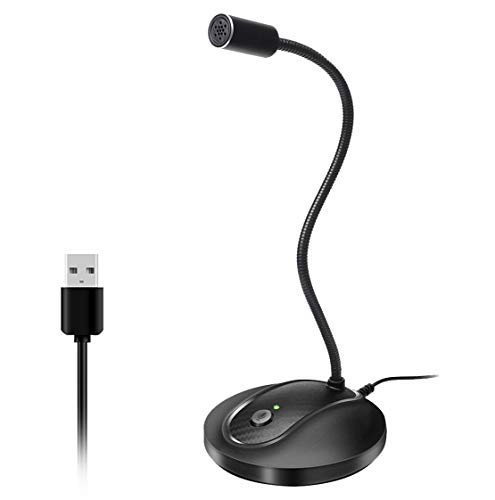
Best for: Desktop users who need versatile mic placement for calls, gaming, and voice dictation. The 360° adjustable gooseneck allows positioning for clear capture, while the mute button and LED indicator provide quick status feedback. It uses intelligent noise-canceling technology to minimize background chatter and echo, making it suitable for shared workspaces. Limitations include a fixed USB interface with no built‑in analog output, so use compatible devices only.
ZealSound K66 USB Podcast Microphone

Best for: Creators prioritizing studio-like audio in real‑world environments. The K66 provides a wide frequency response and a cardioid pattern that focuses on your voice while reducing ambient noise. Its Noise Reduction Mode helps suppress keyboard clicks and fan hum, which is useful in busy setups. Avoid if you need a compact, ultra‑low‑profile mic for travel; this model emphasizes sound quality over portability.
TONOR Conference USB Microphone G11

Best for: Small to medium conferences and classroom sessions. The omnidirectional pickup pattern captures voices from all directions within a generous range, supporting natural conversations in group settings. It’s a solid choice for platforms like Zoom or WebEx. A limitation is that it is not a dedicated cardioid mic, so ambient room noise can be picked up if the space is busy.
FIFINE USB Microphone K669B

Best for: Voice work, streaming, and online classes needing a sturdy metal build and reliable plug‑and‑play setup. The K669B is known for easy setup and a compact footprint, making it ideal for desk‑top configurations with limited space. Limitation: built‑in volume control is helpful but doesn’t replace a full mixer for complex audio projects.
CMTECK USB Computer Microphone G009

Best for: Online teaching, gaming, and remote work that benefits from noise cancellation and a mute indicator. The CCS2.0 smart chip helps reduce background noise, while the LED status makes it easy to see mute state. Choose this if you want a straightforward USB mic with built‑in noise suppression and a clear mute feedback loop. Limitation: not suitable for Raspberry Pi without extra adapters in some setups.
Buying Guide
- Purpose and environment: Choose a mic with a pattern suited to your space. Cardioid mics excel in noisy rooms, while omnidirectional mics work well in small group discussions.
- Connectivity and compatibility: All highlighted mics are USB plug‑and‑play, compatible with Windows and Mac. Consider adapters if you switch between desktop and mobile devices.
- Controls and convenience: Mute buttons, LED indicators, and gain controls help manage real‑time conversations and reduce post‑production edits.
- Portability vs. desktop setup: Gooseneck mics offer positioning flexibility; compact sticks save desk space for portable use.
- Noise handling: Look for models with built‑in noise reduction or noise cancellation modes if you record in busy environments.
- Future needs: If you stream or record often, consider mic build quality and the availability of accessories like pop filters or tripods.
Frequently Asked Questions
- What is the main advantage of a USB microphone for a laptop?
– USB mics are plug‑and‑play, require no external audio interface, and are compatible with most laptops and operating systems. - Do I need a pop filter with these mics?
– For close‑talk scenarios, a pop filter can reduce plosives; many mics include pop filters in their accessory kits or can be paired separately. - Which mic is best for podcasting?
– A mic with cardioid pickup and noise reduction features, like ZealSound K66, is typically favorable for focused voice recording and reducing room noise. - Can I use these mics with a Mac and Windows PC at the same time?
– Yes, all listed models are designed for cross‑platform USB use, though you may need to select the mic as the input device in each OS. - Is omnidirectional better for group calls?
– Omnidirectional mics capture sound from all directions, which can be helpful for group discussions, but may pick up more room noise.