Best 2.5 Inch 4 Ohm Speakers for Small Systems
Quick Overview: This guide compares compact 2.5-inch and similar small-format 4 ohm speakers suited for desktop audio, DIY projects, car tweeters, and compact enclosures. Below is a summary table of the five selected products covered in detail.
| Product | Brand | Key Feature |
|---|---|---|
| Douk Audio 2.5″ Full Range | Douk Audio | Hi‑Fi full range, 88 dB sensitivity, 8–15W |
| Dayton Audio DMA70-4 Dual Magnet | Dayton Audio | Dual neodymium motor, aluminum cone, improved HF |
| Dayton Audio ND65-4 Neo Driver | Dayton Audio | Rubber-edged aluminum cone, large excursion |
| CHOOYO 2.5″ Full Range Woofer (2pcs) | CHOOYO | Rubber edge, 5W rating, DIY friendly |
| uxcell 2.5″ Micro Dome Tweeters | uxcell | Tweeter-style small driver, 91 dB sensitivity |
Douk Audio 2.5″ Inch 4 Ohm Hi‑Fi Desktop Full Range Speaker

This compact full-range driver targets desktop and small cabinet applications. The spec sheet lists an effective frequency range of 150 Hz–20 kHz, 88 dB sensitivity, and rated power handling of 8–15W. The small form factor (about 67 mm diameter) makes it straightforward to mount in limited spaces. Use cases include desktop speakers, small bookshelf prototypes, and car audio midrange replacements where high-frequency extension and space are priorities.
Dayton Audio DMA70-4 2-1/2″ Dual Magnet Aluminum Cone
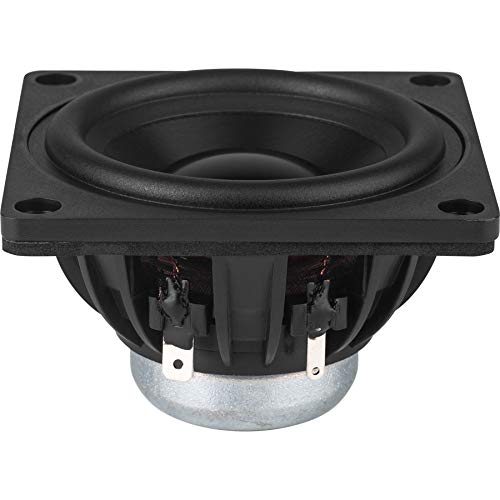
The DMA70-4 uses a dual neodymium motor and an aluminum cone for controlled response and extended high frequency. A large copper cap is included to reduce distortion and improve HF clarity. This driver is suitable for compact full-range designs, transmission-line mini enclosures, and high-efficiency desktop rigs where controlled dispersion and reduced breakup are desirable.
Dayton Audio ND65-4 2-1/2″ Aluminum Cone Neo Driver

The ND65-4 features a rubber-edged aluminum alloy cone and a Neo‑Balanced motor structure for compact magnetic shielding. Its design supports larger excursion relative to typical small drivers, making it a good choice for small sealed enclosures and DIY speakers that need more low-frequency output than typical tiny full-range drivers can provide.
CHOOYO 2PCS 4 Ohm 2.5″ Full Range Rubber Edge Woofer
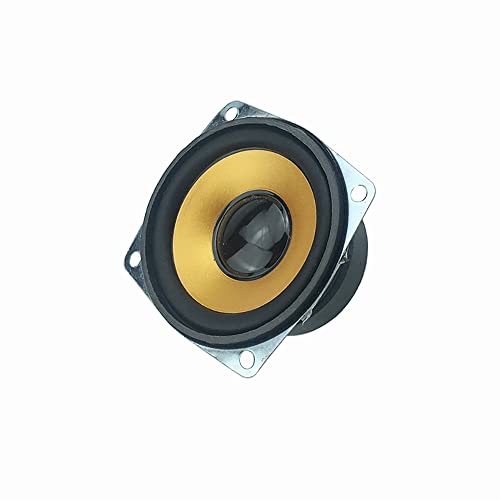
Sold as a pair, these 2.5-inch drivers advertise a 5W rate and 4 ohm impedance. The rubber surround and compact chassis are designed for DIY home theater projects, small bookshelf enclosures, or replacement drivers in compact systems. Their modest power handling suggests use with low-power amplifiers and projects that prioritize compact size over deep bass extension.
uxcell 2 Pcs 2.5 Inch Micro Dome Tweeters 4 Ohm
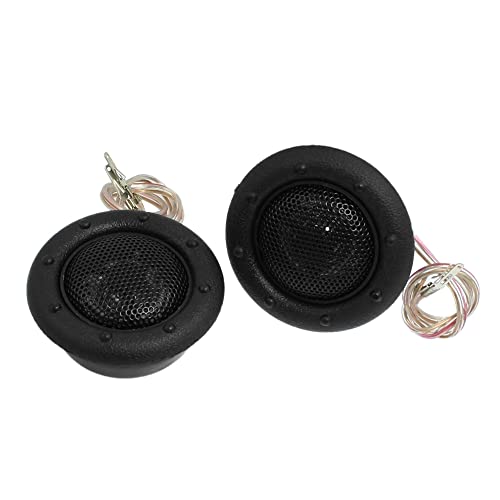
These micro dome tweeter-style drivers list a sensitivity of 91 dB and 4 ohm impedance. The compact dimension (63 x 28 mm) and plastic/metal build suit car audio applications, small speaker front baffles, or nearfield monitoring additions. Given their tweeter-like form, they perform best when paired with a small midwoofer or woofer to cover low frequencies.
Buying Guide: How To Choose A 2.5 Inch 4 Ohm Speaker
Selecting the right small 4 ohm speaker depends on application, enclosure, and intended frequency coverage. Below are the key considerations and comparison perspectives to weigh before buying.
Application And Role
- Full‑Range vs Tweeter: Full-range 2.5-inch drivers aim to cover mid and treble; tweeters or micro domes are meant for HF only and require a woofer complement.
- Use Case: Desktop/nearfield, car audio, DIY mini‑bookshelf, or portable devices — each imposes different demands on sensitivity and power handling.
Electroacoustic Specs To Compare
- Impedance: 4 ohm models draw more current than 8 ohm units; verify amplifier compatibility and stability into 4 ohm loads.
- Sensitivity (dB): Higher sensitivity (e.g., 88–91 dB) yields louder output per watt — helpful for low-power amps.
- Frequency Response: Check low-end and high-end limits; tiny full-range drivers often roll off below 150–200 Hz.
- Power Handling: Match driver rated power to amplifier capability; small drivers often have modest RMS ratings.
Mechanical And Build Factors
- Cone Material: Aluminum cones offer extended high-frequency response but can introduce breakup modes; rubber surrounds increase durability.
- Motor Structure: Neodymium motors provide stronger flux in small packages and can improve control and sensitivity.
- Mounting Size & Depth: Confirm cutout diameter and total depth for your enclosure or installation location.
Enclosure And Integration
- Sealed vs Ported: Small drivers typically perform best in sealed mini enclosures; ported designs require precise tuning and may be less effective with limited excursion.
- Crossover Strategy: For hybrid systems, a passive crossover protects small drivers and integrates them with woofers or subwoofers. For full-range setups, keep crossover simple or bi-amp if possible.
- Acoustic Loading: Baffle step and proximity to walls affect perceived bass and treble — experiment with small sealed boxes or open-baffle mounts.
Durability And Practical Considerations
- Environmental Use: Consider magnet shielding for installations near electronics or displays; rubber surrounds and sealed baskets resist humidity better.
- Wiring And Terminals: Ensure terminals match your wiring approach for soldering or quick-connects in car and DIY builds.
- Pairing: If buying single drivers, plan for matched pairs to maintain stereo balance.
Comparison Perspectives
- Efficiency vs Power Handling: Higher sensitivity drivers (e.g., 88–91 dB) are preferable with low-power amps; drivers with higher excursion or motor strength handle more SPL before distortion.
- Frequency Coverage vs Size: Expect trade-offs — very small drivers rarely reproduce deep bass; combine with a woofer or small sub for full-range systems.
- Price vs Performance: Economical ferrite or basic full-range drivers excel for budget DIY projects; neodymium motors and aluminum cones increase performance for compact high‑quality builds.