Best Acoustic Guitar Amp With Mic Input for Live Singers and Practicers
If you need an acoustic-guitar-friendly amp that also handles a microphone, you’re looking for a versatile, two-channel model with built-in EQ and reliable power. This guide highlights five top options that balance tone, portability, and practicality for buskers, small venues, practice rooms, and home studios. Each pick targets a distinct use case—from battery-powered portability to studio-ready home setups—so you can match the amp to your performance style.
| Product | Brand | Power | |
|---|---|---|---|
| Flatsons Crush20 Acoustic Guitar Amp | Flatsons | 20W | Independent guitar and mic channels with 2-band EQ and battery power. |
| Fender Acoustasonic 15 Acoustic Guitar Amplifier | Fender | 15W | Dedicated instrument and mic channels with a compact, portable design. |
| COOLMUSIC Acoustic Guitar Amplifier (20W) | COOLMUSIC | 20W | Two channels, 3-band EQ, built-in reverb, Bluetooth, multiple inputs. |
| Rockville G-AMP 30W Guitar Combo | Rockville | 30W | Mic input with independent channel controls plus Bluetooth and delay. |
| Fender Acoustasonic 40 Acoustic Guitar Amplifier | Fender | 40W | Dual 6.5″ speakers, built-in reverb, robust PA-style capability for small venues. |
Buyer profiles:
– Buskers and solo performers needing battery power and portability.
– Songwriters seeking clean, natural acoustic tone with voice.
– Small gig players requiring built-in reverb and easy transport.
– Home practice users who want Bluetooth playback and flexible I/O.
– Anyone who prefers reliable two-channel operation to blend guitar and voice smoothly.
Flatsons Crush20 Acoustic Guitar Amp

The Flatsons Crush20 provides independent guitar and vocal channels with precise impedance matching and a 2-band EQ for both inputs. Built-in reverb enhances both channels for a stage-ready sound. The 20W Class-D design aims for stable, distortion-free output with a claimed reach suitable for open-air performances. A 3000mAh battery supports up to eight hours of playtime, making it a strong choice for street gigs or small outdoor events. The 4-level LED power display helps you monitor remaining power. Best for singer-songwriters who need clear mic access on the go.
Who it’s best for: performers needing two-channel operation with a battery-powered option. Why selected: it combines portability with two independent paths for voice and guitar, and its reverb on both channels adds depth without external effects. Caution: actual battery life can vary with volume and Bluetooth use, so prepare a plan for longer sets.
Fender Acoustasonic 15 Acoustic Guitar Amplifier
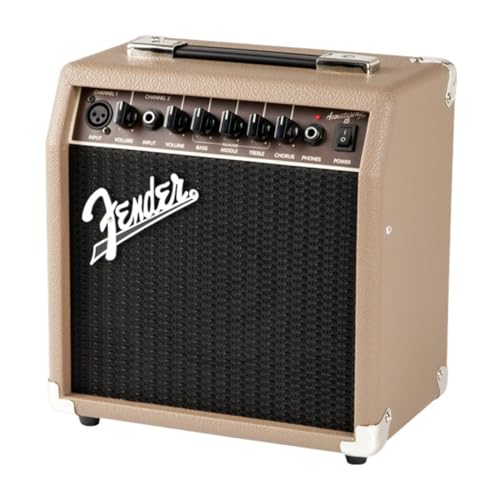
The Acoustasonic 15 is a compact 15-watt combo with dedicated instrument and microphone channels. It emphasizes high-frequency clarity through a 6″ Fender Special Design speaker, geared toward preserving the natural brightness of acoustic instruments. Built-in versatility makes it suitable for street performances, small venues, or practice rooms where quick setup matters. Best for solo performers who want a lightweight, straightforward two-channel solution. Caution: lower wattage than some peers means it may struggle to cut through larger crowds outdoors without close audience proximity.
COOLMUSIC Acoustic Guitar Amplifier (20W)
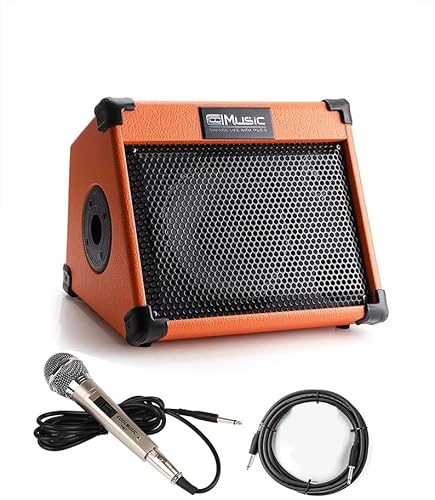
This COOLMUSIC model offers two channels, a 3-band EQ, and built-in reverb, plus Bluetooth for wireless playback. It also provides multiple input options beyond mic and guitar, including USB and DI output. The two-channel layout makes it practical for small gigs or practice rooms where you may need to mix guitar and voice or accommodate a second instrument. Choose this if you want an affordable, feature-rich option with wireless streaming. Limitation: Bluetooth latency can affect timing cues during live performances.
Rockville G-AMP 30W Guitar Combo

The Rockville G-AMP 30W delivers 30W RMS through an 8″ speaker with a mic input and independent vocal controls. It also features Bluetooth streaming and a built-in delay effect for added spatial depth. This setup is well-suited for small gigs or home practice where you want a robust, stage-friendly sound without external effects gear. Best for performers who want a higher-output option with a simple, all-in-one package. Caution: larger and heavier than ultra-portable models, which may affect mobility.
Fender Acoustasonic 40 Acoustic Guitar Amplifier

The Acoustasonic 40 is a larger, 40W portable combo designed for better coverage in small venues and onstage use. Dual 6.5″ speakers deliver fuller acoustic and vocal amplification, and built-in reverb adds depth without external processors. This model suits performers who require more projection and want a PA-like experience in a compact format. Best for small bands or performers needing reliable stage monitoring. Caution: heavier and less portable than mid-power options, requiring more careful transport planning.
Buying Guide: Key Considerations And Comparisons
Two-channel capability is essential for acoustic guitar and mic use. Look for independent volume controls for each input to prevent feedback and balance issues. Built-in effects like reverb improve space and presence, but verify they’re usable with both channels. Power output matters for your typical performance space; battery-powered models excel for street gigs and rehearsals, while higher-wattage amps are better for small venues.
- Power and portability: Battery-powered models increase setup flexibility for outdoor gigs; larger amps offer more headroom for crowds and larger rooms.
- Inputs and I/O: Ensure there are dedicated mic and instrument inputs, plus DI output if you plan to feed a PA system or recording interface.
- Sound shaping: A two-band or three-band EQ per channel helps tailor tone for voice and guitar separately. Built-in effects like reverb and chorus should complement both channels.
- Bluetooth and media options: Bluetooth can simplify practice with backing tracks, though consider latency for live timing. USB and line inputs provide flexible playback options.
- Portability vs. performance: If you travel often, prioritize lighter weight and battery life; for fixed gigs, aim for higher wattage and broader sound dispersion.
FAQ
What should I look for in an acoustic guitar amp with mic input?
Two independent input channels, reliable EQ on each channel, built-in reverb, and enough power for your typical performance space. A mic input with separate gain control helps balance voice and guitar levels.
Is Bluetooth useful on acoustic amps?
Useful for practice with backing tracks or audio playback, but check whether the Bluetooth is suitable for live play-along and consider any latency.
Do I need a DI output?
A DI output helps route your signal cleanly to a PA system or audio interface, preserving tone and reducing feedback risk.
Should I choose a 15W, 20W, or 40W amp?
For quiet practice or small gigs, 15–20W is sufficient. For small venues or outdoor settings, 30–40W provides more headroom and projection.
What’s the trade-off between battery-powered and AC-powered amps?
Battery-powered units offer mobility but may have limited headroom; AC-powered amps typically deliver consistent power and longer operation time for extended gigs.