Best Memory Card for Dash Cam: Trusted Options for Continuous Recording
The top picks below are optimized for dash cams and similar security devices that require reliable, continuous recording. These cards suit drivers who need long, stableLoop recording, quick access to footage, and durability in varying temperatures. The best for extended video logs is the 256GB high-endurance options; the best value choices mix capacity and speed for everyday use; and the best all-rounders balance endurance, speed, and compatibility for multi-device use. The buyer types addressed include daily commuters, fleet operators, and security-conscious homeowners.
Summary table of chosen products
- SANDISK 256GB Ultra microSDXC UHS-I Memory Card — Best overall speed and versatility for dash cams and Android devices
- MindStor 128GB Micro SDXC — Best for steady 1080p dash cam loop recording with solid reliability
- SANDISK 256GB High Endurance Video microSDXC Card — Best for high endurance dash cams and home monitoring
- Gigastone 256GB High Endurance Pro — Best for extended 4K or frequent recording with recovery options
- MindStor 64GB Micro SDXC — Best compact option for smaller dash cams or backup use
SanDisk 256GB Ultra microSDXC — Up To 150MB/s

Best for: Dash cams and Android devices needing solid mid-to-high read speeds and broad compatibility. This card delivers up to 150 MB/s read speed and supports Full HD recording limitlessly for many dash cams.
Why selected: It combines ample capacity with dependable UHS-I performance and an A1 app profile for smoother app operations on devices that might mount it in smart systems or tablets used with the dash cam ecosystem.
Limitation: Some dash cams benefit from higher endurance zones; if continuous 24/7 looping at 4K is required, consider higher endurance models.
MindStor 64GB Micro SDXC — 90MB/s Read
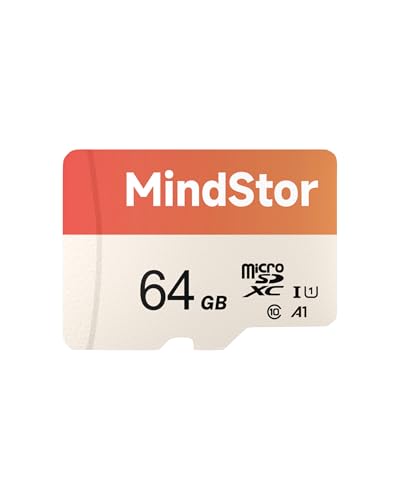
Best for: Dash cams needing a compact, budget-friendly card for shorter recording cycles or backup use. Moderate capacity with reliable 90 MB/s read helps with quick footage reviews.
Why selected: It offers A1 performance for app-like tasks on related devices and is designed to resist everyday wear, making it a practical secondary card for transition setups.
Limitation: 64GB may require more frequent offload during long drives or high-frequency events, increasing card swaps.
SANDISK 256GB High Endurance — Video Card

Best for: Dash cams and home monitoring systems that run for long hours with continuous recording. Engineered for high endurance to handle many hours of video.
Why selected: Endurance-focused design helps reduce the risk of frame drops or data loss during extended sessions, a key factor for security footage reliability.
Limitation: Total usable capacity can be impacted by formatting and device overhead, so plan storage needs with real-world usable space in mind.
Gigastone 256GB High Endurance Pro

Best for: Dash cams that operate in extreme temperatures or require robust endurance for long-term recording, with broader device compatibility.
Why selected: This card emphasizes endurance with a high-speed read profile (up to 100 MB/s) to support quick footage retrieval and reliability for critical events.
Limitation: High endurance cards may incur higher costs; balance your need for long-term looping against budget constraints.
MindStor 128GB Micro SDXC — 90MB/s

Best for: Dash cams and security devices needing a larger capacity that still maintains solid 90 MB/s read speeds for reliable footage retrieval.
Why selected: It offers a balance of ample space and dependable performance for everyday loop recording in mid-range devices.
Limitation: Speed tier is solid but not the top-end; for 4K or more demanding cameras, consider higher-end options above.
Buying Guide: How To Choose A Dash Cam Memory Card
What capacity should you pick?
Choose based on daily driving time and video resolution. For 1080p dash cams, 64GB to 128GB covers typical daily cycles; for 24/7 monitoring or 4K cameras, 256GB or larger reduces frequent offloads.
Why endurance matters
Endurance determines how many hours you can record before the card wears down. High-endurance cards are designed for continuous looping in dash cams and home surveillance.
Speed and video format considerations
UHS-I and V30 or higher write speeds support smooth 1080p and 4K recording without frame drops. If your camera supports 4K, prioritize U3 or V30 UHS-I or better.
Device compatibility and formatting
Some devices limit maximum supported capacity or require specific formatting. Always verify your dash cam’s max capacity and recommended card type before purchase.
Budget vs. reliability
Budget cards can fit older or basic dash cams, but premium endurance cards reduce risk of data loss in long-term use. Consider backup strategies like extra cards and routine offloads.
FAQ
- Can I use any microSD card in a dash cam? Not all cards are recommended; use cards rated for endurance and rated for continuous recording in dash cams.
- What does endurance mean on memory cards? Endurance indicates how long the card can sustain continuous writing without failure, important for loop recording.
- Is 256GB enough for daily use? For many 1080p dash cams, yes, but 4K or heavy footage may require larger cards or multiple cards.
- Do dash cams require special formatting? Some do; check the device manual for recommended file system and formatting practices to maximize reliability.
- Should I buy multiple smaller cards or one large card? Multiple cards can be safer for preventing total data loss; rotating cards reduces risk of total footage loss.
- Is speed important for security cameras too? Yes, higher read/write speeds help ensure smooth video capture and quick access to footage during emergencies.