Best Fuzz Face Style Pedals for Classic Tones and Modern Versatility
If you’re chasing the warm, velvety saturation of a classic fuzz face and the ability to shape modern sustain, this guide helps you pick the right fuzz face style pedal. The selections below target players who want distinct vintage voicings, reliable true-bypass operation, and practical controls for live gigs or studio work. Ideal buyers include retro-sound purists, pedalboard builders seeking compact setups, and players who value simple, expressive fuzz that can stack with other effects.
Summary of selected products
- JHS Pedals 3 Series Fuzz — versatile, gated sustain with a wide fuzz sweep
- Donner Fuzz Guitar Pedal — classic fuzz with flexible tone controls
- JOYO R-25 / CM-05 Bundle — budget-friendly option with patch cables for easy setup
- JOYO JF-26 Analog Fuzz — vintage 90s fuzz with clear mid-cut and simplicity
- Dunlop JHF1 Fuzz Face Distortion Pedal — faithful Jimi-era replication with included cables
JHS Pedals 3 Series Fuzz
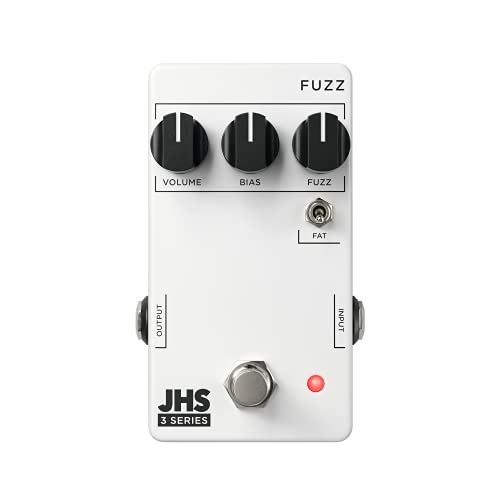
The JHS Pedals 3 Series Fuzz blends vintage flavor with modern articulation. Best for players seeking a wide fuzz palette and a usable Bias control that pushes the tone toward gated distortion or open-scooped fuzz. The unit is noted for its sustain and clarity across the full range of the knob. Ideal for guitarists who want a versatile fuzz that can sit cleanly in a dense mix or push a driven amp for lead tones.
Who it’s best for: players who want a highly controllable fuzz with a broad dynamic range, from tight to fuzzed-out, without losing note definition.
Why selected: It provides a robust balance between vintage feel and modern gain — a practical choice for a primary fuzz or a stacking partner with overdrives.
Limitation: The Bias control is core to its character; dialing in a subtle amount can require some fine-tuning in different musical contexts.
Donner Fuzz Guitar Pedal

The Donner Fuzz Guitar Pedal offers a classic fuzz tone with straightforward controls for tone shaping. Best for players who want a true-bypass pedal with easy access to bass, treble, level, and volume adjustments to tailor fuzz edge and volume in one compact package. It captures the dense, vintage feel while remaining approachable for gigging musicians.
Who it’s best for: players new to fuzz who want a reliable, simple setup with a familiar, old-school voice.
Why selected: Its classic-inspired voice and flexible tone tools make it a strong choice for beginners and intermediate players seeking a traditional fuzz texture.
Limitation: The sound can lean toward classic-era fuzz, which may be less aggressive than some modern diodeless designs in heavier genres.
JOYO R-25 Fuzz Effects Bundle

The JOYO R-25 bundle combines a fuzz pedal with six-pack professional patch cables. Best for pedalboard builders who want quick setup and easy patching, plus better signal clarity and low loss through shielded cables. The package includes cables that help maintain signal integrity when chaining pedals, making it convenient for compact rigs.
Who it’s best for: players who value a ready-to-run setup with reliable patch cables for clean, noise-free connections.
Why selected: The bundle approach reduces setup time and keeps tone intact across an effects chain.
Limitation: The feature list centers on the bundle; fuzz tone specifics rely on the pedal’s own design, so auditioning is advised to confirm character matches your style.
JOYO JF-26 Vintage Fuzz Pedal

The JOYO JF-26 Analog Fuzz offers a classic 90s fuzz voice with Level, Sustain, and Tone controls. Best for players seeking a precise mid-range cut that helps the fuzz cut through a mix, ideal for garage rock, psychedelic jams, and a classic alternative tone. It runs on battery or 9V DC, providing flexible power options for practice or performance.
Who it’s best for: players who want a straightforward, all-analog fuzz with clear control layout.
Why selected: The circuit emphasizes mid-range presence and sustain, a hallmark of many 90s fuzz tones that remain musically versatile.
Limitation: Some players may prefer more aggressive gate and drive than this model offers; it’s tuned toward classic fuzz rather than extreme fuzz saturation.
Dunlop JHF1 Fuzz Face Distortion Pedal Bundle

The Dunlop JHF1 Fuzz Face Distortion Pedal is a faithful reproduction of the Dallas Arbiter Fuzz Face used by Jimi Hendrix-era players. Best for players seeking a period-accurate fuzz voice with compact size and included patch cables for quick setup. This bundle is ideal for a vintage-style pedalboard that prioritizes authenticity and simplicity.
Who it’s best for: players chasing a historically accurate fuzz face sound that remains practical for live use.
Why selected: The design captures that classic fuzz vibe that defined many late-60s guitar tones, making it a staple for retro rigs.
Limitation: As a stompbox that favors midrange emphasis, it may require stacking with other pedals to achieve heavier drive or modern tightness in some mixes.
Buying Guide: How To Choose The Right Fuzz Face Style Pedal
What should you consider when selecting a fuzz face style pedal? Start with the core voice you want—classic, midrange-forward fuzz or more modern, gated tones. Consider the following practical questions and notes to compare options effectively.
- What era or vibe do you want? Vintage 60s/70s styles emphasize midrange warmth and smooth sustain, while 90s fuzz leans heavier and more aggressive.
- Power and portability: Do you need battery power for rehearsals or a consistent power supply for the stage? Look for true bypass and low current draw.
- Controls and usability: Many fuzz faces rely on a small set of knobs (level/sustain/tone) or a bias/control that shapes gate/texture. Ensure the controls map intuitively to your playing style.
- Signal chain compatibility: If you use multiple pedals, a rugged patch cable bundle can help maintain signal integrity and reduce noise.
- Durability and enclosure: For gigging players, a sturdy enclosure, reliable jack spacing, and consistent performance are essential.
- Live vs studio use: Some fuzz faces respond better to clean boosts, while others pair well with overdrives or delays to create a wide sonic palette.
Quick comparison
- Best for authentic vintage voice: Dunlop JHF1 Fuzz Face Distortion Pedal Bundle
- Better for flexible modern fuzz: JHS Pedals 3 Series Fuzz
- Budget-friendly setup with bundles: JOYO R-25 / CM-05 Bundle
- Best for mid-range clarity and 90s tones: JOYO JF-26 Analog Fuzz
- Best for complete starter kits: Donner Fuzz Guitar Pedal
What to audition for in-store or online
If you can test pedals, listen for note clarity as you sweep the fuzz from subtle grit to heavy saturation. Pay attention to how the tone knob shifts from bright to darker timbres and how the sustain behaves with chords versus single-note lines. When stacking with a drive or boost, notice whether the fuzz maintains articulation or becomes overly lossy.
FAQ
- What is a fuzz face pedal? A fuzz face pedal produces a saturated, mid-focused distortion with a smooth, singing sustain, emulating the classic fuzz tones from the late 1960s and early 1970s.
- Should I choose analog or silicon fuzz? Analog fuzz often delivers warmer, more organic dirt with better dynamics; silicon fuzz can be brighter and tighter. Preference depends on your guitar and amp interaction.
- Can fuzz face work with both humbuckers and single-coils? Yes, but the attack and response can vary. Humbuckers tend to push into richer fuzz, while single-coils may highlight the gate and midrange characteristics more distinctly.
- Is true bypass important for fuzz pedals? True bypass helps preserve your original tone when the pedal is off, preventing tone loss in a complex pedalboard.
- Do fuzz pedals require special power? Most operate on standard 9V DC power; some can run on batteries. Check the power specs to match your rig’s power supply.
- Can fuzz faces be used with modern high-gain amps? They can, but the resulting tone depends on the amp’s gain structure. You may want to adjust the guitar volume or use a clean boost to optimize dynamics.