Best Female to Female XLR Cables and Adapters for Studio and Live Sound
If you need reliable female-to-female XLR connections, these cables and adapters are designed to preserve signal integrity and reduce noise in both studio and live environments. This guide highlights options suited for different setups—from compact 6-inch connectors to longer 5-foot cables. Ideal buyers include podcasters, stage technicians, home studio owners, and DJs who frequently connect multiple mics or DMX devices with female-to-female links.
Summary of chosen products:
| Product | Brand | Length | Best For |
|---|---|---|---|
| WJSTN Suanqi XLR Cables Microphone Cable Mic Cord XLR Female to Female Adapter | WJSTN | 6in | Compact connections and sturdy office/studio setups |
| HUALEU XLR Female to Female Adapter, 2-Pack | HUALEU | 2Pack | Durable professional use and reliable signal |
| mudenx XLR Female to Female 5 Feet | mudenx | 5 ft | Hum-reducing shielding for longer runs |
| Togconn XLR Adapter 2 Pack – 3-Pin | Togconn | 2 Pack | Secure connection and rugged build |
| HUALEU 2 Pack 3Pin Female to Female Balance Cable | HUALEU | 1 ft | Compact patch cables with solid construction |
WJSTN Suanqi XLR Cables 6in 2Pack
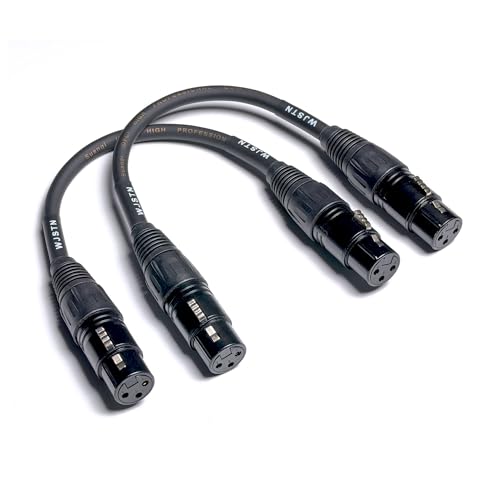
Best for ultra-compact signal routing in small setups. These XLR female-to-female adapters use oxygen-free copper wire and gold-plated connectors to minimize resistance and maintain a clear signal. The 6-inch length makes them ideal for tight stage boxes, portable rigs, or close-in mic wiring. Best for: mobile setups and compact studios where space is at a premium. Limitation: very short length means higher potential for tension if cables are pulled or stretched.
HUALEU XLR Female to Female Adapter (2-Pack)

Best for professional audio setups needing durable metal housing and reliable connection. These adapters feature a robust metal shell and silver-plated copper connectors to reduce contact resistance. They use a rivet-driven, screwless design for stronger structural integrity and consistent performance in live environments. Best for: studios and stages where frequent plugging and unplugging is common. Caution: ensure cables are not under heavy bending to prolong connector life.
mudenx XLR Female to Female 5 Feet (2-Pack)
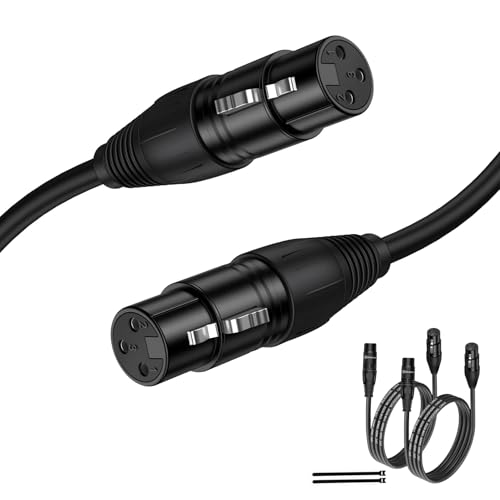
Best for long runs with high-fidelity sound. This pair uses oxygen-free copper conductors and a multi-layer shield, including an aluminum foil layer, to minimize interference and hum. The 5-foot length is suitable for connecting mics to stage boxes or mixers when distance matters. Best for: home studios and small venues with moderate cable runs. Limitation: longer cables can slightly increase capacitance and require careful routing to avoid physical wear.
Togconn XLR Adapter 2 Pack

Best for rugged reliability in busy performance environments. This two-pack uses a hard metal shell with nickel-plated contacts to guard against wear and EMI. It’s a solid choice when you need consistent connections in rehearsal rooms or onstage. Best for: frequent gigging and studio sessions that demand durable, corrosion-resistant adapters. Caution: ensure compatibility with devices that expect specific pin configurations to avoid miswiring.
HUALEU 2 Pack 3Pin Female to Female Cables

Best for patching DMX and audio connections with a balanced, reliable signal. The 1-foot length and zinc alloy shell offer sturdy protection and precise impedance matching. These cables are designed for high-stress environments like tours and broadcast studios. Choose this if you need compact patch cords that won’t sacrifice signal clarity. Limitation: the shorter length may require more careful cable management to avoid tension during performances.
CableCreation XLR Female to Female, 5-Pack

Best for value-conscious buyers needing multiple connectors for large setups. The 5-pack provides hardened die-cast shells and RF/EMI shielding to protect signal integrity. These are versatile for studios or venues requiring several identical female-to-female links. Preference: use when you need reliable backups or to wire complex mic arrays. Caution: ensure you’re not exceeding recommended cable lengths in sensitive audio paths to avoid degradation.
SZLliyxs 2Pack 3 Pin XLR Female to Female Cables

Best for studio and stage with premium shielding. The cables feature gold-plated 3-pin connectors and OFC cores to deliver low noise and clear signal. The 1-foot length makes them ideal for tight rack setups or patch bays. Best for: critical listening environments and professional applications requiring consistent signal integrity. Limitation: short length may necessitate additional adapters for longer runs.
Buying Guide: Choosing The Right Female To Female XLR Link
- Signal quality: Look for oxygen-free copper conductors and gold- or silver-plated connectors to minimize resistance and oxidation.
- Shielding: Multi-layer shielding (foil plus braided) reduces EMI and RF interference, especially on stage.
- Impedance and length: Most XLR cables target 110 ohms for microphone use. Shorter lengths minimize capacitance; longer runs may introduce more noise or latency.
- Durability: Metal housings, rivet/screwless designs, and robust strain relief extend life in busy environments.
- Best use-case: Short cables excel on stages and in compact studios; longer cables suit racks, booths, and larger venues.
- Compatibility: Ensure the gender and pin configuration match your devices and that any DMX or audio paths align with the standard XLR pinout.
Frequently Asked Questions
- What is the main difference between XLR female-to-female adapters and cables?
– Adapters join two female connectors directly, while cables provide a complete path with male and female ends or two female ends plus a specific length. - Can I use these for DMX lighting?
– Some items list DMX compatibility; verify the impedance and shielding to ensure correct performance for DMX signals. - Are gold-plated connectors better than silver-plated or plain copper?
– Gold plating improves corrosion resistance and long-term contact reliability, though connectors with high-quality copper can also perform well. - Will a 1-foot cable affect my mic signal?
– For most professional mics, a short length minimizes signal degradation; longer cables can introduce more capacitance and potential noise. - Should I choose a 2-pack or 5-pack?
– A 2-pack is suitable for small studios or on-the-road setups; a 5-pack offers value for larger rigs or multiple connections. - What is better for stage use, silver-plated or gold-plated connectors?
– Silver-plated offers strong conductivity and corrosion resistance; gold plating provides excellent contact reliability, especially in frequent connect-disconnect scenarios.