Best Voice Activated Tape Recorders for Clear, Hands-Free Recording in Any Setting
Answering the call for reliable, hands-free recording, these voice activated recorders are ideal for students, journalists, professionals, and researchers. Each model emphasizes clear PCM audio, noise reduction, and long battery life to fit long lectures, meetings, and fieldwork. This guide compares five top picks to help you choose the best fit for your needs, whether you want maximum storage, simple one-click recording, or magnetic portability.
| Product | Memory | Key Strength | Best For |
|---|---|---|---|
| Tonfarb 136GB Digital Voice Recorder | 136GB | Long recording hours, robust noise reduction | Lectures and interviews with extended sessions |
| Tonfarb 64GB Digital Voice Recorder | 64GB | One-click Start/Save, compact | Meetings and on-the-go field work |
| EVISTR 64GB Digital Voice Recorder | 64GB | 360° pickup, A-B playback | Classroom notes and business interviews |
| Sunlan 16GB Digital Voice Recorder | 16GB | Simple operation, clear playback | Entry-level use and quick recordings |
| Tallkcoder 72GB Magnetic Recorder | 72GB | AI noise cancellation, magnetic mounting | Discreet or in-field recording |
Tonfarb 136GB Digital Voice Recorder With Playback

This device combines PCM recording at up to 1536 kbps with automatic noise reduction to deliver crystal-clear audio. It supports long-term storage with 8GB built-in plus a complimentary 128GB TF card, allowing up to 9000 hours of MP3 or WAV recordings. A built-in 1100 mAh battery supports up to 68 hours of continuous use, making it suitable for back-to-back lectures or extended interviews. A one-click recording and save function lets you start recording quickly, even when powered off, and USB-C enables fast transfer to a computer.
Best for: Students, journalists, and professionals who need long, uninterrupted recording sessions with minimal background noise.
Limitations: Larger memory and higher bit-rate files may require careful file management and external storage planning.
Tonfarb 64GB Digital Voice Recorder

This recorder offers one-click recording and saving with an ergonomic control layout. It ships with a built-in 64GB TF card and a 600 mAh battery that supports up to 48 hours of continuous use at MP3 32 kbps. It features PCM recording and noise reduction to deliver clear playback for lectures, meetings, and fieldwork. The compact design makes it a strong choice for portable, everyday use.
Best for: People who want quick, reliable recording on a compact device, such as students and reporters.
Limitations: Lower total memory than some rivals; users may want a larger card for very long sessions.
EVISTR 64GB Digital Voice Recorder With Playback

EVISTR’s L357 model emphasizes 360° recording with a PCM up to 1536 kbps and adjustable gain across seven levels. It stores up to 4660 hours of recording on a 64GB memory and uses a 500 mAh battery for up to 32 hours of continuous recording and 35 hours of playback. The device is easy to operate with only two buttons for record and save, plus playback features like A-B repeat and variable speed. It supports WAV and MP3 formats for flexible use in classrooms or meetings.
Best for: Students and professionals who value adjustable gain and straightforward operation with versatile playback options.
Limitations: Metal body is durable but may feel slick without a case.
Sunlan 16GB Digital Voice Recorder
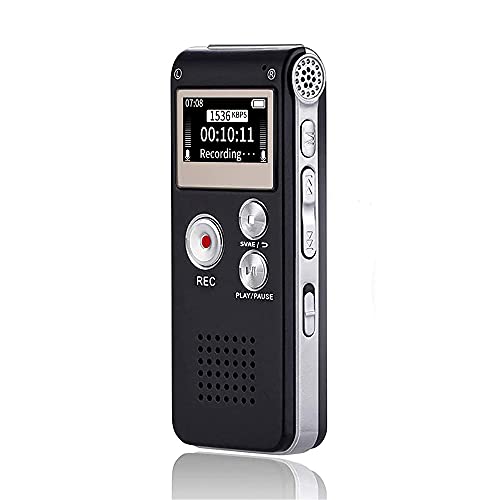
Sunlan offers a simple, beginner-friendly recorder with a one-button operation: press REC to start, STOP to end, PLAY to review, and A-B for repeating segments. It emphasizes clear playback and built-in noise reduction for clearer transcripts. The device supports USB recharge and is well-suited for quick field notes, classroom use, and basic interviews where simplicity matters.
Best for: New users seeking a straightforward device for quick recording and playback.
Limitations: Smaller memory capacity and fewer advanced features compared to higher-end models.
Tallkcoder 72GB Magnetic Voice Activated Recorder
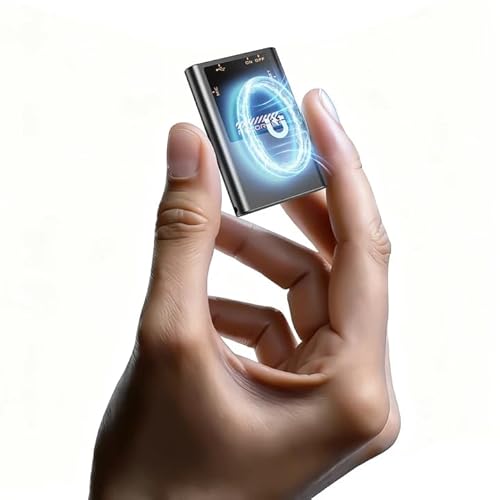
This 72GB device features AI-powered triple noise cancellation and a strong magnetic body for secure placement on metal surfaces. It supports one-touch recording for instant capture and simple operation. The magnetic design is ideal for hands-free recording in offices, cars, or classrooms, where discreet placement matters. The AI DSP 5.0 chip helps optimize ambient sound for clearer speech capture.
Best for: Professionals who need discreet, reliable field recording or a hands-free option in dynamic environments.
Limitations: Magnetic mounting is great for placement but may require careful handling to avoid accidental detachment.
Buying Guide: Key Considerations For Voice Activated Recorders
- Memory capacity and recording hours: Choose memory that fits the typical session length you expect. More hours reduce the need to swap cards.
- Audio quality and noise reduction: Prioritize PCM or WAV options and noise reduction when you record in noisy environments or distant speakers.
- Voice activation vs. continuous recording: Voice-activated modes save space and battery, but ensure the sensitivity settings match your typical sound levels.
- Battery life and charging: Look for devices with long battery life and convenient charging (Type-C or USB-C is common).
- Playback features: A-B repeat, variable speed playback, and easy transfer to a computer improve post-recording efficiency.
- Portability and durability: Small, metal-bodied devices are easier to carry and more durable for fieldwork, while magnetic mounts add convenience in certain settings.
- File formats and compatibility: WAV/MP3 support covers most workflows; ensure compatibility with your transcription software or audio editor.
FAQ
- What is PCM recording and why does it matter?
PCM recording provides high-fidelity digital audio with minimal compression, resulting in clearer recordings suitable for transcription and analysis.
- How long can these recorders capture on a single charge?
Battery life ranges from roughly 32 to 68 hours in typical MP3/WAV modes, depending on bit rate and usage.
- Is voice-activated recording always best?
Voice-activation saves space and power but may miss very soft voices; in quiet rooms, continuous recording can be preferable.
- Can I transfer files to a computer easily?
Most models use USB-C or USB interfaces for direct transfer to a computer for quick file management.
- Which recorder is best for field reporting?
Devices with strong magnets or compact forms (like Tallkcoder or Tonfarb 64GB) suit hands-free, on-the-go recording in varied environments.
- Do I need a large memory card?
If you expect long sessions (lectures, conferences), choose at least 64GB or more to minimize card swaps.