Best Bluetooth Audio Transmitter and Receiver Options for Every Setup
If you’re looking to add wireless sound to a TV, computer, car stereo, or home speaker system, these Bluetooth transmitter/receiver kits deliver solid options across budgets and use cases. This guide highlights five reliable models, clarifying who each is best for and why, plus practical buying ideas to help you compare features like range, latency, and dual-device support.
Buyer tips: choose a kit with low latency if you’re watching video, pick TX/RX dual-mode if you want versatility, and consider range for large rooms or multi-room layouts. The top picks below cover TVs, home theaters, cars, and travel needs.
| Product | Best For | Why Pick It |
|---|---|---|
| 1Mii 2.4GHz Wireless Audio Transmitter Receiver Set (TX+RX) | Home theater and TV setups | Long range, low latency, dual AUX/RCA outputs |
| esinkin Bluetooth Audio Adapter | Budget streaming to existing speakers | Simple setup, reliable indoor range, easy pairing |
| 1Mii Bluetooth 5.3 Transmitter Receiver | Video and gaming with modern devices | Latest BT 5.3, aptX Low Latency, dual-use |
| UGREEN Bluetooth Transmitter Receiver | Travel and car or plane use | 2-in-1 TX/RX, long battery life, lightweight |
| 1Mii 2.4GHz Wireless Transmitter Receiver (200ft) | PC, TV, and home audio | Plug-and-play, dual AUX/RCA outputs, clear status LED |
1Mii 2.4GHz Wireless Audio Transmitter Receiver Set
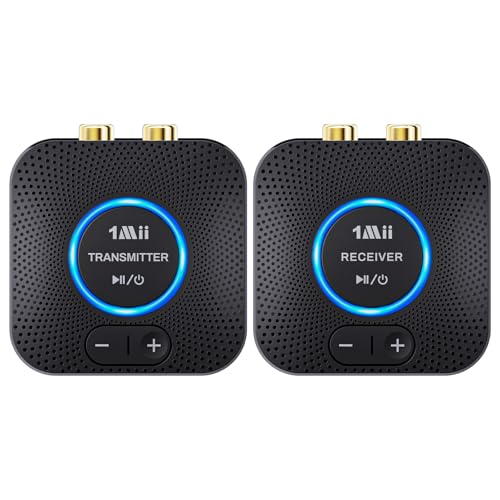
Best for: TV enthusiasts and home theater fans who want a robust, plug-and-play wireless link to powered speakers or a soundbar. This kit includes one TX and one RX, supports 2.4 GHz transmission with a claimed 262 ft/80 m range, and uses AUX/RCA in/out for flexible connections.
Why it’s chosen: It offers quick pairing, a clear LED indicator, and dual AUX/RCA outputs, making it easier to drive two speakers or a sound system from a TV or PC. A potential limitation is that dual input usage can mix signals at the receive end, so plan your wiring to avoid simultaneous AUX and RCA inputs when necessary.
esinkin Bluetooth Audio Adapter
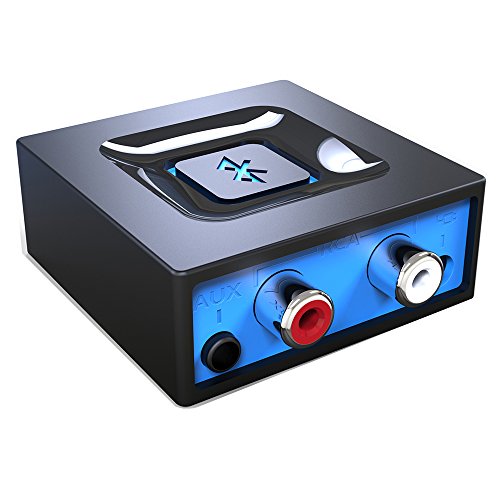
Best for: Quick upgrades of existing speaker setups to Bluetooth expedience, ideal for streaming music from a phone to home stereo systems.
Why it’s chosen: A straightforward setup with a dedicated pairing button and automatic reconnect features, plus a practical 30–40 ft indoor range. Limitation: The device does not specify advanced codecs beyond standard Bluetooth profiles, so peak audio fidelity may vary with your source and speakers.
1Mii Bluetooth 5.3 Transmitter Receiver

Best for: Viewers and gamers who need low-latency audio and broad compatibility with newer Bluetooth devices.
Why it’s chosen: The latest BT 5.3, backward compatibility with older BT versions, and aptX Low Latency help keep video and audio synchronized. The dual-mode design supports both TX and RX use, making it a versatile choice for turning non-Bluetooth TVs into wireless sound channels. Caution: While it supports LDAC/aptX Adaptive in some configurations, exact codec support depends on the connected devices.
UGREEN Bluetooth Transmitter Receiver
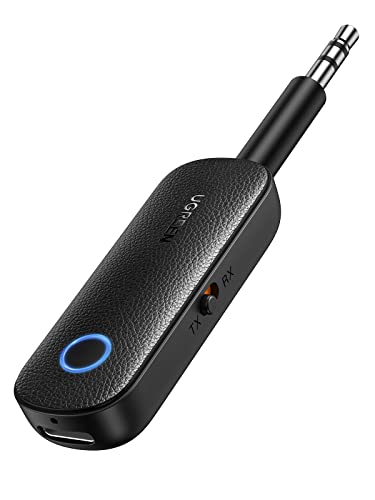
Best for: Travelers and frequent commuters who need a compact, multi-environment Bluetooth adapter.
Why it’s chosen: It combines TX and RX modes in one compact unit with long battery life and dual device pairing. It can pair two devices at once and includes a built-in microphone in RX mode for calls. Limitation: The device is described as travel-friendly, but battery life can vary with usage and volume levels in wireless mode.
1Mii 2.4GHz Wireless Transmitter Receiver (200ft)

Best for: Home setups requiring clear, long-range wireless audio from a PC or TV to two speakers.
Why it’s chosen: It emphasizes a straightforward plug-and-play experience with 2-in-1 TX/RX capability and dual AUX/RCA outputs. The claim of a 200 ft range in open spaces makes it a solid choice for larger rooms or multi-room layouts. Caution: Real-world range can be reduced by walls and furniture; plan accordingly.
Buying Guide: How to Choose the Right Bluetooth Transmitter Receiver
- What is your primary use? If you’re watching TV, latency matters. Look for aptX Low Latency or Bluetooth 5.x with low-latency features.
- Do you need TX, RX, or both? Dual-mode units simplify setups where you want to send audio to speakers and receive from a device at the same time.
- What is your connection type? AUX and RCA outputs are common; ensure your speakers or soundbars match the outputs on the transmitter.
- How important is range? Larger rooms or off-center listening positions benefit from longer range; however, walls reduce effective distance.
- Power and portability: Some models run on USB power or built-in batteries. For travel, a compact, battery-powered unit is convenient.
- Codec support: If your source devices support AAC/aptX/aptX HD, choose a model that supports the best matching codec for the best fidelity.
Quick Comparison At a Glance
- Best overall home theater: 1Mii 2.4GHz Wireless Audio Transmitter Receiver Set
- Best budget option: esinkin Bluetooth Audio Adapter
- Best for video latency: 1Mii Bluetooth 5.3 Transmitter Receiver
- Best travel/plane use: UGREEN Bluetooth Transmitter Receiver
- Best long-range: 1Mii 2.4GHz Wireless Transmitter Receiver (200ft)
Frequently Asked Questions
- What is the difference between a Bluetooth transmitter and receiver?
Transmitter sends audio wirelessly to Bluetooth headphones or speakers; receiver accepts audio from a Bluetooth source to drive non-Bluetooth speakers. - Do these devices add delay?
Many support low-latency codecs like aptX Low Latency; latency varies by device and source, so latest models generally perform better for video. - Can I connect two devices at once?
Some units support dual Bluetooth connections in TX or RX mode; check the product specs for dual-pair compatibility. - Will Bluetooth work in a car or on a plane?
Yes, many models are portable and designed for cars, airplanes, and travel; ensure it supports the relevant power and output formats for your setup. - What should I look for to avoid audio dropouts?
Stable pairing, sufficient range, and proper line-of-sight help; avoid settings that mix multiple inputs on the receiver end if your layout calls for separate channels. - Is there any risk of interference with other wireless devices?
2.4 GHz devices can interfere; many transmitters mitigate this with anti-interference technology, but optimal placement still matters.